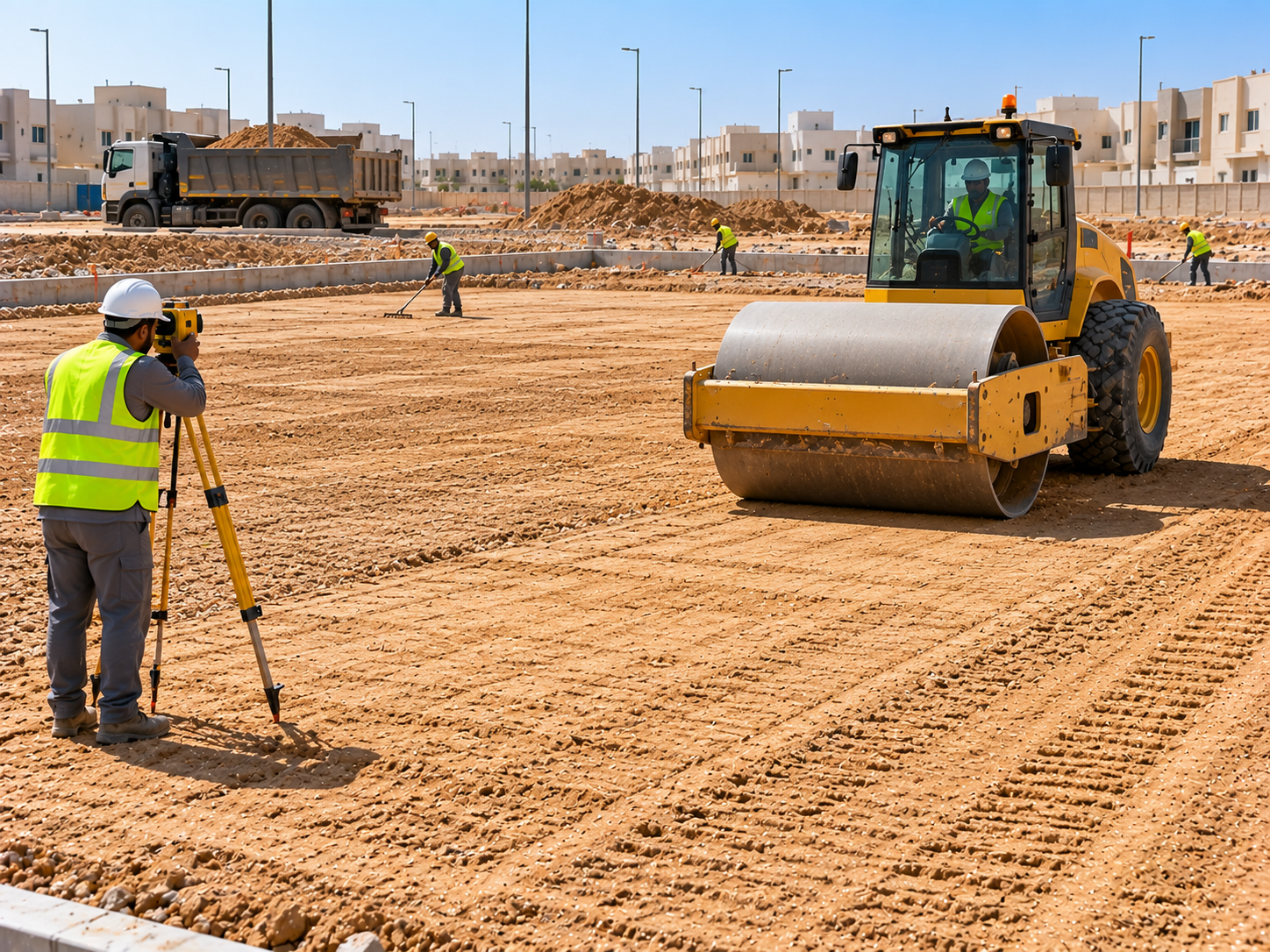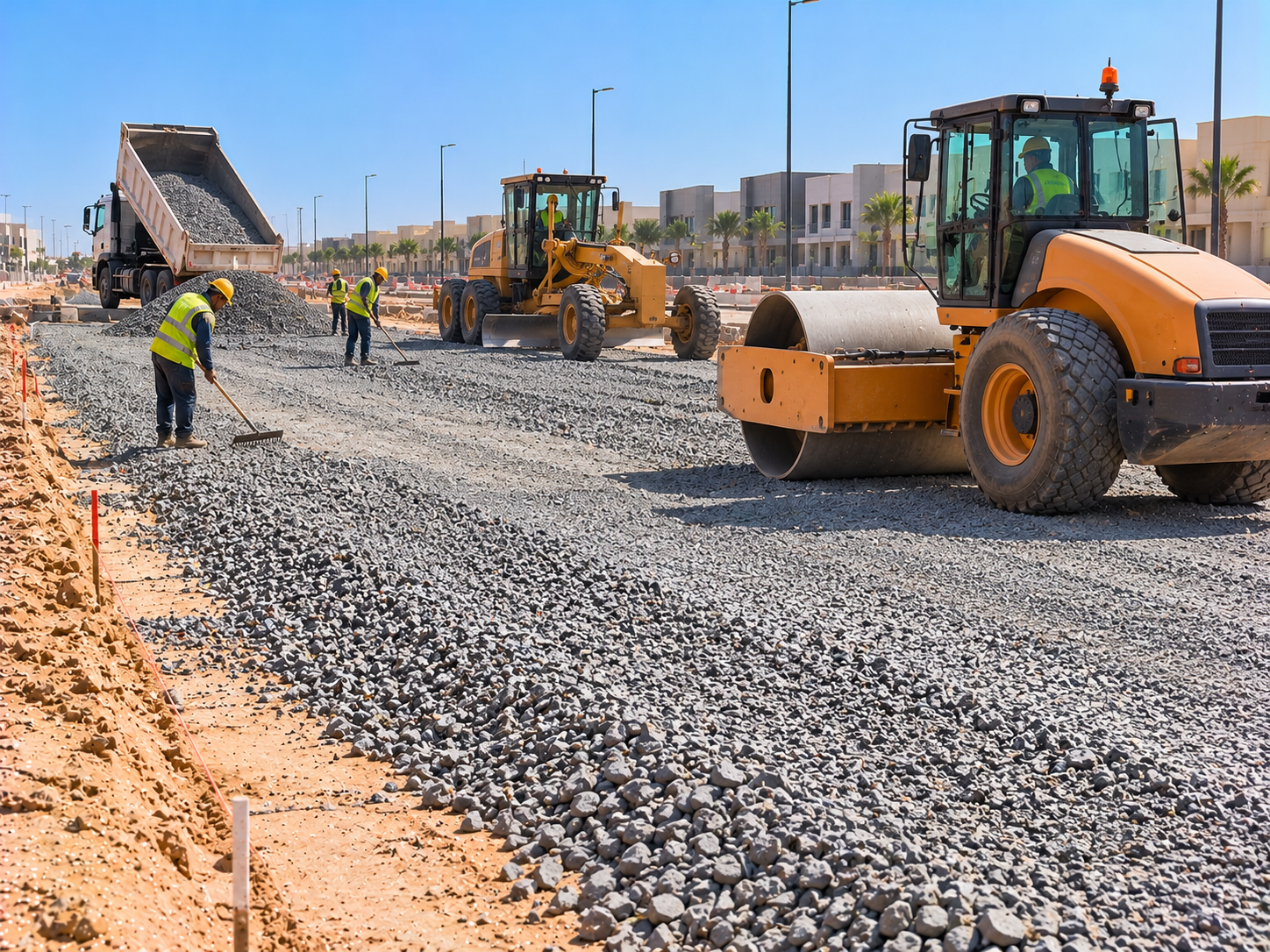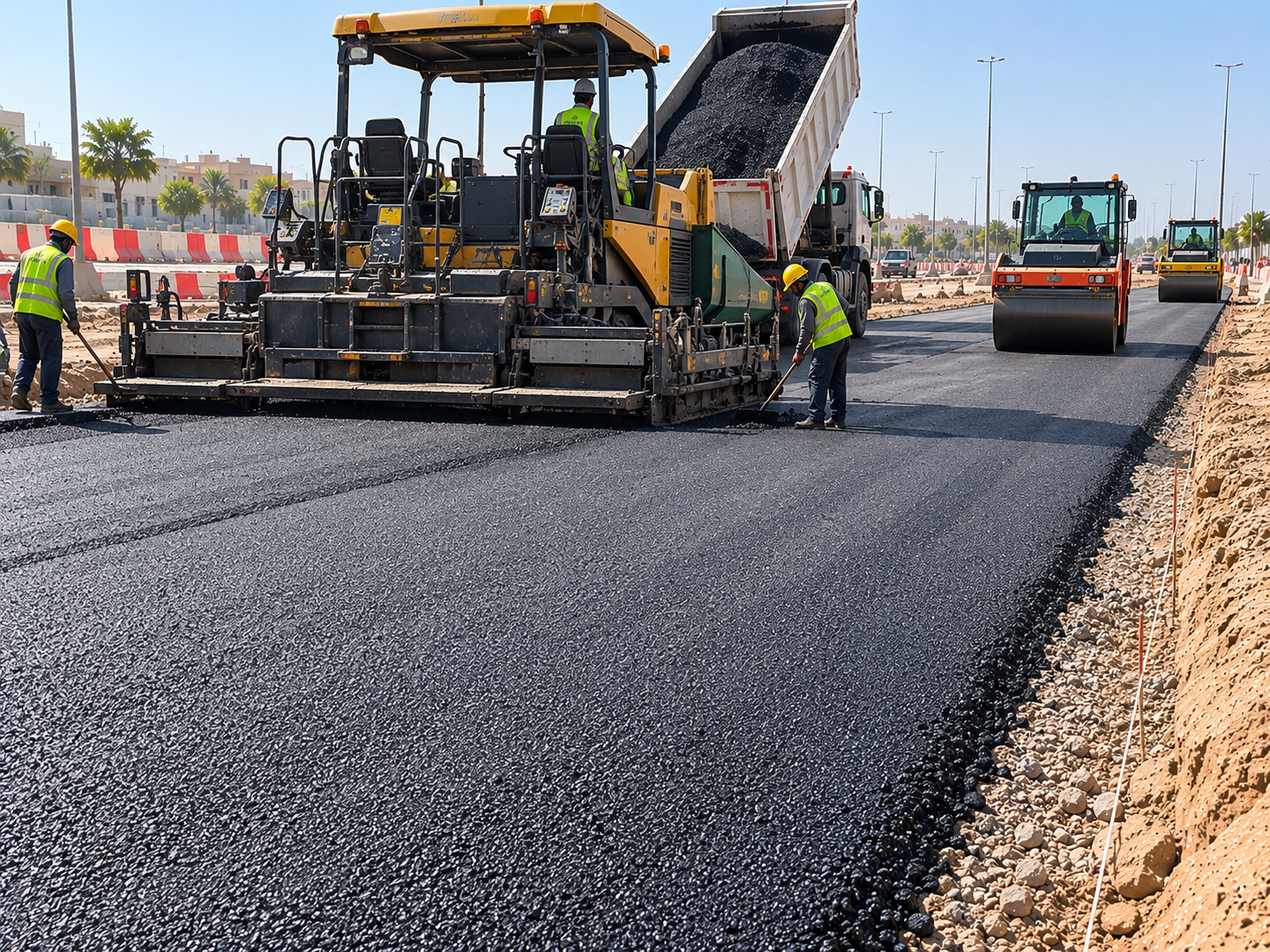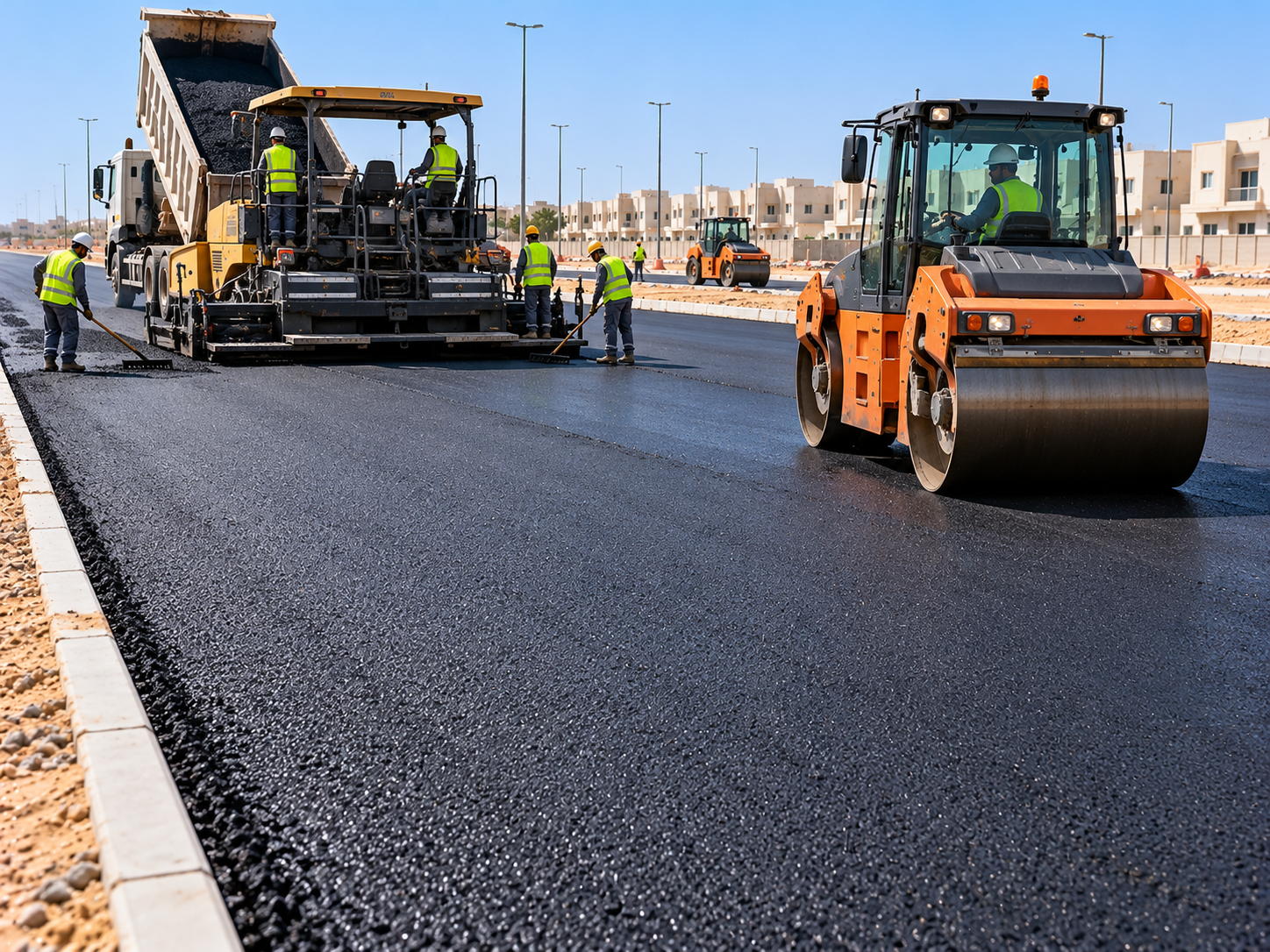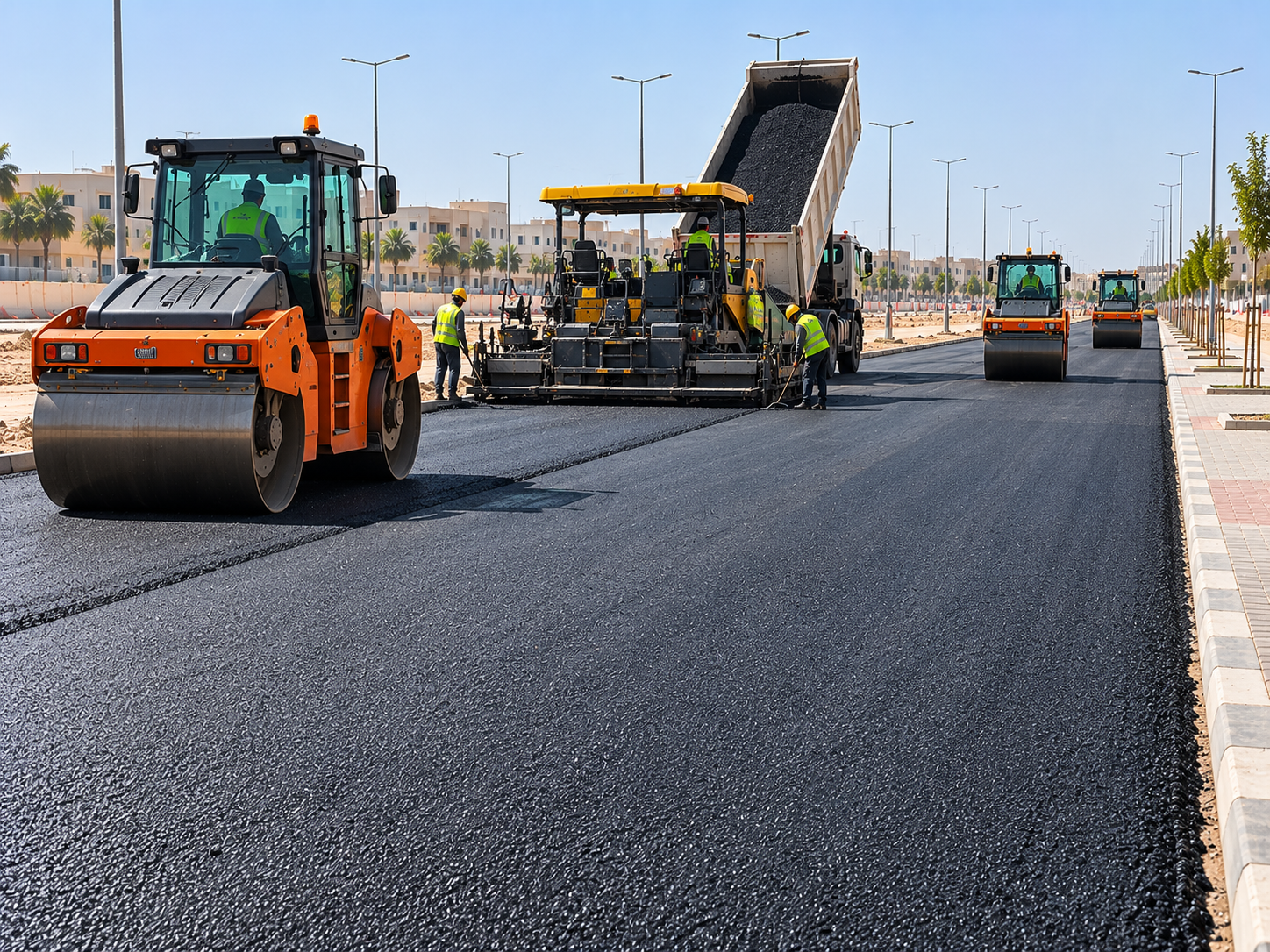
From site grading to the final asphalt layer, a surface built to last
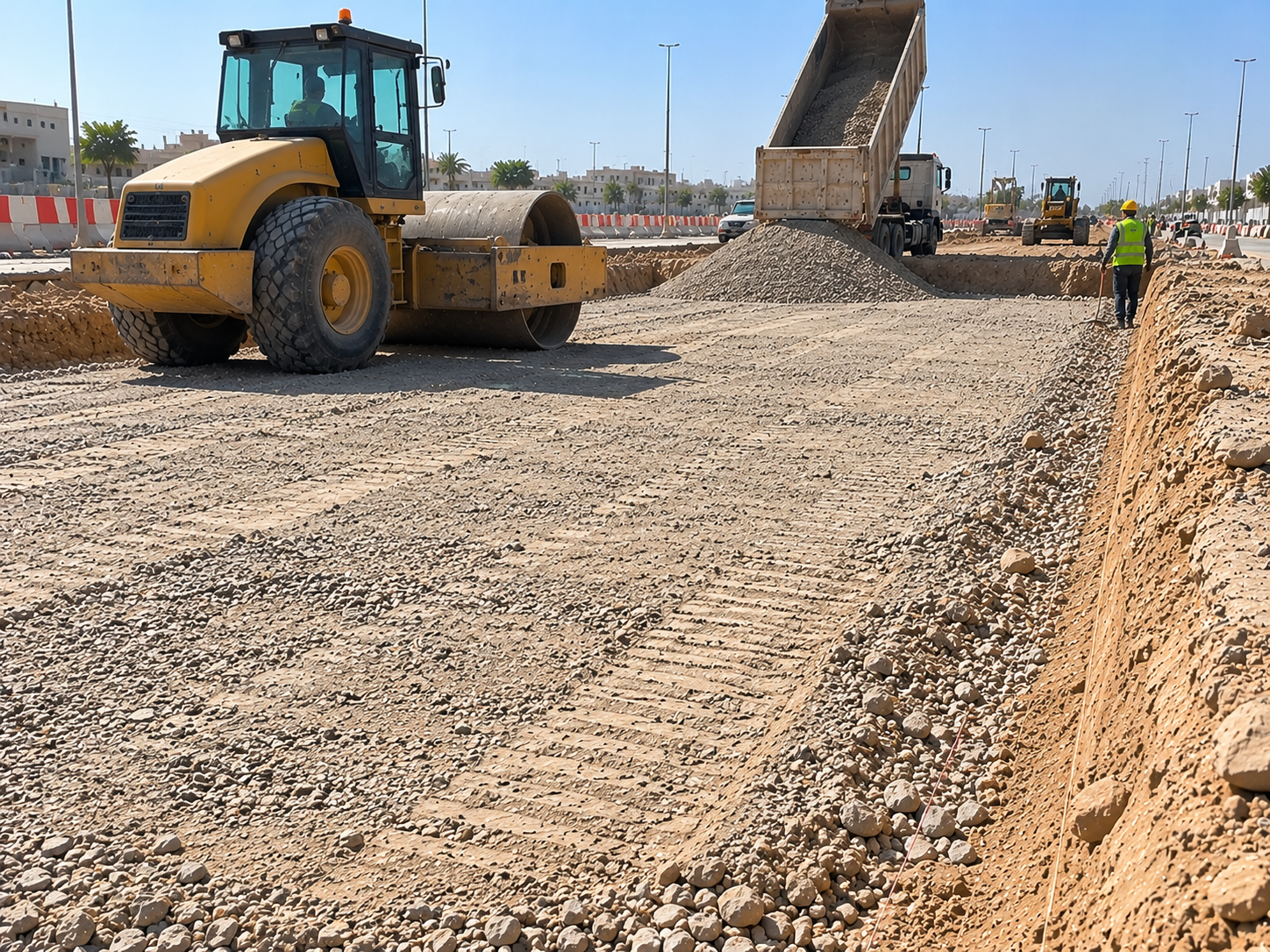
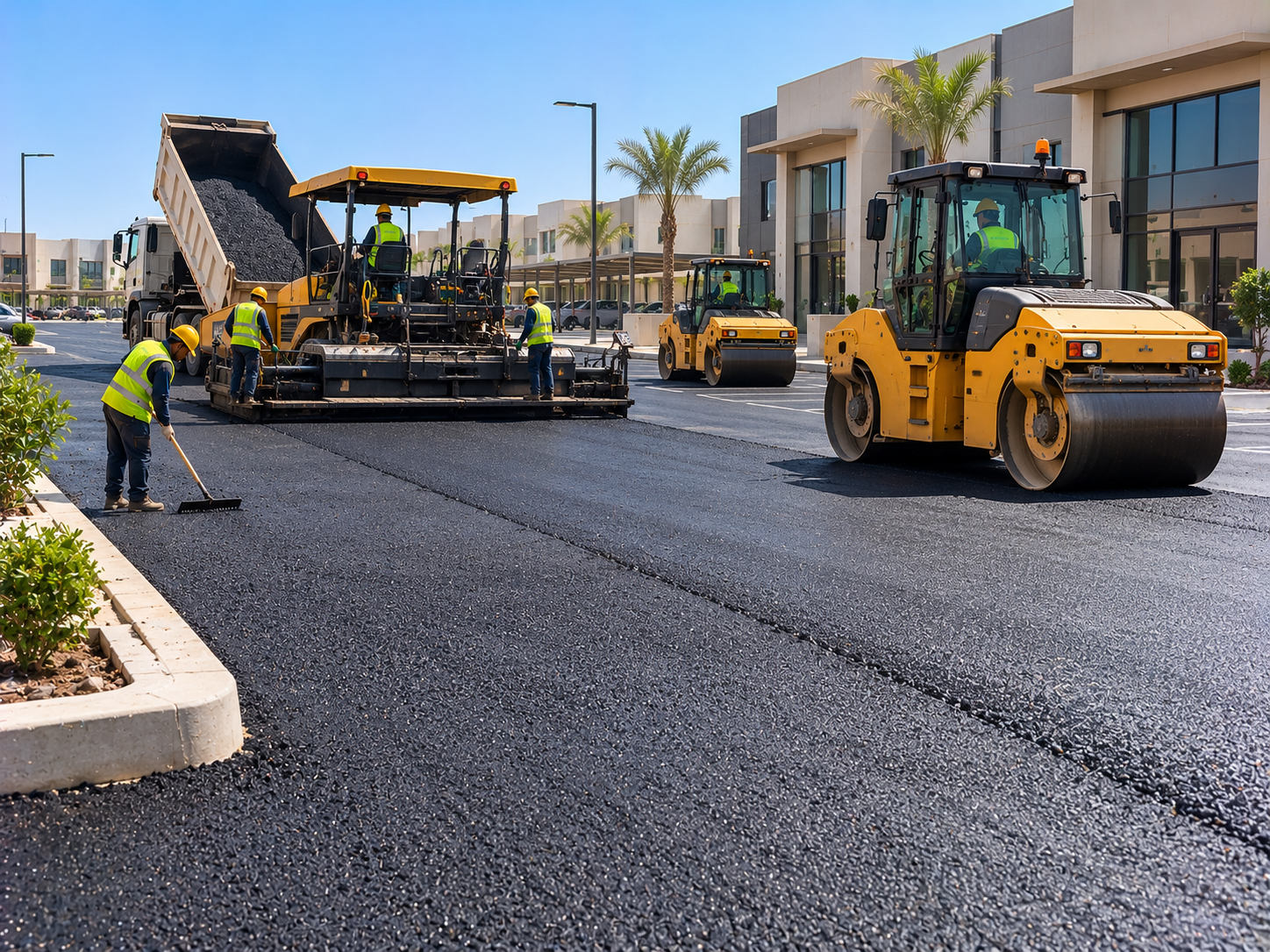
We deliver asphalt and road paving for developments, complexes, car parks and yards in every city in Saudi Arabia: grading and compaction, supply and laying of subbase and base layers, then the asphalt base course and wearing course at designed thicknesses, with modern equipment and compaction tests on every layer.
Designed layers and proper compaction for a surface that will not crack or sink
Browse our other services in Saudi Arabia
Real sites before and after asphalt
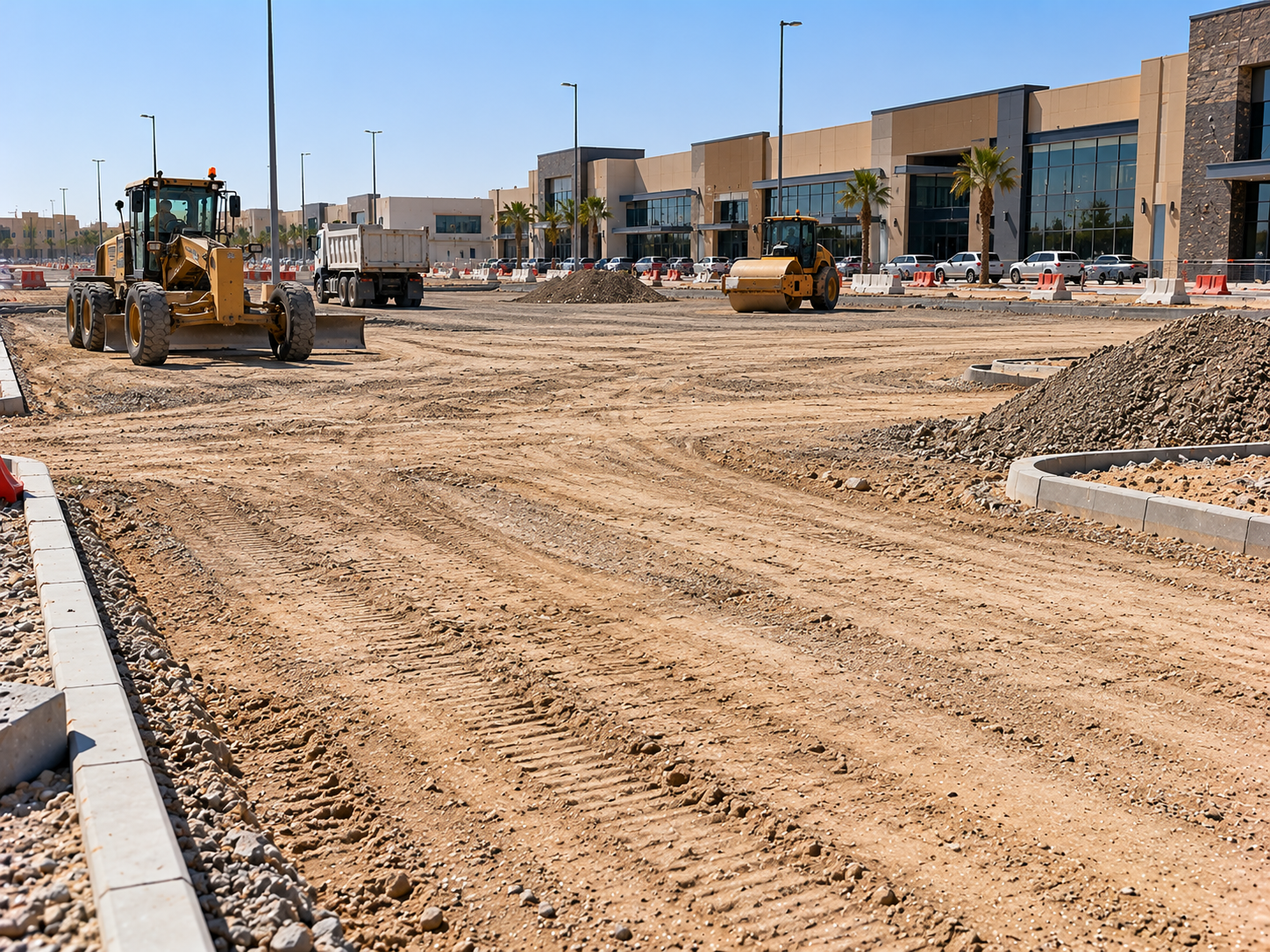

Commercial car park

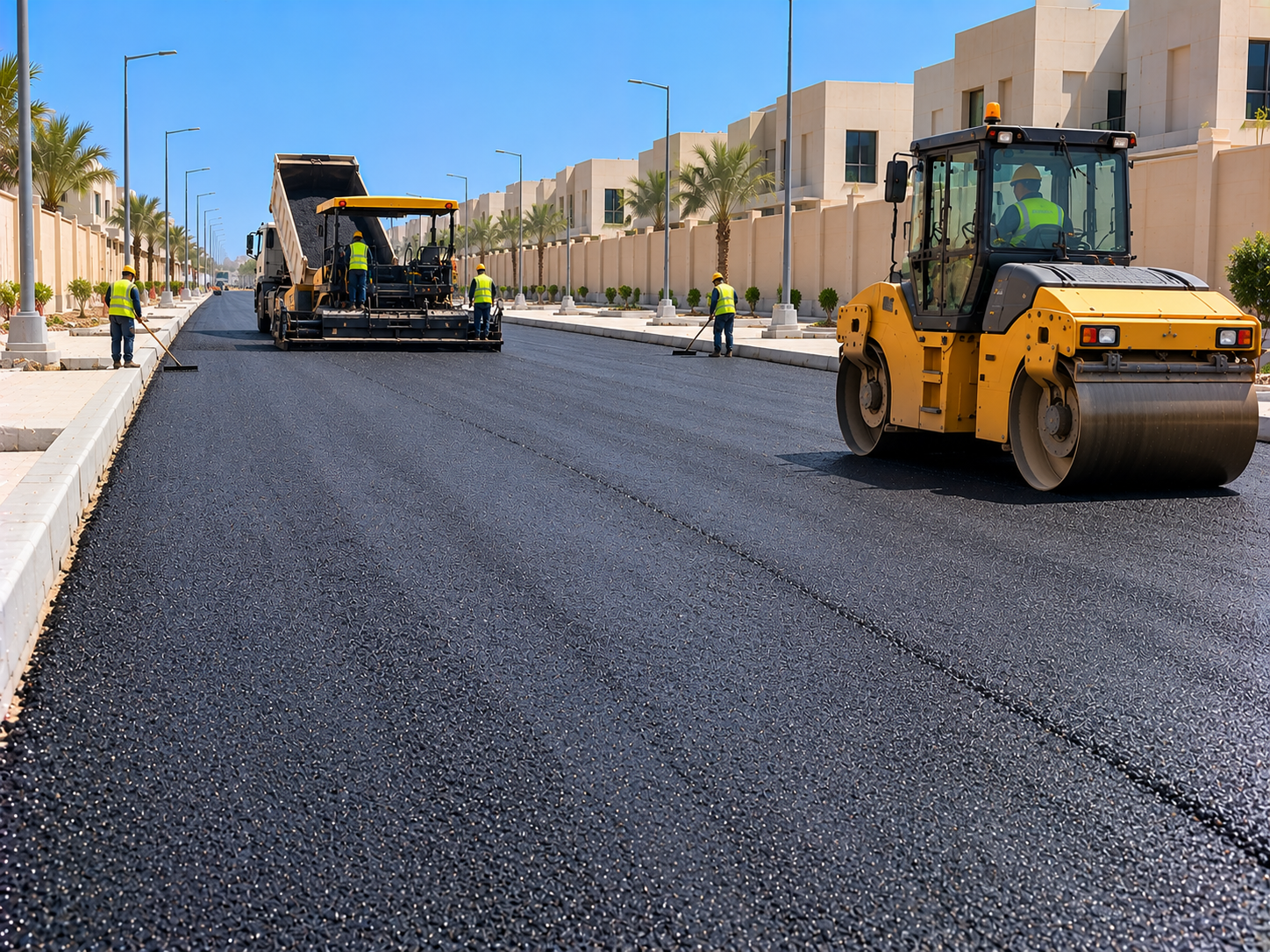
Internal street
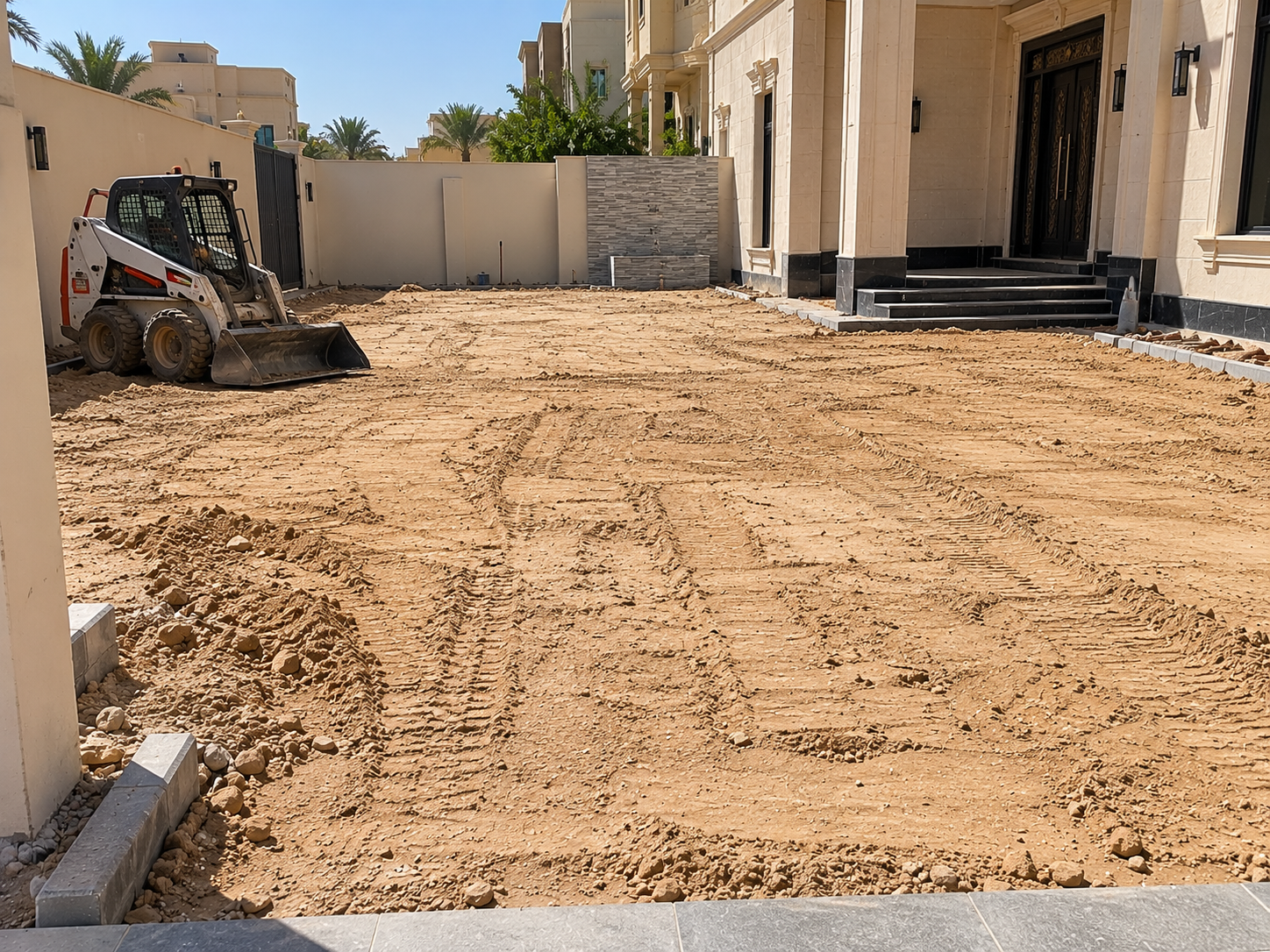
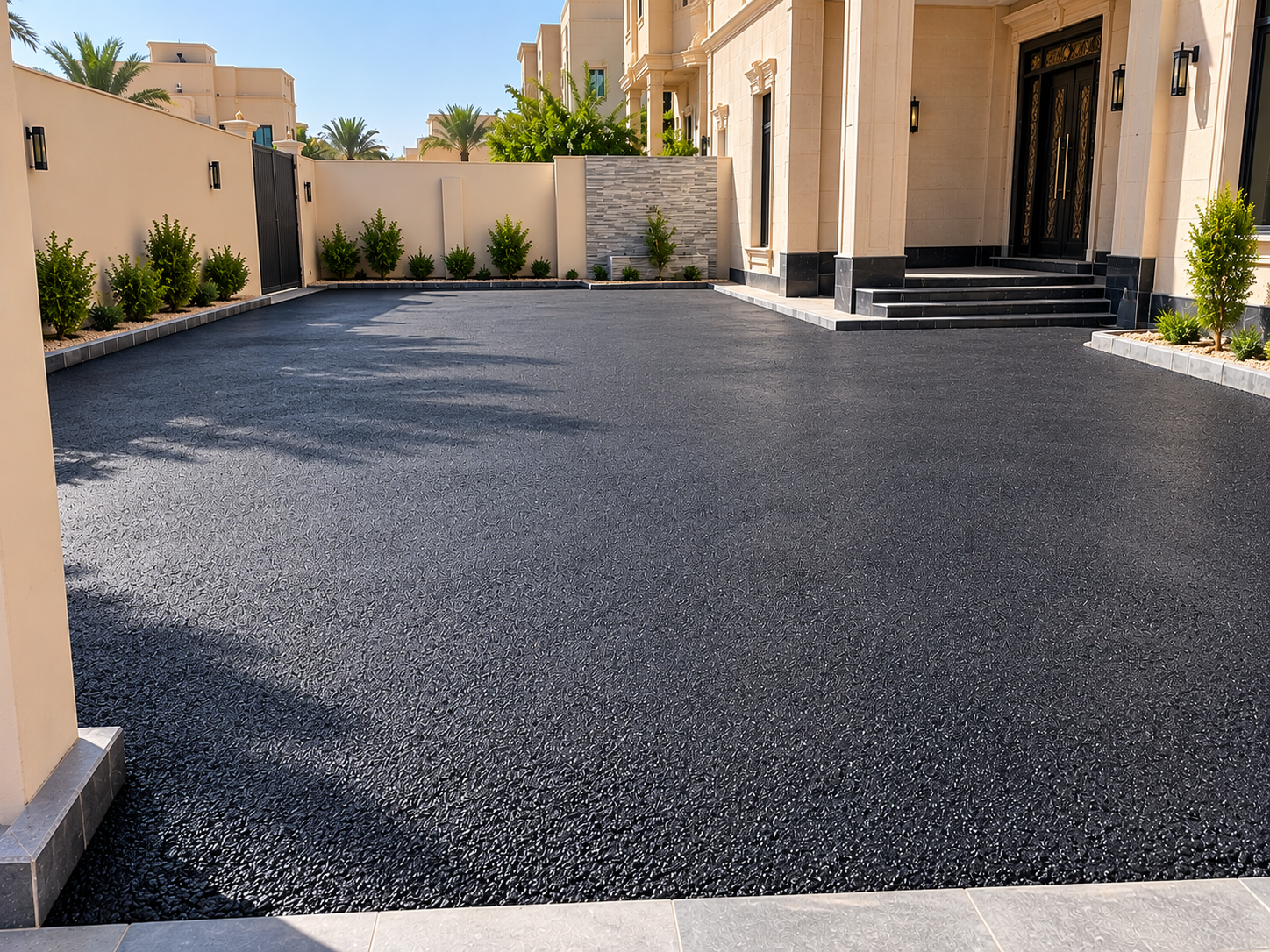
Villa yard
Designed layers and compaction tests before every layer
Modern equipment
Pavers, rollers and trucks sized to the job
Designed layers
Subbase and base, then two asphalt courses
Compaction tests
On every layer before the next
Proper drainage
Designed falls that stop ponding
From first contact to handover: clear steps with no surprises
Contact us
Send the location and approximate area by WhatsApp or phone
Site visit & survey
We inspect the site and set the levels and layers
Quote
A clear quote based on area and layers
Grading & layers
Grading and compaction, then subbase and base with tests
Asphalt & handover
Base course and wearing course, then handover
Our headquarters is in Riyadh, and our teams deliver projects across every region of Saudi Arabia with the same quality, engineering supervision and warranty.
A good road or car park is not judged by the colour of the asphalt on handover day. It is judged by how well it handles heat, traffic and rain without cracking, sinking or holding water. That depends more on what lies beneath the asphalt than on the surface itself.
This guide explains what asphalt works cover and how to choose the right type of paving for your site. It sets out the factors that decide the cost, the tests to ask for and the mistakes that shorten the life of a road before its time. The aim is for you to make your decision knowing exactly what you are paying for.
Asphalt paving is not spreading a black layer over soil. It is a complete system of layers that starts with the natural ground and ends with the surface vehicles drive on. Each layer has a role in spreading loads, draining water and protecting what lies below.
Real estate developers need internal roads paved in their new subdivisions once the networks are complete. Residential and commercial compounds need organised car parks and internal roads that handle constant daily traffic. Warehouses and factories need yards that can carry heavy trucks and cranes.
Villa and palace owners need paving for their yards and for the driveways leading to entrances and garages. Here drainage, the final look and harmony with the landscaping and pavements matter as much as load capacity. Schools, mosques and health centres also need it, since they receive large numbers of cars at specific times.
In all these cases the thicknesses and number of layers vary with use. A villa yard used by private cars is completely different from a truck unloading yard. That is why a quotation should not be given before the actual use of the site is known and it has been inspected in person.
It is also important to know whether the site is new and has never been paved, or already has old asphalt or tiles. An existing site needs an inspection to find the cause of the damage before any rework. If the cause is soil settlement or water seepage, the new layer will fail in the same way unless the cause is treated first.
Asphalt is the best known choice for roads and wide car parks, but it is not the only one. Some sites suit interlock paving and others suit concrete paving. The choice depends on the type of traffic, the area, the look you want and how easy it is to maintain.
| Paving type | Where it suits | Advantages | What to consider |
|---|---|---|---|
| Asphalt | Roads, car parks, wide yards and villa yards | Quick to lay, smooth and comfortable to drive on, and easy to maintain by patching | Affected by extreme heat and oil spills if the mix is not suitable |
| Interlock | Walkways, yards, entrances and pavements | Attractive look, many colours and blocks that are easy to lift and relay | Needs a well compacted base and fixed edges so it does not shift |
| Concrete | Truck and crane yards and areas with concentrated loads | High capacity for heavy loads and resistant to oil | Needs correct expansion joints and is harder to repair |
The base course uses a coarser mix and gives the road its structural strength. The wearing course uses a finer mix and gives a comfortable final surface with resistance to friction and weather. In private yards with light traffic a single well designed layer may be enough. Roads and heavy duty yards usually need two layers or more.
Yes, and this is common in villas and compounds. The internal road may be asphalt, the walkways interlock and the service area concrete. What matters is that the levels between them are studied so the surfaces meet without a step, and that all slopes run in one direction towards the drainage points.
Our advice is to decide first what will pass over each part of the site. Then choose the paving type for each part on that basis, not on looks alone. A choice based on use saves you a lot of maintenance later.
In open car parks you can consider shades over the most used parking spaces. Shade lowers the surface temperature and protects both the asphalt and the cars. In yards, planting beds can be built into the design instead of being cut out of finished asphalt later. This early thinking makes the site look better and avoids breaking work that has already been done.
The quality of asphalt is decided in the stages nobody sees after handover. That is why the work must follow consecutive steps, and none of them should start before the one before it is confirmed as sound.
The temperature of the mix at the moment of laying is decisive. A mix that has cooled before compaction does not bond well and breaks up later. So the arrival of trucks must be coordinated with the laying speed, and loads must not be left waiting on site for long.
Joints between lanes need special care. A weak joint is the first place cracking and water entry begin. The edge of the previous lane must be cut and sprayed before the next lane is laid.
Manhole and inspection chamber covers must also be set to the final asphalt level before laying. A cover that sticks up or sits low disturbs drivers and becomes a weak point where the layer breaks up over time.
Once finished, the asphalt must be left to cool before it is opened to traffic. Heavy vehicles should not park or turn their wheels on the spot during this period, as this leaves marks that are hard to remove later. We tell you the right time to open the road based on the weather and the layer thickness.
The price of paving per square metre is not a single number that suits every site. Two car parks of the same size may differ greatly in cost depending on the condition of the ground, the number of layers and the type of traffic. Understanding these factors helps you read and compare offers correctly.
The most common way to cut the price is to reduce layer thickness, skip the base layer or reduce compaction. The owner does not see these things on handover day, but they appear after a while as potholes, cracks and settlement.
So ask for the offer to state the type of each layer, its compacted thickness and the type of mix. Ask it to make clear whether the work includes grading, milling, kerbs and markings. Compare offers item by item, not only by the total. A slightly higher offer with the right layers ends up far more economical than a cheap offer that has to be redone.
Complete the networks, kerbs and pavements before the asphalt so you do not break it later. Group all the site works into one phase if possible, because moving equipment more than once raises the cost. Choose the thickness according to the real use of each part instead of one heavy thickness for the whole site.
Once the asphalt is laid it becomes hard to know what is underneath. That is why follow up and testing must be part of every stage and not only at the end. You have the right to ask for proof that the agreed specifications were met.
After the first rain, or after spraying water on the surface, notice where the water collects. Water pooling in one spot points to a slope defect that should be fixed within the warranty period. Also watch the edges of the asphalt at the kerbs and around manholes, as these are the first places where problems appear.
All these mistakes come from rushing or trying to save in the wrong place. Avoiding them needs engineering supervision present on site and a contractor who sticks to the steps.
If you notice any problem after handover, document it with photos straight away and contact the contractor. Early treatment within the warranty period is easier and cheaper than waiting until the problem grows. Keep a copy of the contract and the test reports in one place so you can return to them when needed.
Asphalt is strongly affected by heat and water. That is why the right mix, the execution method and the maintenance programme vary from one region of the Kingdom to another.
In Riyadh, Qassim and Al Kharj the surface temperature rises sharply in summer. An unsuitable mix softens in the heat and shows ripples and tyre marks where cars park. So a mix that handles high temperatures must be chosen. Laying is best done in the cooler hours so the mix temperature and compaction can be better controlled.
In Jeddah, Dammam, Al Khobar and Jubail heat, humidity and sometimes salty soil come together. The biggest enemy of asphalt here is water seeping into the layers. So good drainage and sealing cracks early matter more than anything else. Base layers may need extra treatment if groundwater is close to the surface.
In Abha, Khamis Mushait and Al Baha rain is frequent and temperatures drop in winter. Water that enters cracks and expands widens them over time. Sloping roads need side channels to stop water running over the surface and eroding the edges.
Over time a new wearing course can be laid over the road if the lower layers are sound. This is far more economical than repaving completely. Simple regular maintenance extends the life of the asphalt and delays the need for major repairs.
We recommend a quick inspection walk around roads and car parks after every rainy season. It reveals new cracks and spots where water collects at an early stage, before they turn into potholes.
A good asphalt company does not start with the price. It starts by asking how the site will be used and asks to inspect it before giving any figure. That alone is a strong sign that it will design the layers around your needs and not around a ready made template.
A clear quotation sets out the approximate area and the scope of grading and excavation. It names every layer with its compacted thickness and the type of asphalt mix. It explains the complementary works such as kerbs, markings and adjusting manhole covers. It links payments to completed stages and states the warranty terms. Treat any item not written in the offer as not included until it is added.
We start with a site visit and a survey, then give you a written quotation that sets out the layers and thicknesses. During execution a specialist engineer follows every stage from grading to the wearing course. We send you photos of the stages so you can see what lies beneath the asphalt before it is covered. We use approved materials and hand over the site with a written warranty in the contract.
Because we carry out excavation, infrastructure networks, pavements and asphalt paving under one management, the order of work is right from the start and excavation is not repeated. Our head office is in Riyadh and our teams work in Jeddah, Makkah, Dammam, Qassim, Abha and other cities across the Kingdom. You can view our projects or contact us to arrange a site visit.
We also make sure the site is handed over clean after removing debris and surplus materials. After handover we explain when the road can be opened to traffic and what simple maintenance it needs so the asphalt stays in good condition for as long as possible.
The word paving on its own means nothing specific. A thin layer over uncompacted soil is called paving, and a road with properly designed layers is called paving too. The difference appears after the first summer. So ask for the specifications to be written into the contract item by item.
A prime coat is sprayed between the base course and the asphalt. A tack coat is sprayed between the two asphalt layers. These coats cost little, yet without them the layers separate and peel under traffic. Make sure they are named in the contract.
Ask the contract to state the direction of drainage falls, the points where water collects and how it is drained. It should also give asphalt levels at doors, garages and entrances so water does not run into the building. Asphalt that does not shed water fails sooner however good the mix.
The contract should say whether it includes kerbs, adjusting manhole cover levels, road paint and parking layouts. Clients often assume these are included and then find they are outside the scope.
At Yam Integrated Construction we attach these specifications to the quotation itself. You read them before signing and can share them with your engineer if you wish. At handover you compare what was built with what was written, without argument. A clear specification protects not only the client but also the serious contractor, because it proves the work matches what was agreed.
Ask the contract to state how asphalt edges are finished against kerbs, walls and paving, and how joints between different days of laying are treated. Edges and joints are the first places weak asphalt crumbles. When their method is written down, you can check it easily at handover and know whether the work was done as agreed.
A written specification shortens discussion at every stage of the project, not only at handover.
Asphalt is almost the last thing laid in external works. Anything forgotten before it means breaking the new asphalt later. That is why we review a preparation checklist with the client before fixing the laying date.
Asphalt trucks, the paver and rollers need wide entrances and suitable routes. We check gate height and width and any low cables or trees on the way. We set where trucks will wait without blocking neighbours or loading existing pavements.
Asphalt is never laid on a wet surface or in rain. In the cold winters of the southern highlands and Tabuk we choose the warmer hours. In the summer of Riyadh and Qassim we prefer early morning to protect the crew and control compaction.
This list looks simple, but it prevents most of the problems that appear after paving. We go through it with the client before confirming the final date. If an item is not ready, we postpone laying, because rushed asphalt over an unfinished site costs more than waiting.
Shortly before laying day we visit the site once more with the client or their representative. We confirm the base course is compacted, clean and dry and that levels match the design. We check the route is clear for trucks and that cars have left the area. This short visit prevents postponing laying day after the mix has already reached site.
Before the date we give the client a short note of what they need to prepare so nothing is forgotten.
Paving quotations are among the hardest to compare by looking at the total alone. A quotation may look clearly cheaper, then you find it counts thickness before compaction or ignores a whole layer. These steps help you compare fairly.
Some quotations price per square metre and others as a lump sum for the whole site. A rate per square metre means you need to know how the final area is measured and by whom. A lump sum needs clear boundaries for the area on a drawing. In both cases, ask for thickness to be stated after compaction, because the difference between laid and compacted thickness is large.
| Item | What to confirm in each quotation |
|---|---|
| Grading and compaction | Whether it includes removing and replacing weak soil |
| Subbase | Included or not, and its thickness |
| Base course | Material type and compacted thickness |
| Bonding coats | Prime coat and tack coat named explicitly |
| Asphalt | Number of layers and mix type for each |
| Associated works | Kerbs, manholes and road paint |
| Testing | Compaction tests and who carries them out |
Compare payment terms and how they link to stages, the warranty period and what it covers. Ask whether an engineer follows the work on site and whether you receive photographs of each layer before it is covered. These items do not show in the total, but they decide how long the road lasts.
If one quotation is far lower than the rest, ask its author directly why. Either there is a clear reason, or an item is missing that will surface later as an extra claim or a defect in the road.
Asphalt quality depends on the equipment as much as on the mix. Ask each company what paver and rollers it will use and whether they suit the size of your site. Small areas need different equipment from long roads. Ask who will be responsible on site each day and how you reach them.
Also ask how long the quotation is valid and whether the price changes if the date slips. Mix and material prices change, and some quotations tie the price to a fixed work date. Knowing this in advance spares you a surprise if the project is postponed for any reason.
Laying day is one of the busiest days on site. Trucks arrive constantly, the paver moves, rollers compact and the mix is extremely hot. With residents, customers or staff around the site, managing safety and traffic becomes a core part of the work.
Hot mix causes severe burns on contact. Workers wear suitable boots, gloves and clothing that covers the body. In summer the heat of the mix adds to the heat of the air, so we arrange rest breaks and provide water and shade throughout.
In shop and compound car parks the whole site usually cannot close. We divide the area into sections and pave one while the rest stays open. We put up clear signs to the alternative entrances. Sometimes night work or work at quiet hours is the best solution, with enough lighting and reflective signs.
When paving an internal street where people live, we tell residents the date in advance. We keep house entrances open as far as possible or set a short closure time. The street does not open to cars until the asphalt has cooled enough that wheels leave no marks.
Ask any paving company how it will manage traffic on your site before signing. A company that thinks about this in advance usually thinks about quality details too. At Yam Integrated Construction the site engineer follows the safety and traffic plan as part of daily engineering supervision. We review the plan with the client before laying day so residents and staff know what will happen and when.
Safety does not end when laying ends. The surface stays hot for a while, and children and pets should be kept off it until it has fully cooled.
We also advise the client not to move heavy furniture or portable tanks over the new surface in the first days. Asphalt gains its full stiffness gradually, and concentrated loads can leave lasting marks.
Not every site needs the same design. A villa courtyard used by family cars is different from a commercial car park entered by trucks every day. Knowing the real use helps you spend in the right place rather than overdoing it or cutting corners.
Any saving on these items shows quickly as cracks, settlement and potholes. Repairing them later costs more than doing them right from the start.
If the old asphalt is sound and its cracks are superficial, a new layer over it after treatment may be enough. If settlement is widespread or the layers beneath are weak, a new layer will not last. Then full reconstruction is the more economical choice over the long term, even if it looks more expensive now.
Describe the real use of the site to the contractor accurately. Who uses it, roughly how often, and whether trucks or heavy plant enter. Ask them to propose more than one option and explain the effect of each on surface life. A serious contractor explains what you gain and lose with each option and does not push you towards the most or least expensive without reason.
At Yam Integrated Construction we present these options after the site visit in a clear written quotation. You choose knowing the effect of each decision on the road and on your budget.
Another smart way to save is to carry out paving in the same period as excavation and network works, with one party. You avoid moving equipment twice, waste less material and coordinate the stages more easily.
Most important, never save on supervision. Engineering follow up is what ensures everything you paid for was actually done.
Paving a palace or villa has different priorities from paving a commercial compound or a subdivision street. A contractor who applies the same solution everywhere costs the client either money or quality.
Traffic here is usually light, limited to family and guest cars. Yet appearance matters a great deal because the courtyard is part of the house frontage. The work focuses on a smooth surface, straight edges and levels that match the house entrance, the garage and the majlis. Drainage points are kept away from doors so water does not collect in front of them. Courtyards often combine asphalt on driveways with stone or interlock around the entrances.
Traffic is heavy and repetitive, with cars turning and stopping in the same places all day. Turning areas and entrances take more stress than the rest of the car park. They need stronger layers and clear marking of bays, arrows and walkways. It also matters that the work is phased so business can continue.
These roads serve a range of vehicles, including construction and delivery trucks, especially while the subdivision is being built up. So the layer design is heavier and longitudinal and cross falls get more attention. They are closely coordinated with infrastructure networks, because any manhole or crossing that is not set correctly becomes a permanent weak point in the road.
| Site | First priority | Point to watch |
|---|---|---|
| Villa or palace courtyard | Appearance and levels at entrances | Preventing water pooling at doors |
| Commercial car park | Carrying repeated traffic | Turning areas and phased work |
| Subdivision street | Layer strength and falls | Coordination with manholes and crossings |
Loading areas and warehouses carry heavy loads and long truck stops. At some points concrete paving may suit better than asphalt, especially where trucks stand still. We suggest this after the site visit when we see it serves the site better. In every case we start by asking the client about use before any design. The answer decides the layers, the materials and the method.
Some sites combine several types in one place. A residential compound may have an internal street, visitor parking and private courtyards. Each part is then designed for its own use instead of one layer across the whole site. This approach saves on the light areas and strengthens the heavy ones.
Many requests are not for new paving but for old asphalt with cracks, potholes and settlement. Sometimes the owner wants to extend a car park or add a new driveway beside existing asphalt. In both cases the right solution starts with understanding the cause of the damage before choosing the repair method.
The weak point in any extension is the joint between old and new. The edge of the old asphalt is cut in a straight line back to sound material. The new layers are built to match the old ones, and the old edge receives a tack coat before laying. Joints between layers are best stepped so they do not line up from top to bottom.
Laying a new layer over the old raises the surface. Manhole and valve covers are raised to match the new level. Door and entrance levels are reviewed so the asphalt does not end up higher than the garage or shop floor.
The choice between local repair and reconstruction depends on the extent and cause of the damage. We only propose full reconstruction when partial treatment will not last. In every case we explain the reason in writing with photographs of the damaged spots before starting, so you know why this solution was chosen and what will change after it.
If the damage comes from water leaking from an irrigation or sewer line beneath the asphalt, there is no point repairing the surface before fixing the leak. If the cause is incorrect falls, they must be corrected during the treatment. A repair that ignores the cause sees the damage return in the same place. That is why every repair project starts with a careful inspection of the surface and its surroundings.
New asphalt looks good in almost every case. The glossy black surface hides many faults in the first days. So handover needs an organised inspection, not a general glance.
Ask for compaction test results for each layer, photographs of each stage before it was covered and a drawing showing the boundaries of the paved area, along with a written warranty document stating what it covers.
If water pools after the first rain, early cracks appear or a specific spot settles, do not wait. Photograph the spot, note the date and contact the company within the warranty period. Early treatment is simple, while delayed treatment spreads over a larger area. Ask for the company's engineer to inspect the cause before the repair so the fix is not a temporary patch.
At Yam Integrated Construction the warranty is documented in the contract with clear terms. We walk the site with you point by point before the handover is signed. On any report we inspect first, identify the cause and then repair, so the problem does not return in the same place.
Keep the warranty document with the stage photographs and test results in one file. You will need them together to identify the cause quickly on any report.
Keep heavy trucks off the new surface at first, and do not park cars in one spot for long periods during the first hot days. Tell any other contractor working on site where the new asphalt begins so they do not dig into it or place heavy materials on it.
The most common questions we get about roads, car parks & yards
Grading and compaction, subbase, base, then the asphalt base course and the wearing course.
Yes. Yards, car parks, internal roads and developments, both small and large areas.
It depends on the traffic: a yard differs from a truck park or a road. We set it after the site visit.
By area, ground condition and the layers required. We send a clear quote after the site visit.
Usually a few hours after the asphalt cools; we confirm the time based on weather and layer thickness.
Yes. Our head office is in Riyadh and we deliver asphalt works across every city and region in Saudi Arabia.
Yes, after removing or milling the old layer depending on its condition. We inspect the soil underneath, because old settlement or cracking is usually caused by the lower layers.
Asphalt suits wide areas and constant car traffic, while interlock suits walkways and entrances where the look matters to you. The two can be combined with careful study of levels and drainage.
The most common cause is water entering the layers because of wrong slopes or cracks that were not sealed. Sometimes the cause is weak compaction or layers that are too thin.
It can, if the lower layers are sound and there is no settlement. We treat cracks and potholes first and adjust the levels of manholes and kerbs before laying the new layer.
Yes. We mark parking bays, arrows and walkways once the asphalt is complete, and we plan the parking layout to make entering and leaving easy.
Extreme heat requires careful coordination of mix delivery, laying speed and compaction. That is why we prefer to work in the cooler hours and monitor the mix temperature throughout the work.
Leave your details and WhatsApp will open with your message ready to send to our support team.