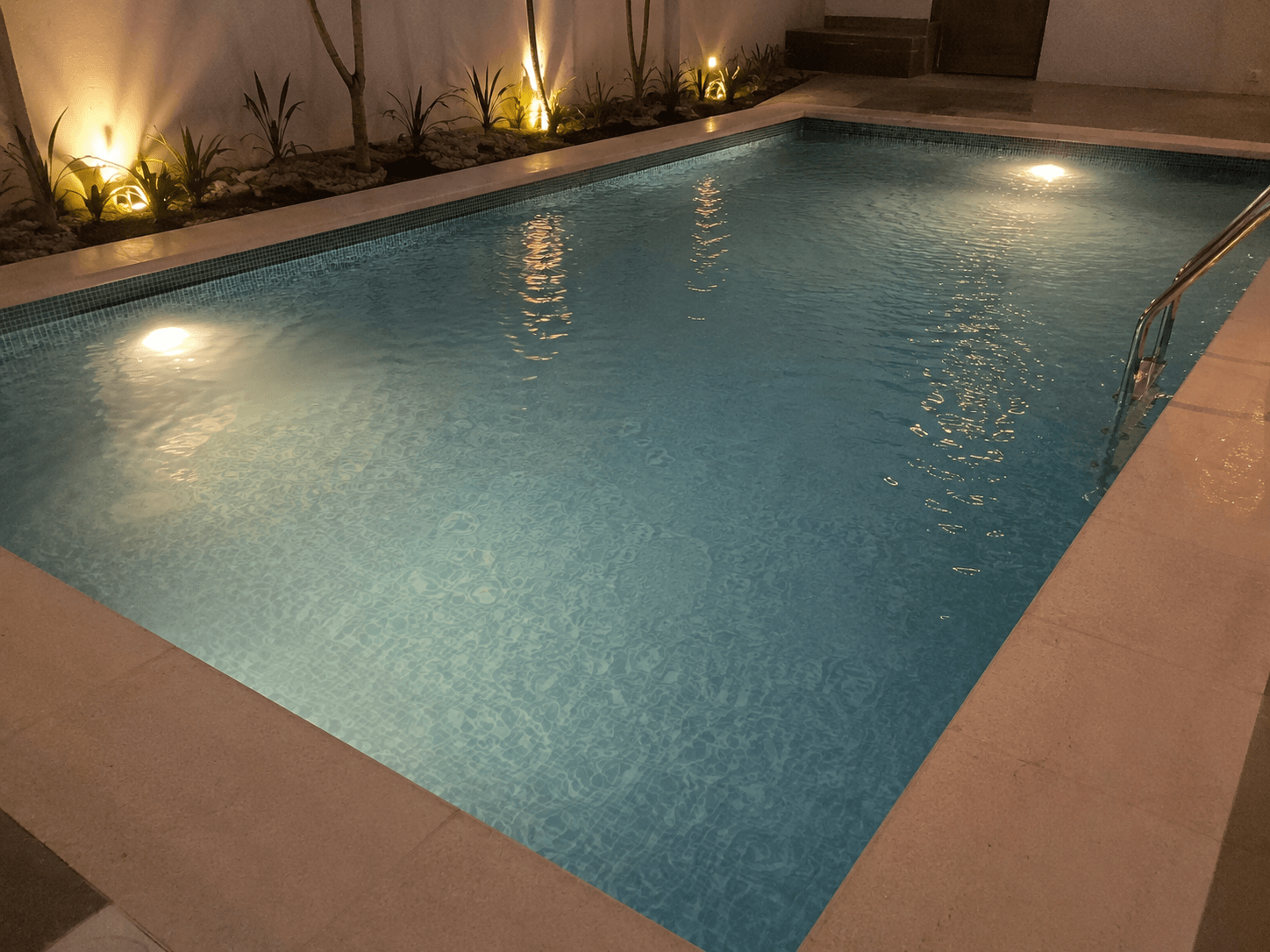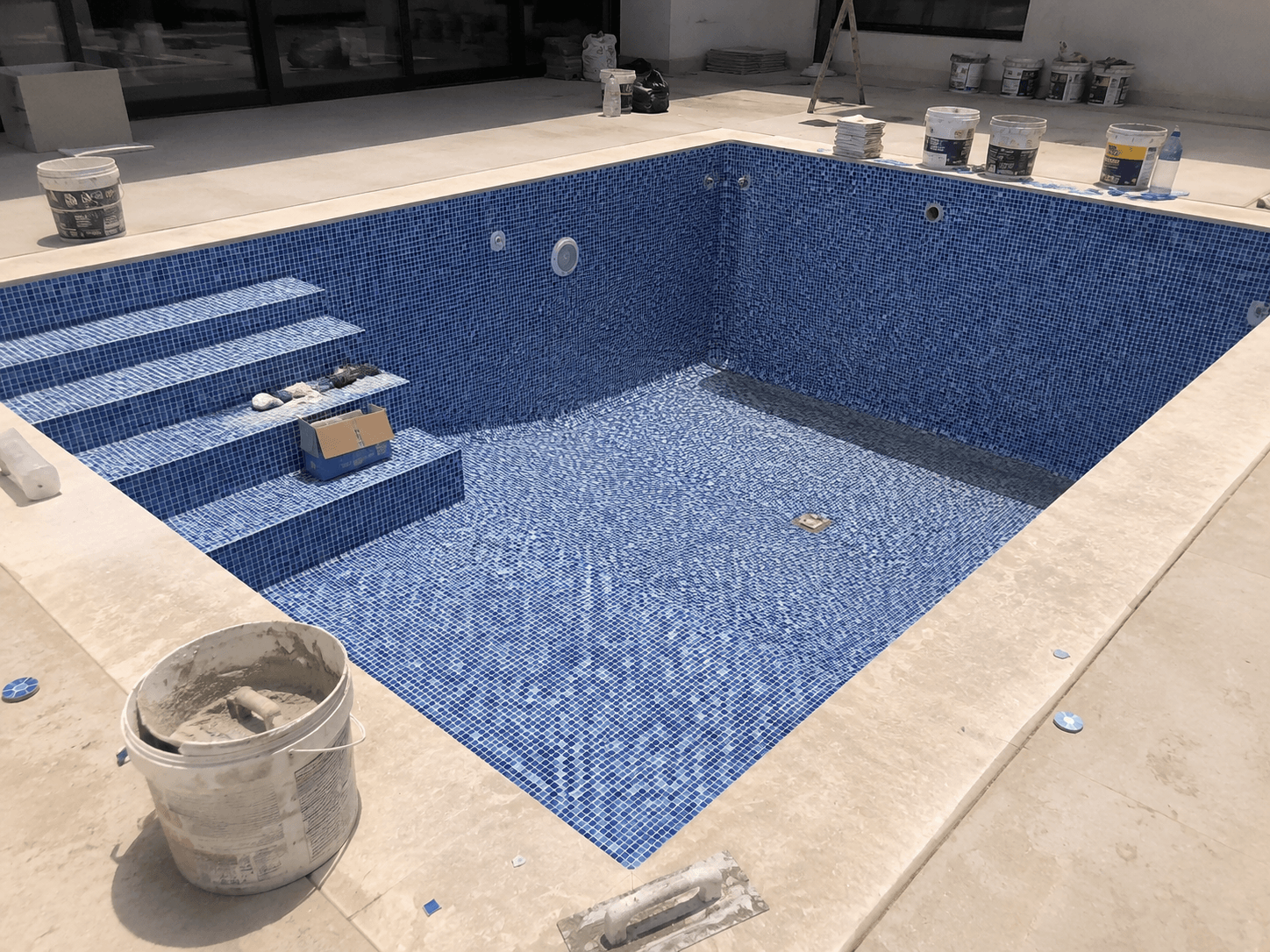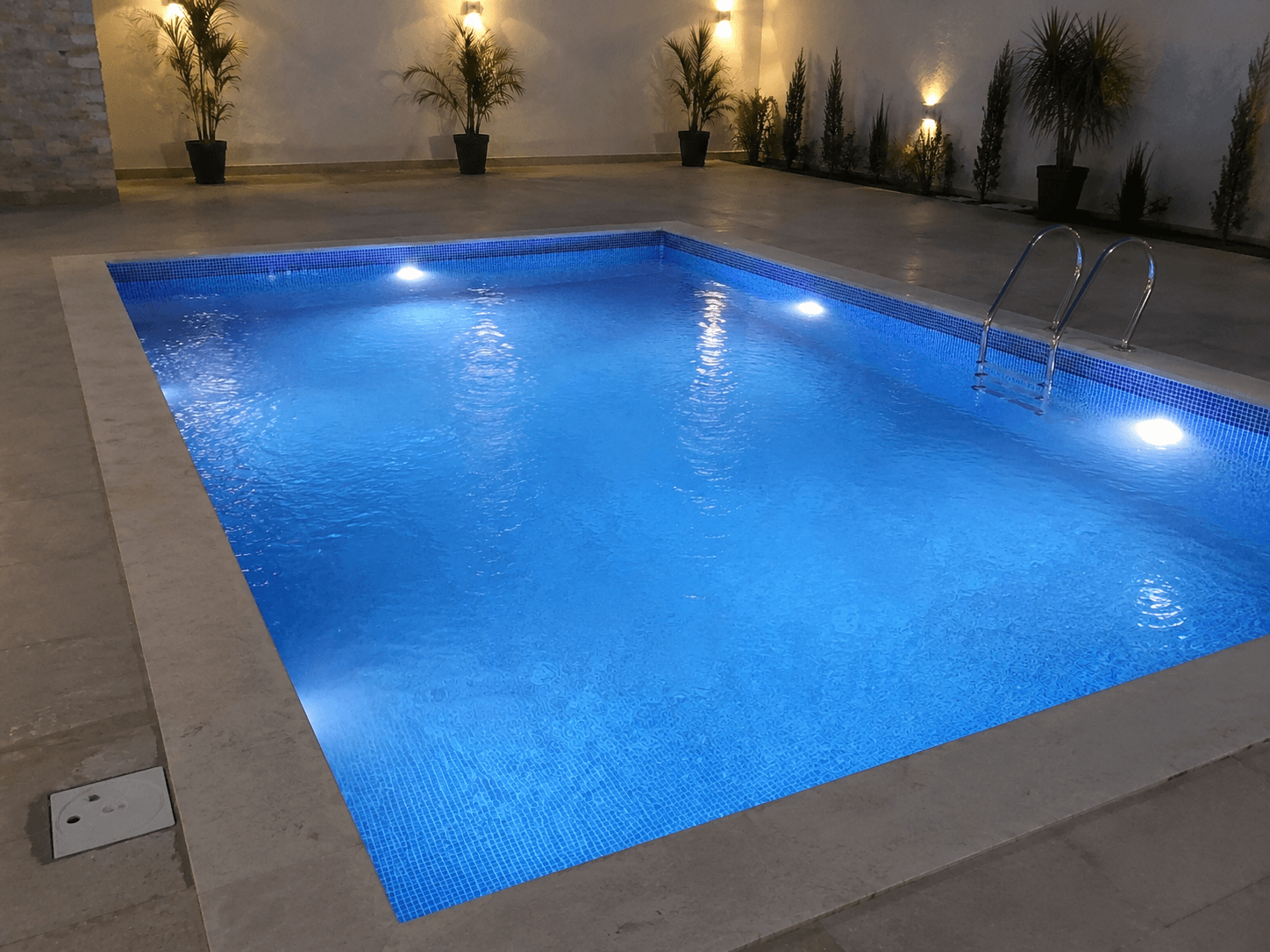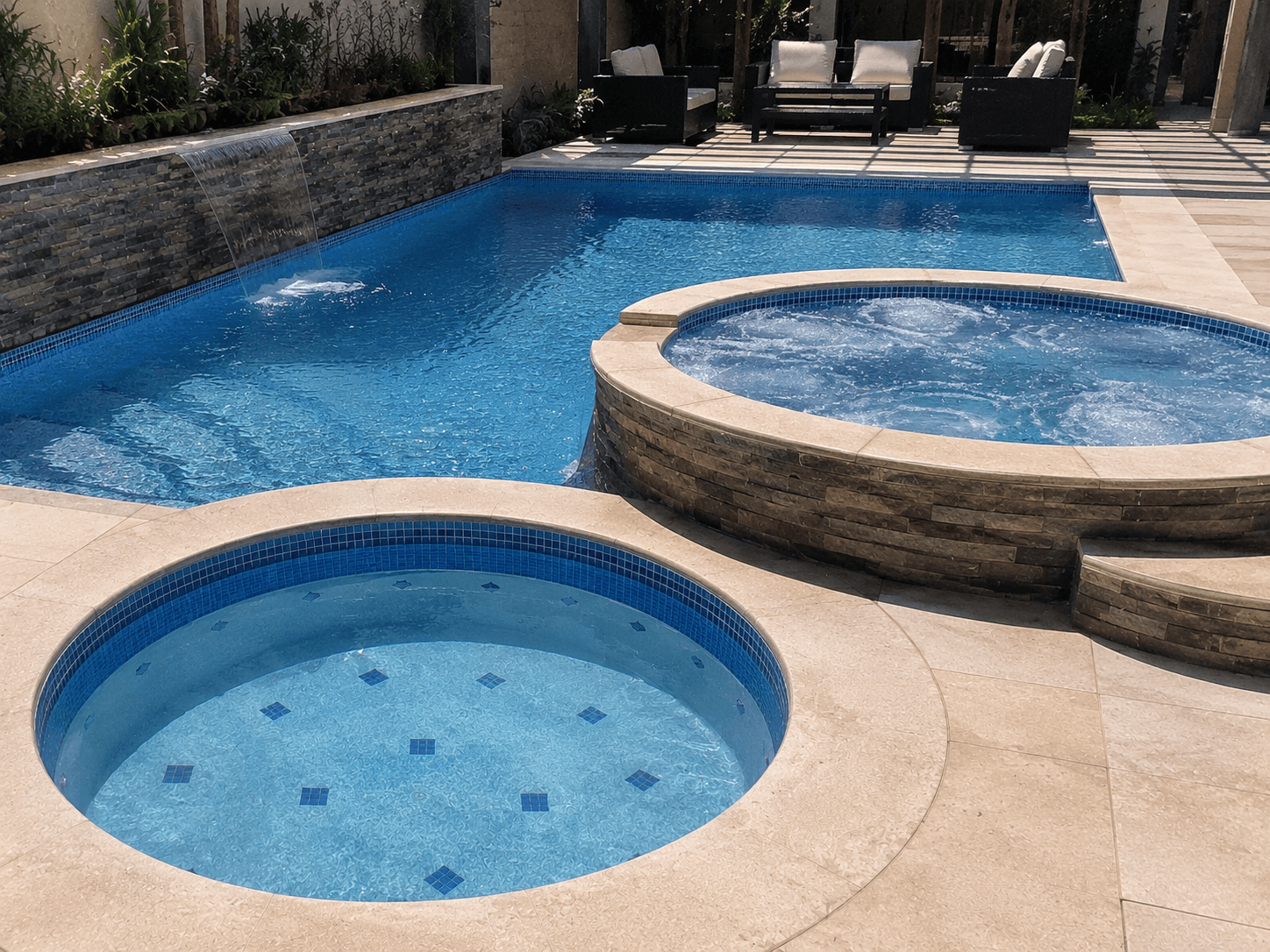
From the first dig to the last tile, your pool is in the hands of a specialist team
We design and build complete villa pools across Saudi Arabia: excavation and structure, waterproofing and lining, tiling and cladding, filtration and lighting systems and water heating, with close engineering supervision, a professional team and a real warranty at every stage.
From excavating the pool shell to handing over a complete pool, our team in Saudi Arabia delivers every detail to a high standard with a real warranty
Browse our other services in Saudi Arabia
See the stages of building a pool, from excavation to final handover, in Saudi Arabia
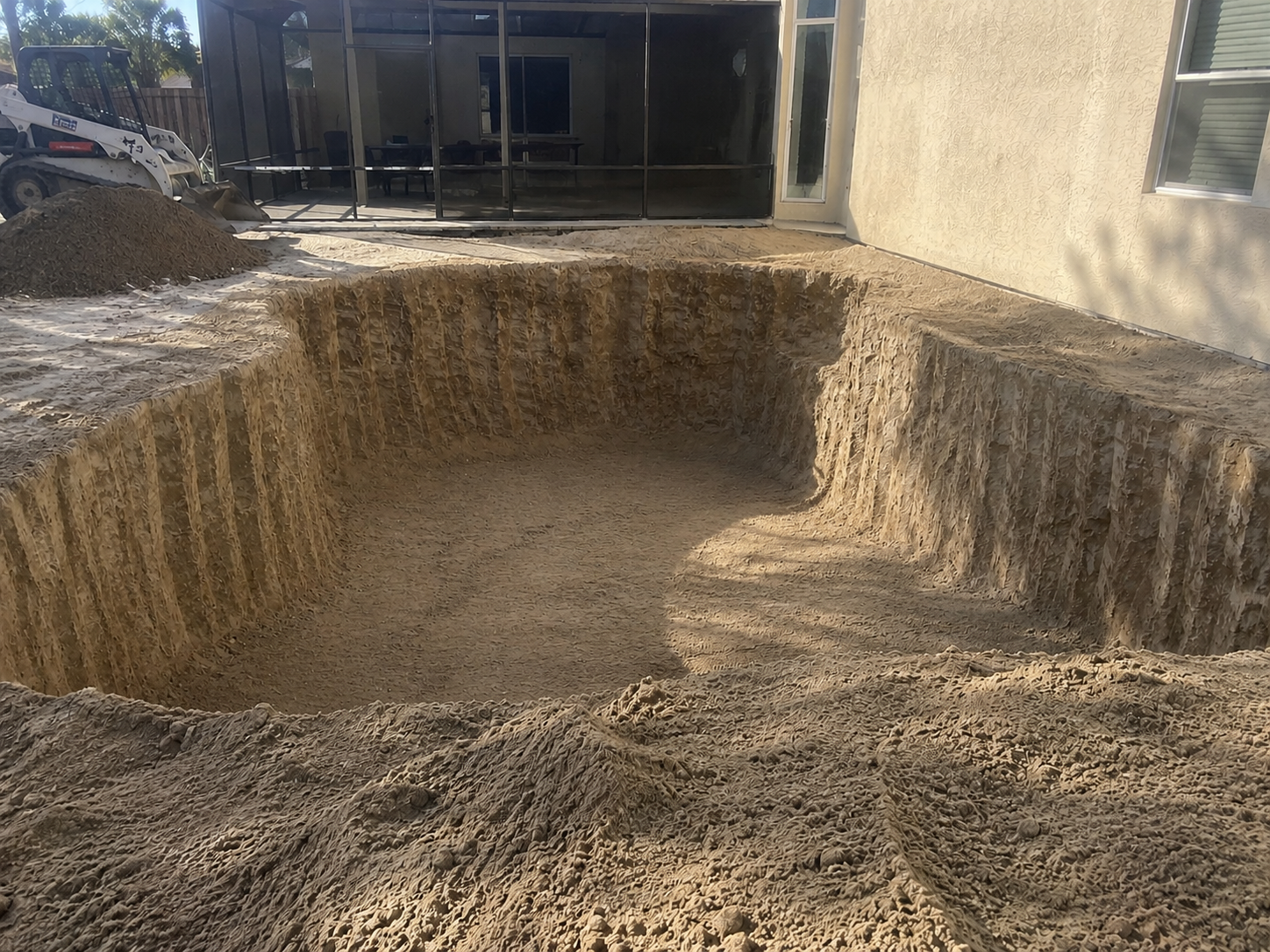
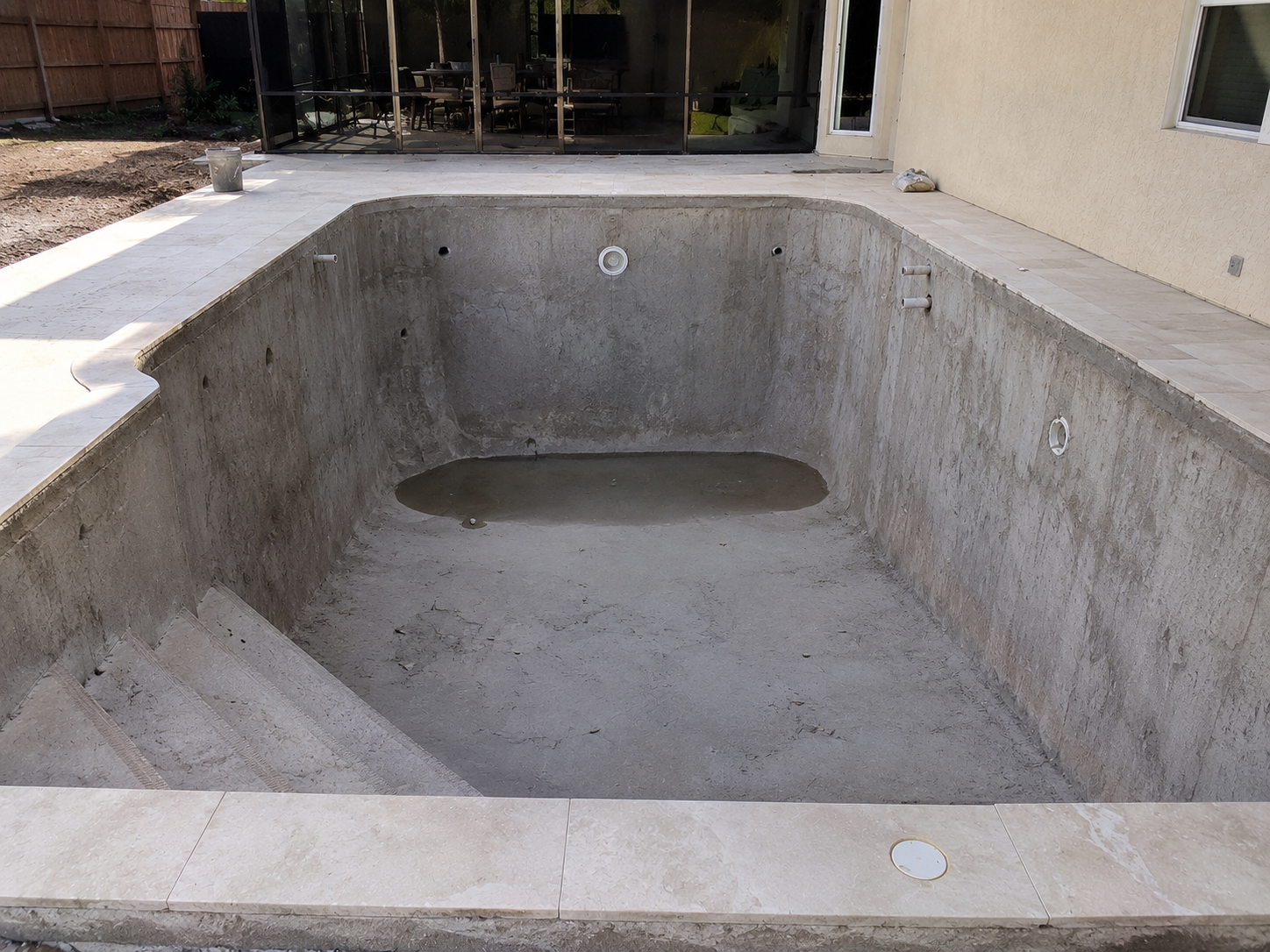
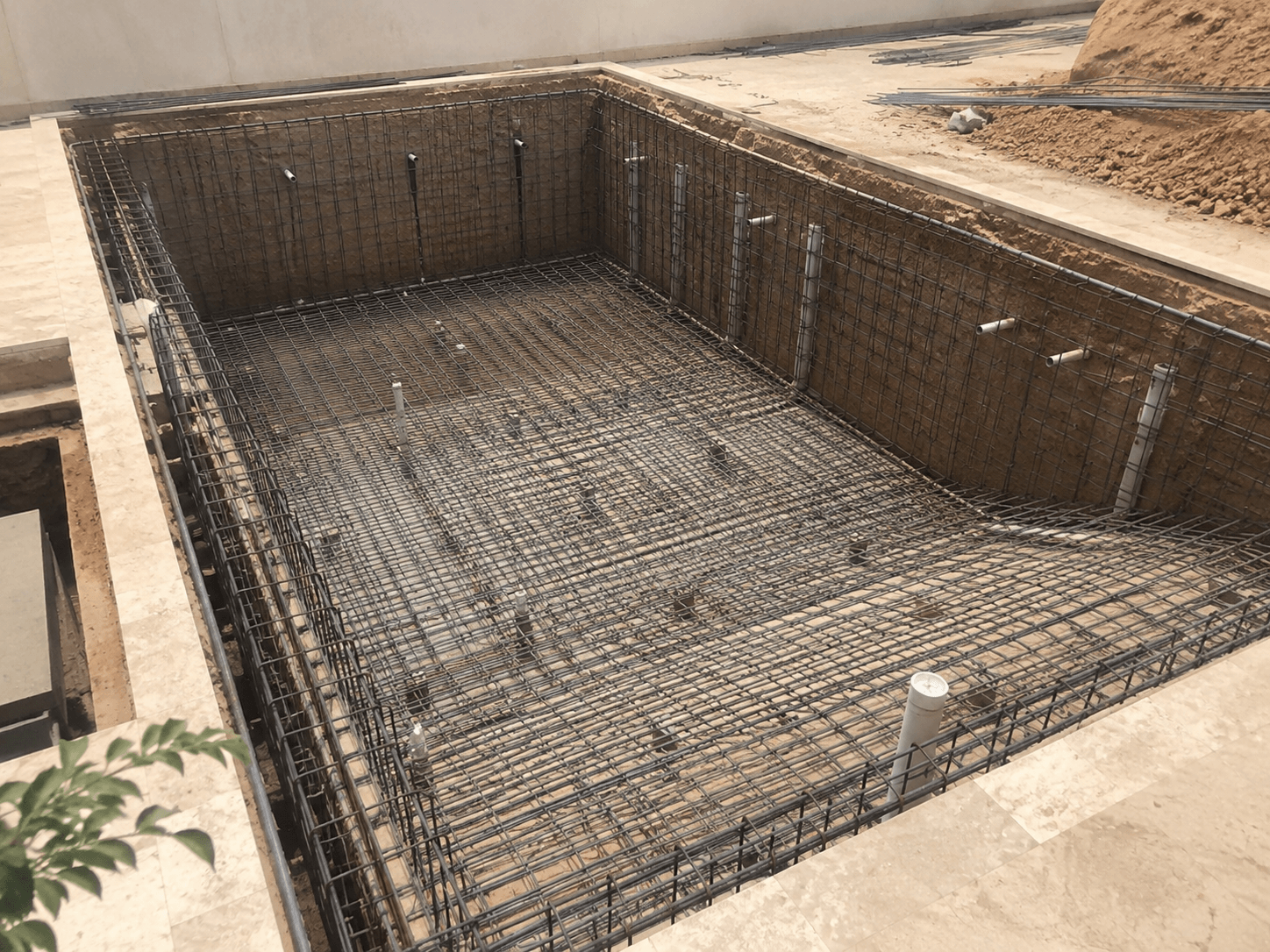
Excavating and preparing the pool shell
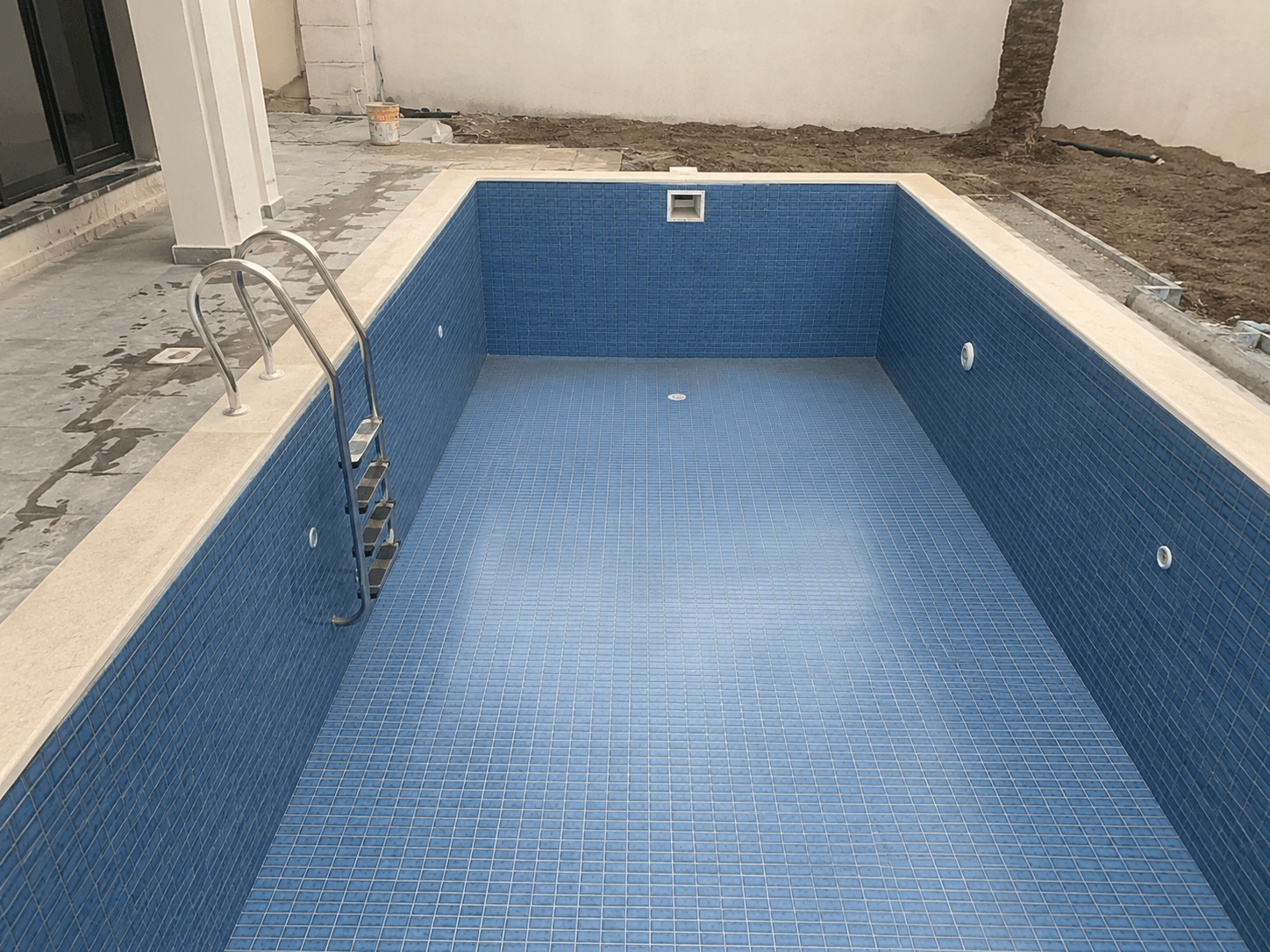
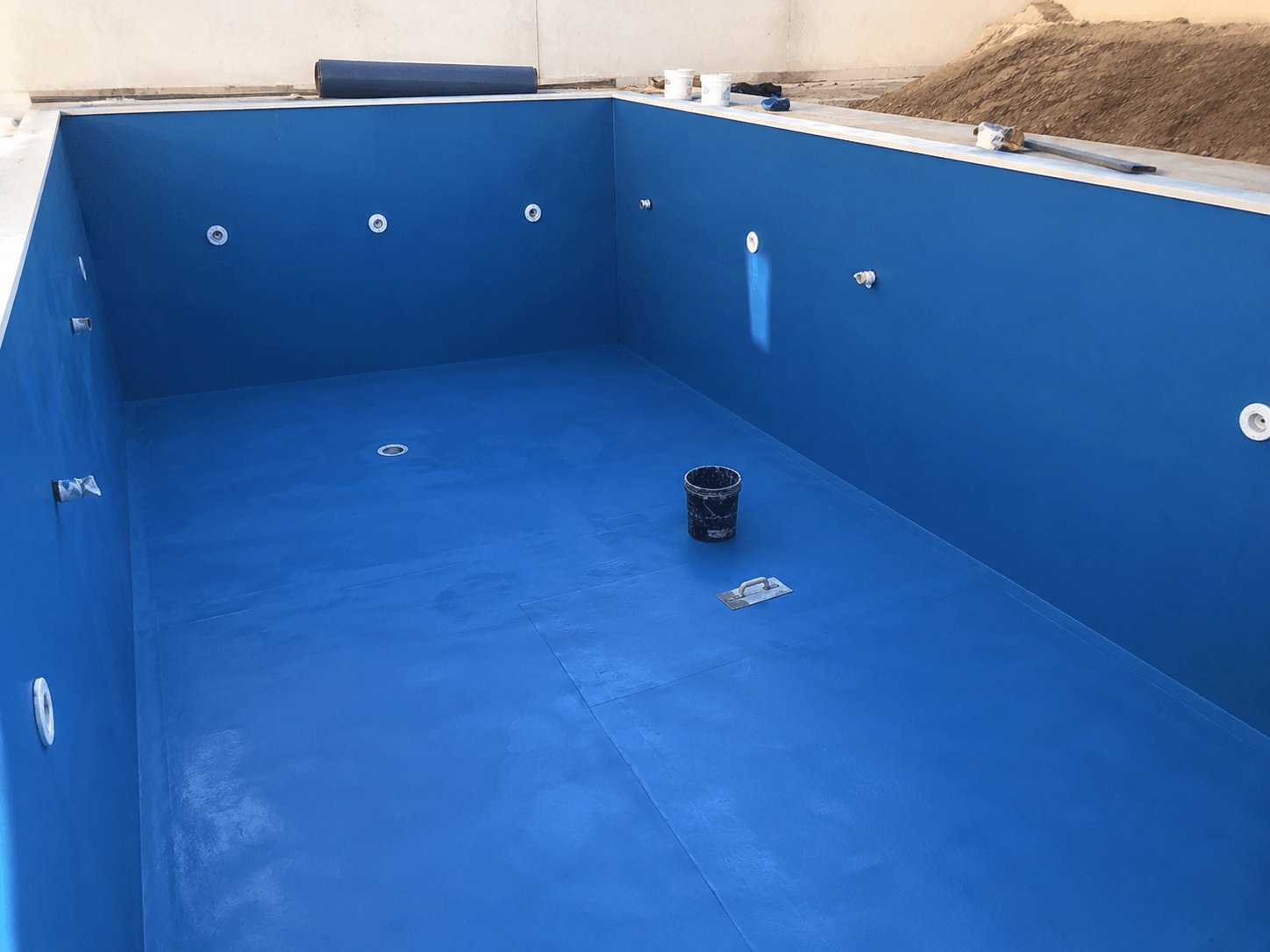
Tiling and finishing the pool shell
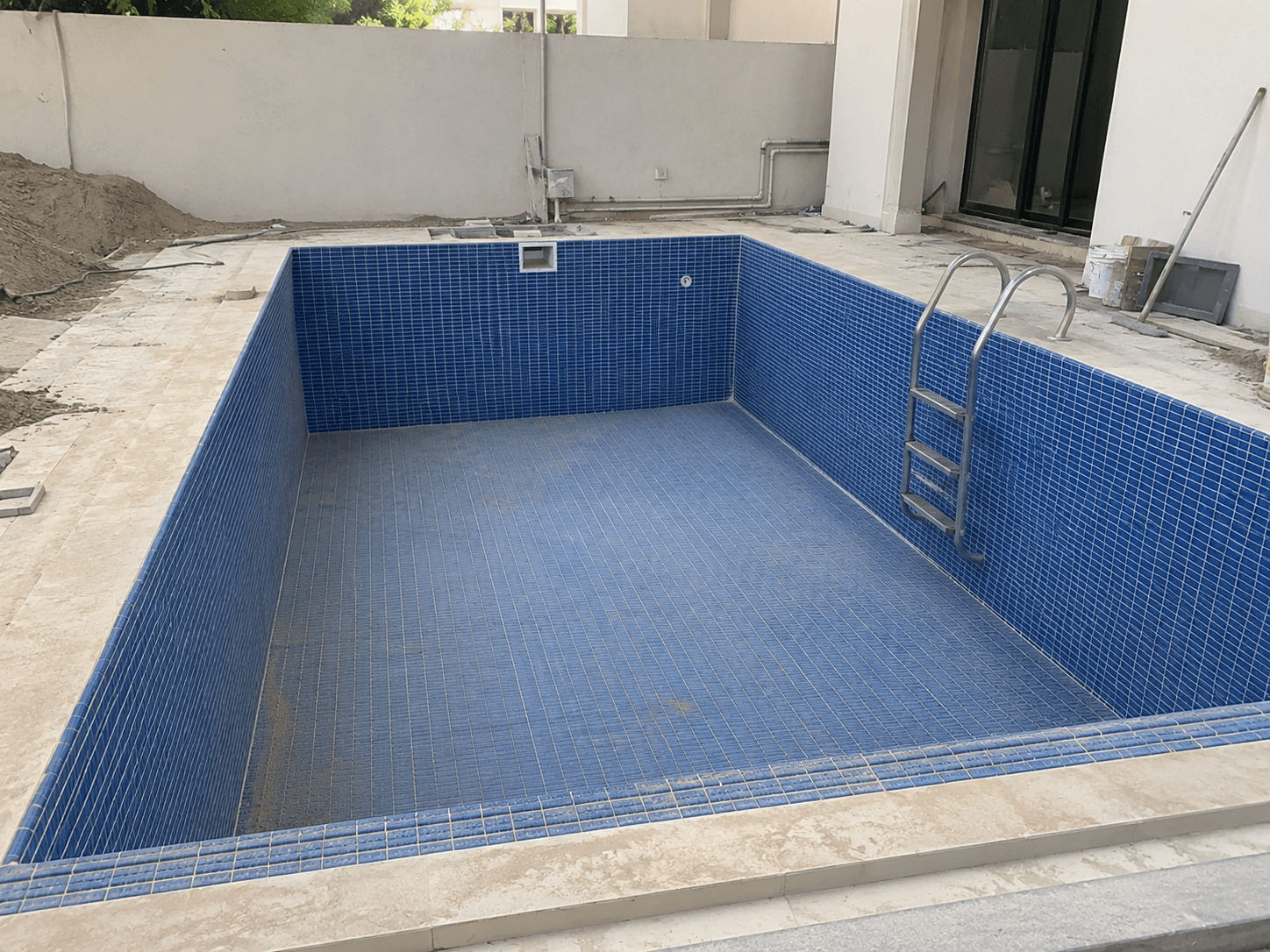
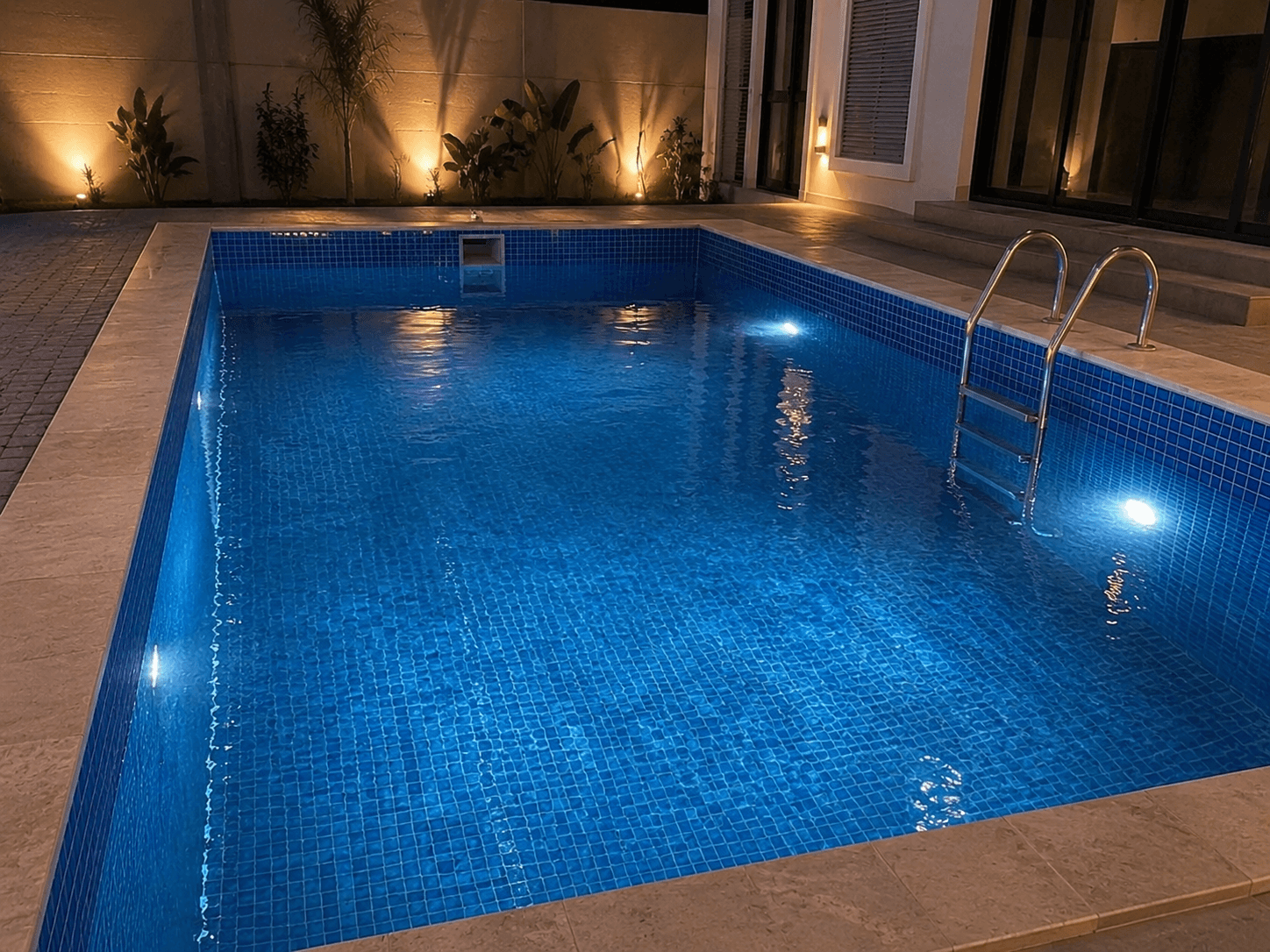
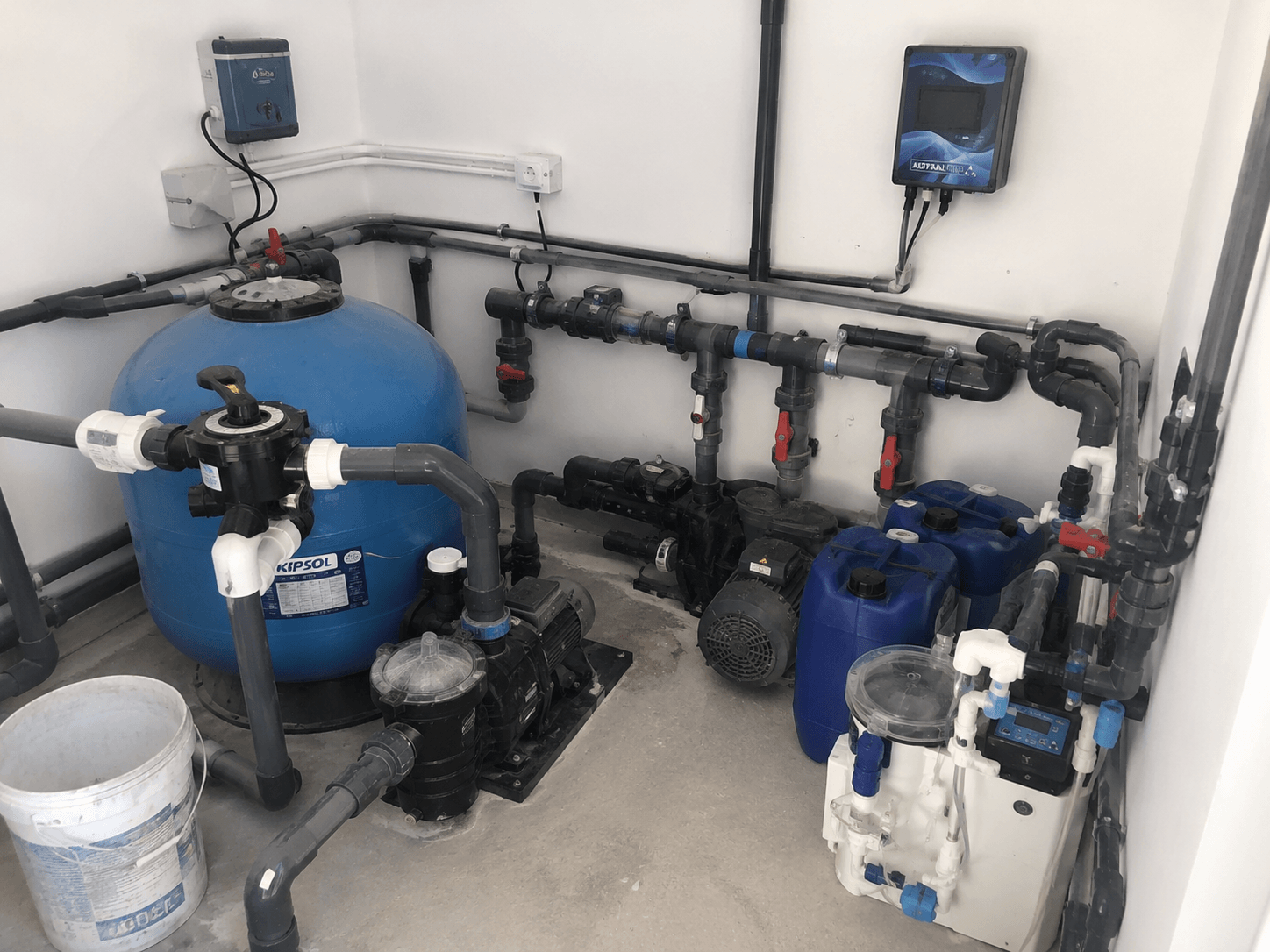
Installing lighting and filtration
Close engineering supervision and committed delivery from the first visit to handover
Thorough engineering study
A considered pool design that suits your villa and soil
Approved materials
Waterproofing and tiling to high-quality standard specifications
A complete technical team
Engineers and technicians with long experience building pools
A real warranty
On waterproofing, finishes and installed systems
From first contact to handover: clear steps with no surprises
Contact Us
Contact us by WhatsApp or phone and tell us about the pool you want
Design and engineering study
We prepare an initial pool design and a clear quote with no surprises
Site Visit
A specialist team inspects the site and assesses the soil and technical requirements
Pool construction
Our technical team builds your pool with the best materials and keeps you updated throughout
Handover & Warranty
Final pool handover with a real warranty after handover
Our headquarters is in Riyadh, and our teams deliver projects across every region of Saudi Arabia with the same quality, engineering supervision and warranty.
A villa pool is a real structural project, not just a basin of water. Its success starts with the right design and carries on through excavation, concrete, waterproofing, finishing and systems. A small mistake at an early stage tends to show up later as a leak, cracks or water that never looks clear.
This guide brings together what a villa owner should know before starting. You will find the main pool types and how they differ, the construction stages, materials, cost factors, quality checks and maintenance. You will also learn how to choose a pool construction company that gives you a clear written quotation and engineering supervision from the first visit to handover.
Villa pool design and construction at Yam Integrated Construction covers the project from the first idea to the first start up. You do not need to deal with a separate contractor for every stage. One team is responsible for design, excavation, the concrete shell, waterproofing, tiling, the pump room and lighting.
It suits villa owners who want a family pool in the back garden or on the roof. It suits palaces that need larger pools with special architectural details such as an infinity edge or water features. It also suits gated residential projects and compounds that need a shared pool built to handle heavy daily use.
It is equally suited to owners with an existing pool who want to renovate it or add a jacuzzi or a children's pool next to it. In that case we start by inspecting the old basin before suggesting anything. If the pool is part of a wider villa renovation, we coordinate its works with the rest of the refurbishment so the stages do not clash.
Before you contact any contractor, write down what you want from the pool. Who will use it most, are there children, is it for real swimming or for relaxing and the view, and do you need it in winter too. These simple answers save a lot of discussion and help the engineer propose a design that fits your family and your space without extras you do not need.
The core idea is that consistent pool quality needs integrated planning. When design, structure and systems sit with one party, there are fewer gaps between stages and it is easier to know who is responsible for any remark.
The first important decision is the type of shell. It determines design freedom, the lifespan of the pool and how it is maintained. In Saudi villas the concrete pool remains the most common choice because it handles the heat well and gives complete freedom of shape and size.
| Item | Cast concrete | Sprayed concrete | Prefabricated fibreglass |
|---|---|---|---|
| Shape freedom | High for straight shapes | Very high for freeform shapes | Limited by the mould |
| Resistance to heat and soil | Very strong | Very strong | Good with a precisely prepared base |
| Finishing options | Tiles, mosaic and stone | Tiles, mosaic and stone | Usually the factory surface |
| Adding a jacuzzi or water feature | Easy | Easy | Limited |
| Future renovation | Possible by retiling | Possible by retiling | Needs special surface treatment |
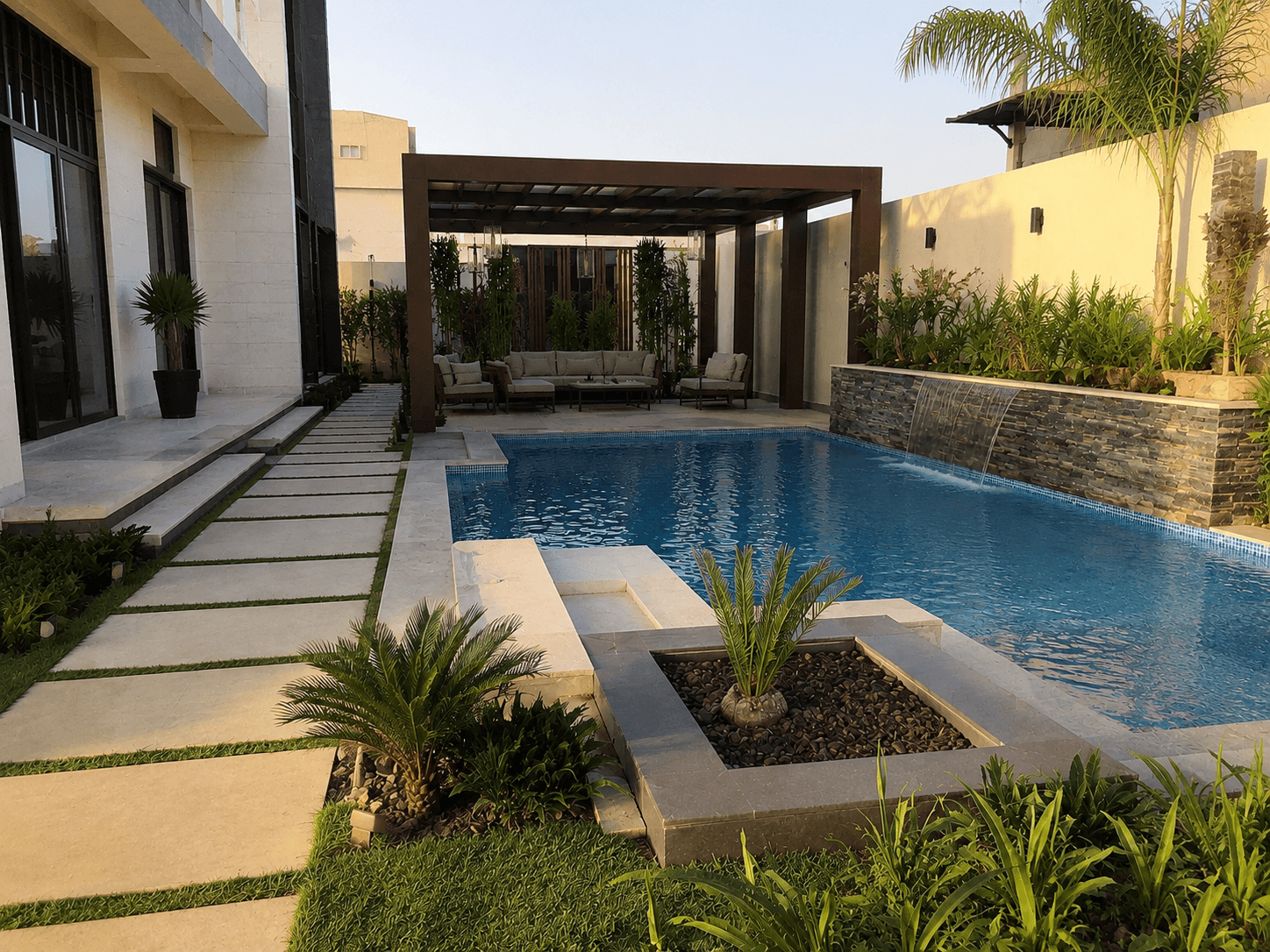
Once the shell is chosen, the details of the shape follow. There is the classic rectangular pool and the infinity edge pool that suits roofs and elevated sites. There is the perimeter overflow pool that gives a water surface flush with the deck. You can also add a shallow area for children, underwater seats or wide steps.
Every addition affects the systems. An infinity edge, for example, needs a balance tank and a suitably sized pump. That is why we discuss shape and systems together at the design stage, not after excavation. We also consider privacy when positioning the pool in relation to neighbours' windows and boundary walls. A family pool needs a screened corner and a shaded seating area close by.
The order of stages in villa pool construction is not a formality. Each stage depends on the one before it, and skipping or rushing any step shows its effect later. This is the sequence we follow on our projects.
Between stages there are internal sign off points. The team does not move from reinforcement to pouring before the engineer has checked the steel and the embedded fittings. Tiling does not start before the flood test after waterproofing has passed. These points may seem slow, but they save you breaking out and redoing work later. The client knows in advance when each sign off point will take place so they can attend if they wish.
At every stage the supervisor sends photos to the client. These photos matter because they record what lies under the tiles and inside the walls, and they are your reference for any future maintenance.
A pool is a harsh environment for materials. Water is always present, chlorine attacks surfaces and the sun is strong across most of the Kingdom. Not every material used in ordinary building is suitable for a pool basin.
Flexible cementitious coatings are usually applied in two or more coats. In some cases a crystalline waterproofing is added that reacts with the concrete and seals its pores. Polyurethane and bituminous materials are used in specific places such as the outer wall in contact with the soil, and not directly under the tiles unless they are designed for that purpose.
Many cases of falling tiles are caused by the wrong adhesive rather than the tile itself. What you need is a flexible adhesive made for submerged basins. Epoxy grout resists chlorine and algae better than ordinary cement grout and keeps its colour longer.
Do not forget the system materials. Pipes must be pressure rated and joined with correctly solvent welded fittings. Metal fixtures such as ladders and grab rails are best in chlorine resistant stainless steel. Cables for underwater lighting need waterproof boxes and connectors made for that use.
Always ask for the quotation to name each material and its type. This protects you from a cheaper substitute during the works and makes it easier to compare quotations.
Pool waterproofing is the stage nobody sees after handover, yet it decides the life of the whole pool. A leak does not only mean lost water. Escaping water can reach the soil under the villa or neighbouring walls and cause settlement or damp in the building.
Many people focus on the basin and forget the elements around it. The balance tank in overflow pools needs the same level of waterproofing because it is always full of water. The pump room needs a waterproofed floor and drainage for any water that escapes from the filter or joints, so it never reaches the villa foundations.
On sites with a high water table or saline soil, the pool also needs external waterproofing on the wall in contact with the ground. This protects the concrete from salts that attack the steel from outside. We decide whether this is needed during the site inspection, based on the location.
Ask the contractor to state the waterproofing system in the quotation by name, with the number of coats and the flood test method. Ask for photos of every layer. If you have an old pool that leaks, the repair starts by finding the source of the leak before any new waterproofing is applied.
There is no fixed price for a villa pool. The cost depends on several factors that interact with each other. Knowing them helps you read quotations properly and see where to invest and where you can save without touching quality.
Save on extras, not on essentials. The shell, waterproofing and buried pipes cannot be changed after finishing without breaking out. Extra lighting or the type of stone on the surrounding deck can be upgraded later. You can also prepare the connections for a future addition such as heating without installing the unit now.
The cost does not end at handover. Electricity for the pump and heating, sanitising chemicals and top up water are all ongoing expenses. A variable speed pump and a thermal cover reduce these expenses over the long term, so it is worth asking about running costs and not only construction costs.
When comparing two quotations, make sure the items match. The lower one may be lower because it excludes external waterproofing, the pump room or the surrounding decking.
The Kingdom is vast and its climate varies. A pool in Riyadh faces different conditions from a pool in Jeddah or Abha. Good design considers the region from the start and does not copy the same specification from one city to another.
In Riyadh, Qassim, Al Kharj and the surrounding area, temperatures are high and the air is dry. Evaporation is fast and the pool needs constant top up water. Exposed surfaces around the pool get very hot in the sun.
In Jeddah, Dammam, Al Khobar, Jubail and Yanbu, humidity is high, the soil in some districts is saline and the water table is close to the surface. This puts pressure on concrete, steel and exposed metals.
In Abha, Khamis Mushait, Al Baha and Taif, temperatures drop in winter and nights are cold. Here heating becomes essential rather than a luxury if the pool is to be used all year round.
In Tabuk, Hail, Al Jouf and Arar, summer heat meets winter cold. A pool here needs protection from the sun in summer and heating in winter if the owner wants to use it all year. Windbreaks around the seating area are recommended, because cold wind makes the pool uncomfortable even with warm water.
Our head office is in Riyadh and our teams work across many cities. That is why we adjust the specification to the region before writing the quotation, not after.
You do not need to be an engineer to follow the quality of your pool. It is enough to know what should happen at each stage and to ask for proof that it happened. A serious contractor welcomes these requests because they protect both sides.
At final handover, walk around the pool with the supervisor. Check the copings and decking for broken tiles or wrong falls. Switch on the lighting at night to see how it is distributed. Ask for the systems to be run in front of you and make sure you understand the control panel. Record any remark in writing with its date so it is fixed within the contract scope, and keep a copy of the final drawings.
The best way to avoid these mistakes is to write the inspection points into the contract from the start. Then every test is an agreed step and not a surprise request halfway through the project.
Handover is not the end of your relationship with the pool. Regular maintenance is what keeps the water clear and the tiles and equipment in good condition. Most major problems begin with small neglect that builds up over time.
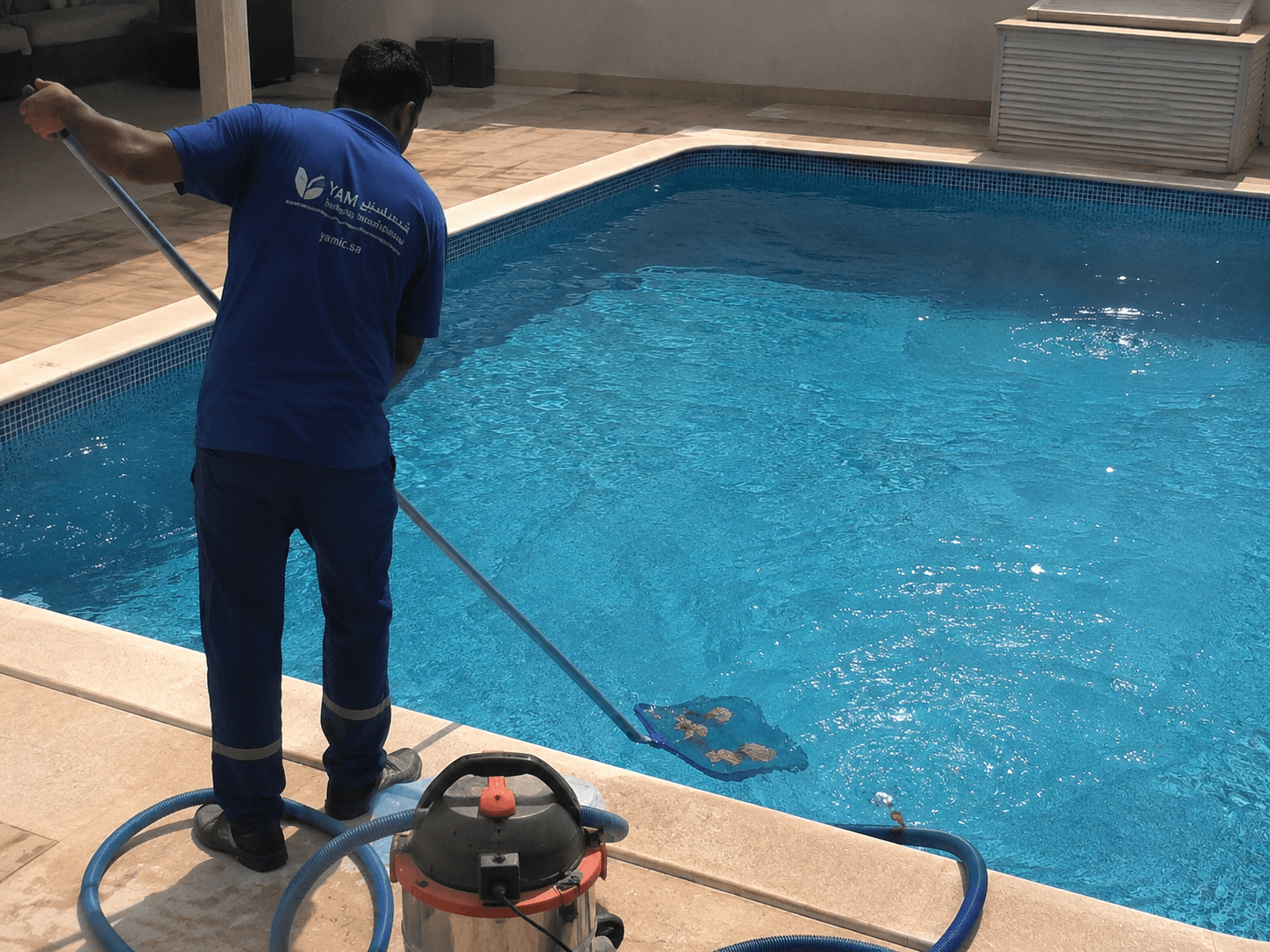
Brushing the walls and floor prevents algae building up in the corners. Vacuuming the floor removes sediment the filter does not catch. Cleaning the waterline prevents the limescale deposits that spoil the look of the mosaic.
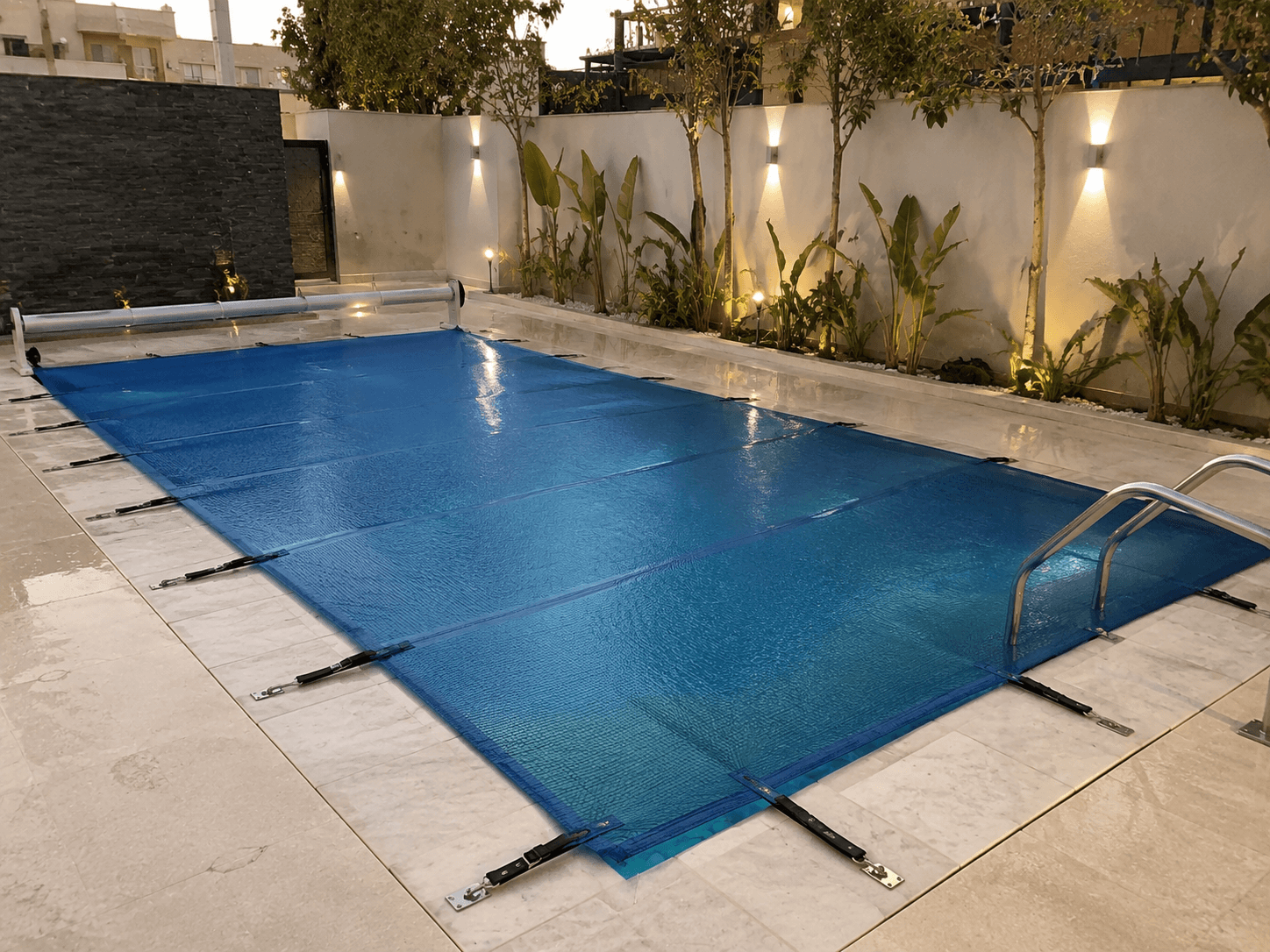
In summer, evaporation and chlorine consumption increase, so the water needs closer monitoring. In winter, if use drops, do not drain the pool completely, because an empty basin can be affected by soil and groundwater pressure. It is better to reduce running hours while keeping the water balanced and to cover the pool to protect it from dust and leaves.
At YAMIC we explain the basic maintenance routine at handover and give you the operating manual. You can also request a periodic maintenance contract if you prefer a specialised team to look after the pool for you.
Choosing a contractor is a decision that goes beyond comparing two numbers. The pool stays with you for a long time and hidden defects appear after handover. Look for a pool construction company that explains its way of working clearly and commits to it in writing.
Be careful with a quotation that gives a lump sum without details, one that promises a perfect result without seeing the site, and a contractor who asks for most of the amount before work begins. These are signs worth pausing on and asking more questions before you sign. A clear quotation protects you and the contractor alike.
We serve villas, palaces and projects from our head office in Riyadh and reach Jeddah, Dammam, Makkah, Madinah, Abha, Tabuk and other cities. If you are planning a new pool or renovating an existing one, you can contact us to arrange a site inspection.
A villa pool is used by adults, children and elderly family members alike. That is why safety starts at the design stage and is never left to the end. Every safety feature added during construction is easier and more economical than adding it after handover.
Suction outlets in the floor need purpose-made covers that prevent hair or clothing from being drawn in. It is better to spread suction across more than one outlet so it is never concentrated at a single point. Steps should be comfortably wide and evenly spaced, with a fixed handrail for getting in and out. In a deep pool, the transition from shallow to deep should be gradual and easy to see.
Water and electricity call for strict precautions. Underwater lights are low voltage and designed specifically for pools. The electrical panel includes earth leakage protection, and every metal element near the basin is bonded to earth. Switches and sockets are placed away from the splash zone and protected from water. Outdoor lighting along walkways and steps reduces trips and falls at night.
Pools in residential compounds and projects need a higher level of precaution. Clear guidance signs are placed at the entrance and shallow areas for children are defined separately. A place is set aside for rescue equipment such as a ring buoy and a long reaching pole close to the edge. Night lighting is bright enough to see the whole floor of the basin.
At Yam Integrated Construction we discuss the safety features with you at the design stage and list them item by item in the quotation. That way you know exactly what will be installed in your pool before excavation begins, and you can have peace of mind about your family after handover.
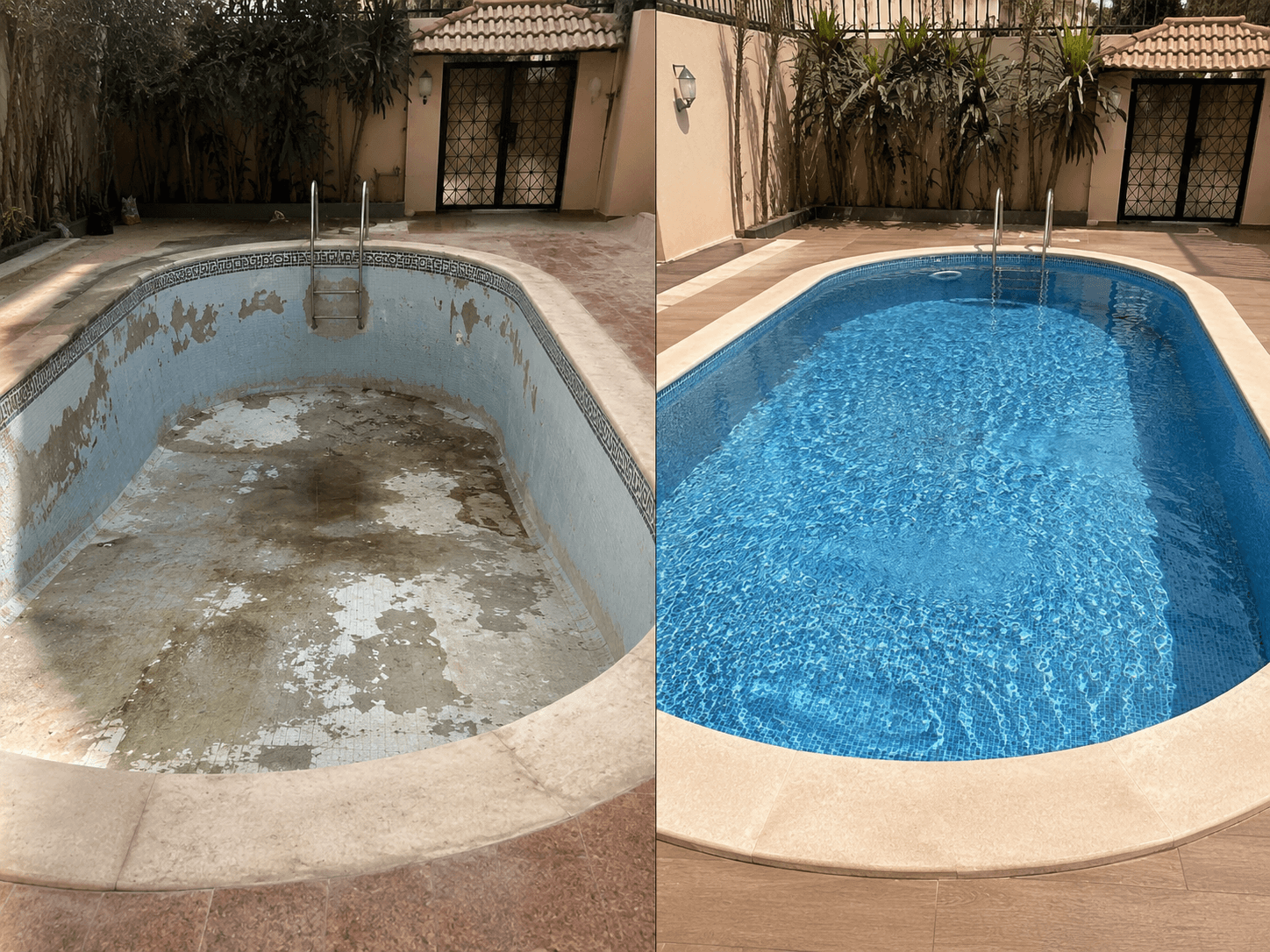
Many villas have an existing pool that is no longer comfortable to use. The tiles are peeling, the water level keeps dropping or the equipment uses more electricity than it should. The first question is not what to change but why the problem appeared, because laying new tiles over failed waterproofing brings the same problem back after a while.
| Level | What it includes | When it suits |
|---|---|---|
| Surface refresh | Deep cleaning, regrouting and repairing scattered tiles | When the waterproofing and structure are sound |
| New finish | Removing the tiles, redoing the waterproofing and retiling | When peeling is widespread or there is damp behind the tiles |
| System upgrade | Pump, filter, lighting and controls with newer technology | When filtration is weak or consumption is high |
| Reshaping | Changing the shape or depth, or adding steps and in-water seating | When the pool no longer suits the family's current needs |
Working on an existing pool reveals things that only show once finishes are removed. The quotation should therefore state how any surprise will be handled and how it is approved before work goes ahead. The site needs more protection because the garden, decking and seating areas are already in place. It is important to keep photos before and after removal to document the real condition of the structure. It also helps to ask for a written report of the inspection results before choosing a level. If the pool is very old, upgrading the systems can be an opportunity to reduce both electricity and chemical use.
At Yam Integrated Construction we start with the inspection, then set out the options clearly in writing so you can choose the level that suits your pool's condition and your budget, without paying for work it does not need.
A pool is never built in isolation. Around it there is a garden, walkways, lighting, irrigation and drainage, and often outdoor seating and shades. If each team works without coordination, trenches are dug twice and finished work gets broken. The project needs one plan that sets the order of works and who is responsible for each part.
Some trees shed leaves heavily and overload the filter and skimmer. Others have strong roots that press on pipes and walls over time. It is better to choose low-litter plants and set them at a suitable distance from the basin. In hot regions, light shades and well-chosen trees help reduce the heat of the decking around the water. In coastal cities, plants that tolerate humidity and salt are chosen, and in the cooler highlands, plants that are not affected by the cold are preferred.
The seating area around the pool needs planning from the start. Shade positions and their footings are fixed before the decking is poured so it does not have to be drilled later. Light-coloured decking that does not hold heat in the sun is chosen. The prevailing wind direction is considered so it does not carry dust and leaves into the water. If privacy from neighbours is needed, walls and taller planting are planned together with the design.
When the pool, garden and outdoor works are with one contractor, overlaps are reduced and you know who to contact about any issue. You can look at our interior and exterior design service to see how a pool is integrated into a complete garden design. At Yam Integrated Construction we set the coordination schedule between teams before work starts and follow it under engineering supervision, so the outdoor space comes together as you planned it.
Building a pool at a villa where the family lives needs advance planning. Machinery comes in, soil goes out and workers move around the yard. The better you prepare the site and the household before work starts, the more smoothly this stage goes, with the least disruption.
The excavation is a hazard for children, especially after working hours. It is therefore surrounded by a clear barrier and its access points are closed every day. Working hours are agreed with the contractor to respect the privacy of the home and prayer and rest times. Where possible, it helps to give workers an entrance separate from the family entrance.
Excavation and concrete pouring bring traffic, dust and noise. Letting neighbours know in advance and keeping the street in front of the house clean preserves good relations. Concrete trucks and soil removal are scheduled so they do not block the road.
Weather affects how the work progresses. In the hot summer, pouring and curing concrete needs extra care, and working hours are arranged away from the peak heat. In rainy areas such as the southern highlands, the excavation is protected from rain and flash floods. Many owners prefer the pool to be ready before the season the family uses it most, so discuss timing with the contractor early and do not leave the decision to the last moment.
At Yam Integrated Construction we agree the site plan with you before starting, whether in Riyadh, Jeddah, Dammam or any other city. We send you regular photos so you can follow progress with peace of mind about your home and family.
The questions clients ask us most before starting a pool project
It depends on the pool size and design. We set a clear timeline after the site visit and agreeing the scope.
Yes. We carry out a complete engineering study of the site and soil before defining the scope and the quote.
Yes. We give a real warranty on the work and materials, and explain the details before we start.
Yes. We are headquartered in Riyadh and deliver projects in all cities and regions of Saudi Arabia: Jeddah, Makkah, Madinah, Dammam, Khobar, Taif, Abha and more.
Of course. We take on complete pools or a single stage, whether excavation, waterproofing, tiling or anything else you need.
Payment is made in installments linked to execution stages, agreed upon with you in detail before the project starts.
In many cases it can, after a structural study of whether the roof slab and columns can carry the weight of the water. We confirm feasibility after a site inspection and a review of the building drawings, and we use waterproofing designed for roofs.
A concrete pool gives more freedom in shape, size and finish and handles heat and soil well. A prefabricated pool is quicker to install but is limited to the mould sizes and needs a suitable route to transport it.
A skimmer is an opening in the pool wall that draws in surface water and leaves, with the water level slightly below the edge. An overflow channel lets the water spill over the edge into a perimeter channel so the surface looks flush with the deck, and it needs a balance tank.
It depends on the site. In areas with a high water table or saline soil, such as some districts of coastal cities, external waterproofing is recommended to protect the concrete and steel.
Glass mosaic and porcelain rated for pools are suitable choices because they absorb almost no water. What matters is that they are laid with a flexible adhesive made for submerged basins and a chlorine resistant grout.
Yes. The connections and the space for the unit in the pump room can be prepared during construction. When you decide later, the heater is installed without breaking out or altering the basin.
Watch the water level with the pump switched off and compare the loss with normal evaporation in the same conditions. If the drop is greater, or damp appears around the pool or in the pump room, ask for a specialist inspection.
Yes, we build pools for villas, palaces, residential compounds and projects. For shared pools we plan filtration and sanitising systems that suit heavier use and higher safety requirements around the basin.
Leave your details and WhatsApp will open with your message ready to send to our support team.