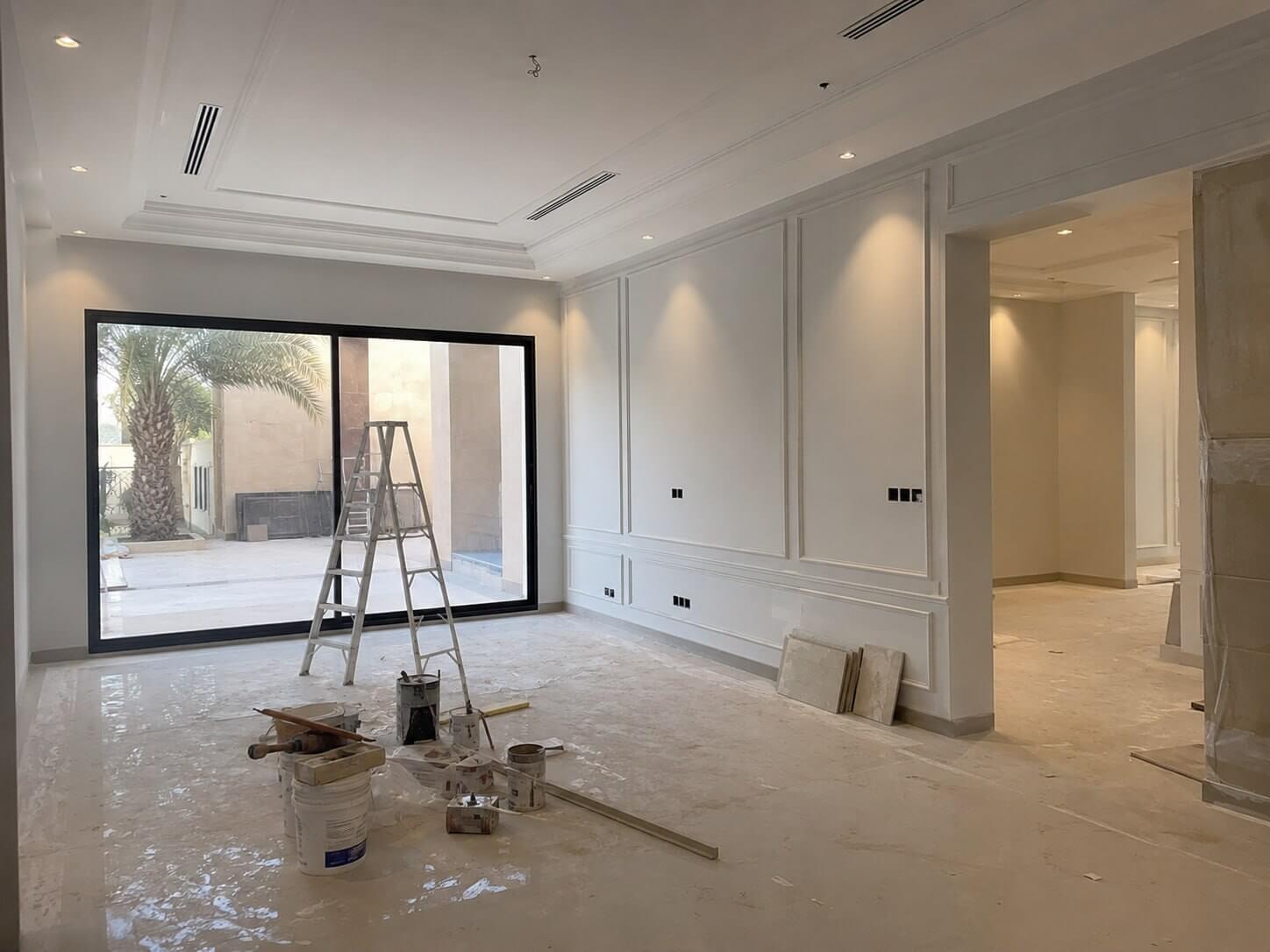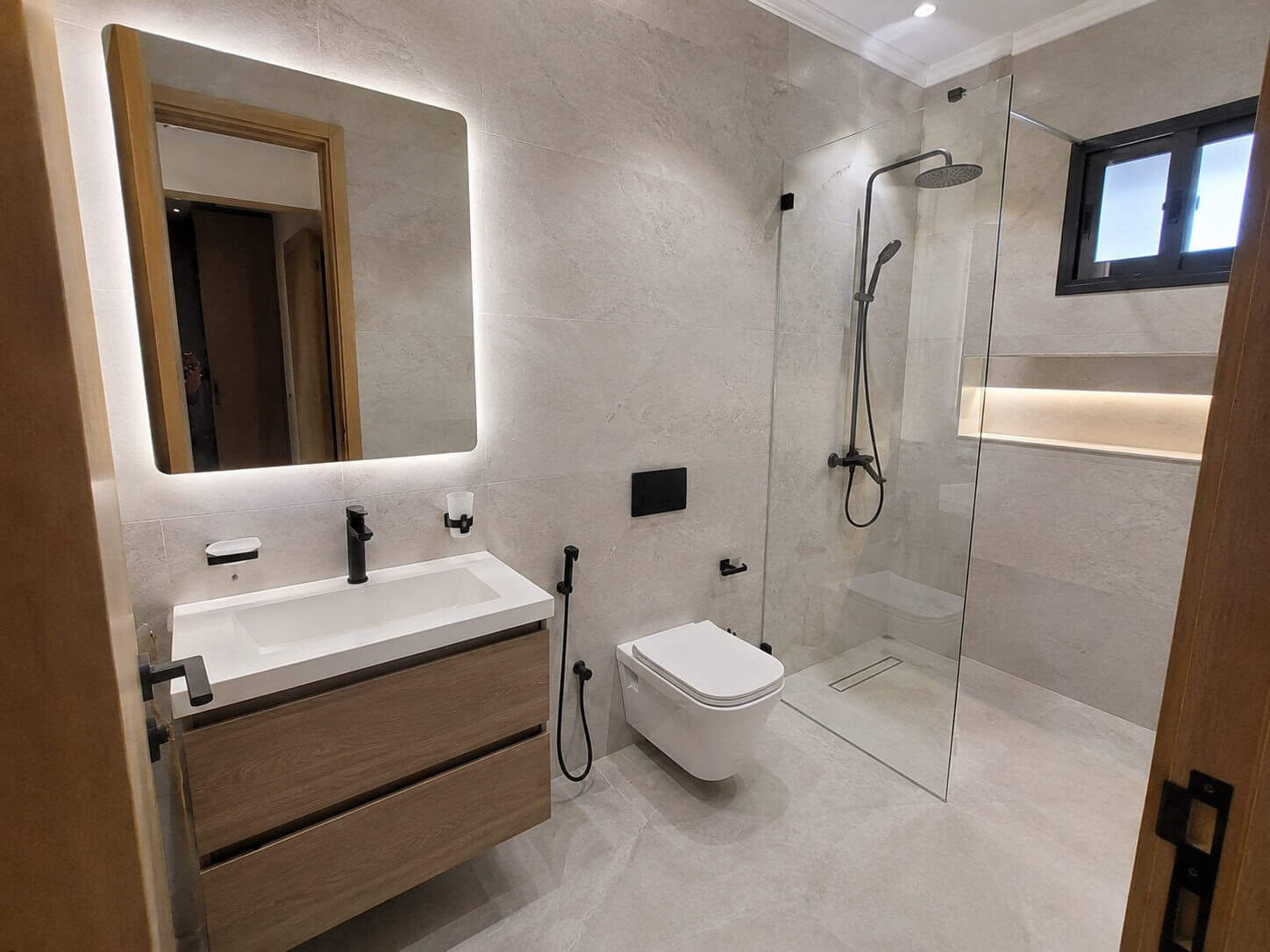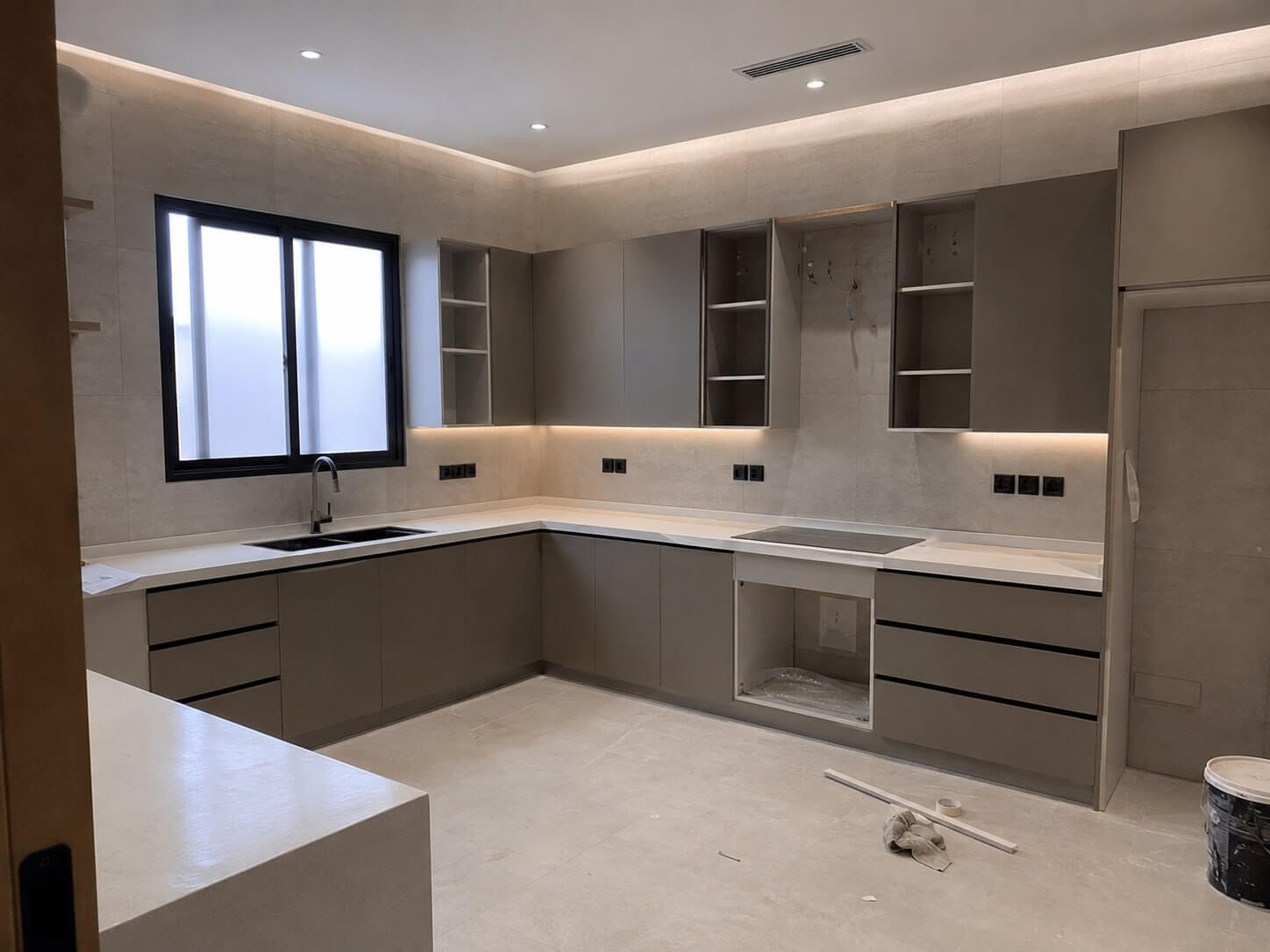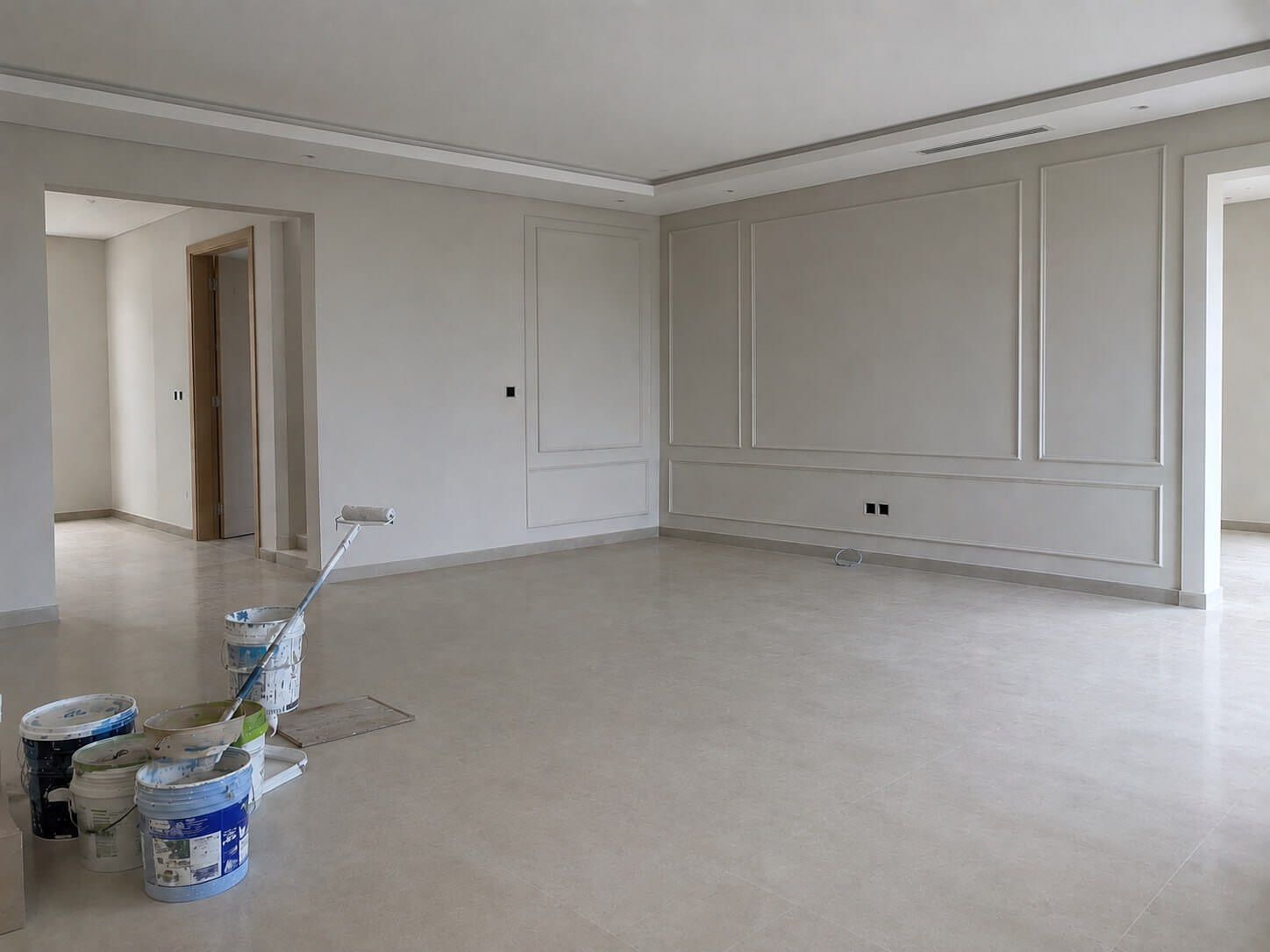
From the engineering inspection to the final finishing touch, your renovation is in safe hands
We carry out a thorough engineering inspection and complete renovation of villas and homes: facade renovation, roof insulation and damp proofing, bathroom and kitchen renewal, electrical and plumbing maintenance and full finishing, with engineering supervision, a professional team and a real warranty at every stage.
From inspecting the structure to the final finishing touch, our team in Saudi Arabia delivers every detail to a high standard with a real warranty
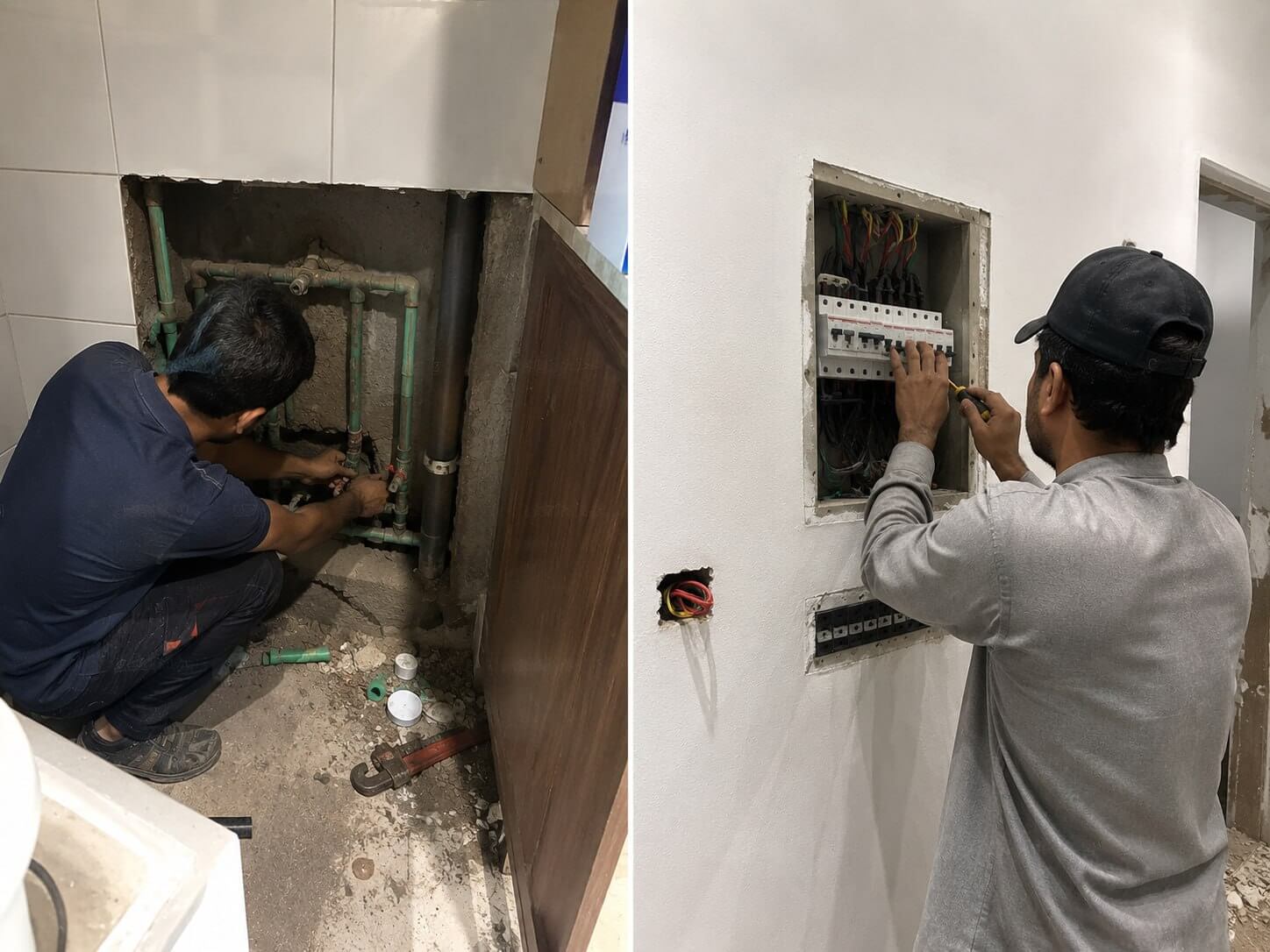
Browse our other services in Saudi Arabia
See for yourself the difference we make when renovating villas and homes, from the first day to handover
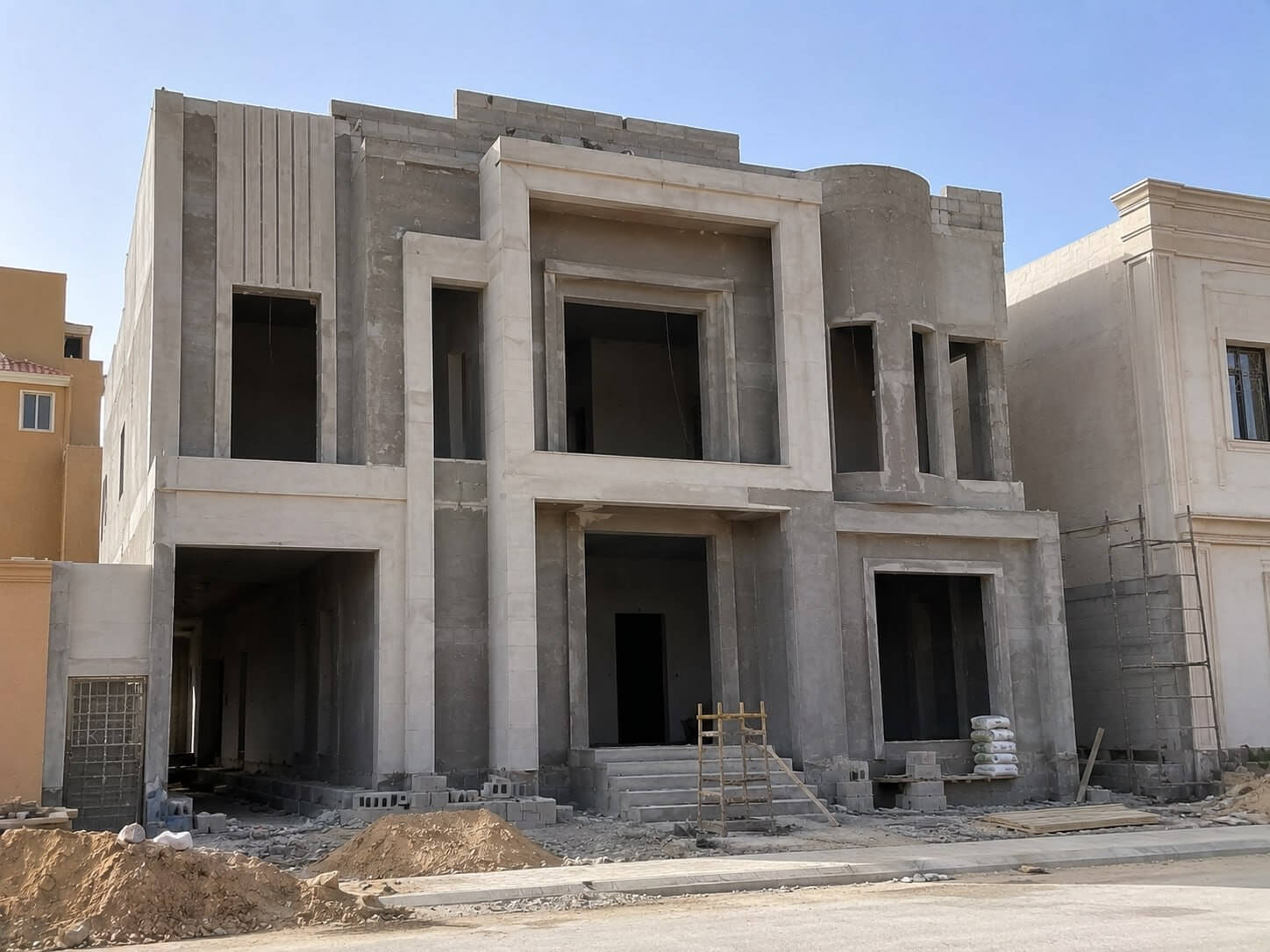
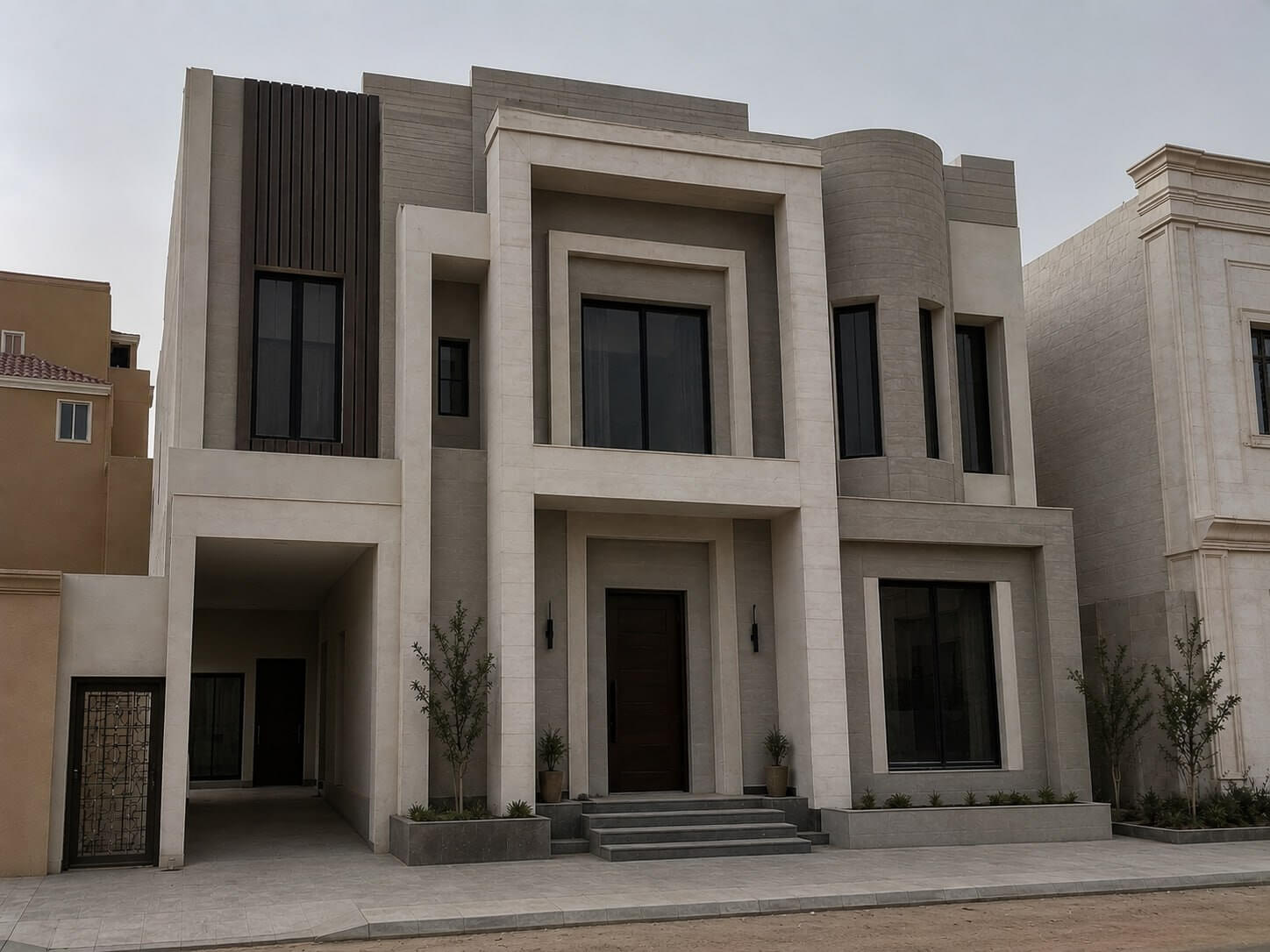
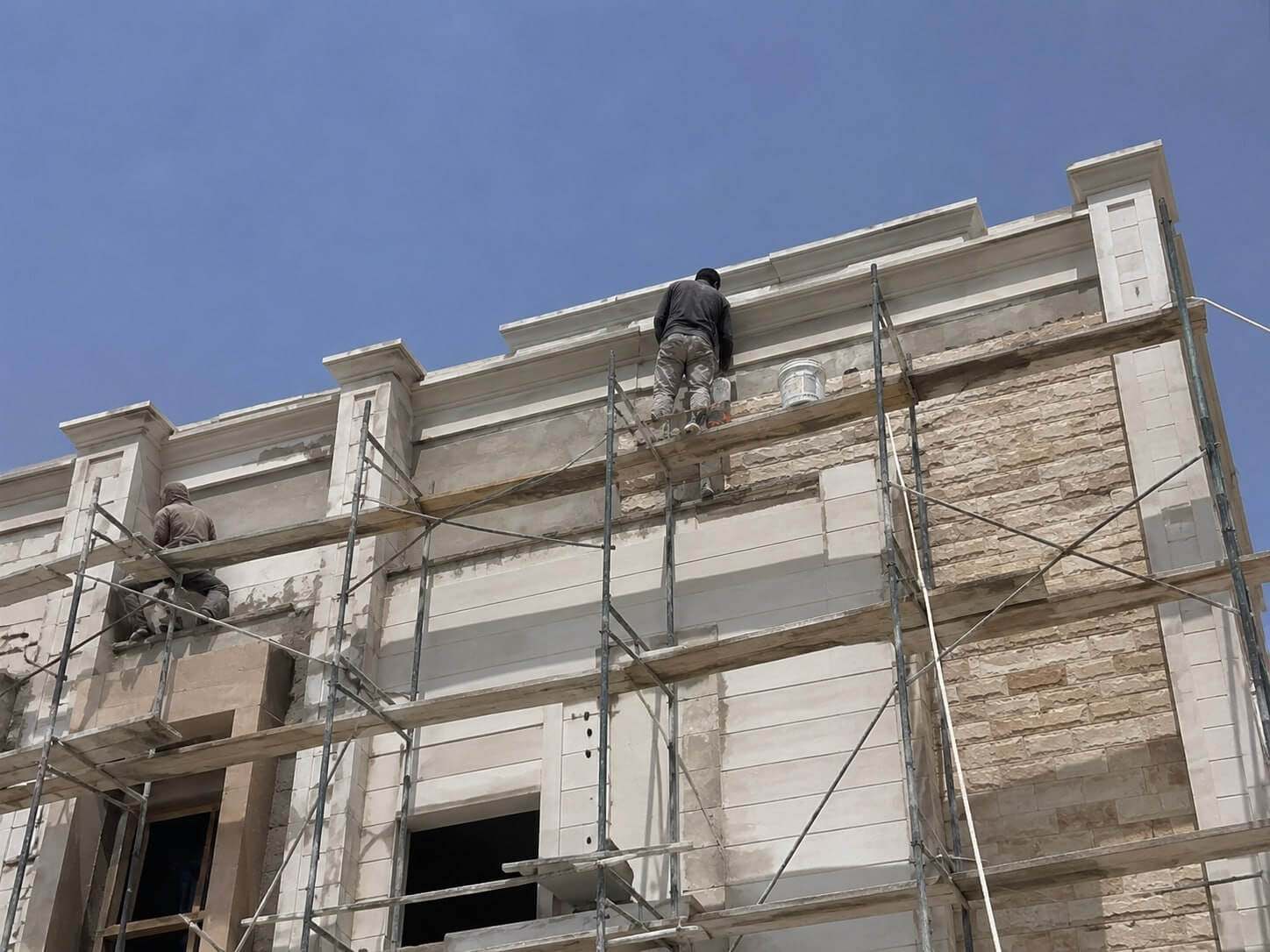
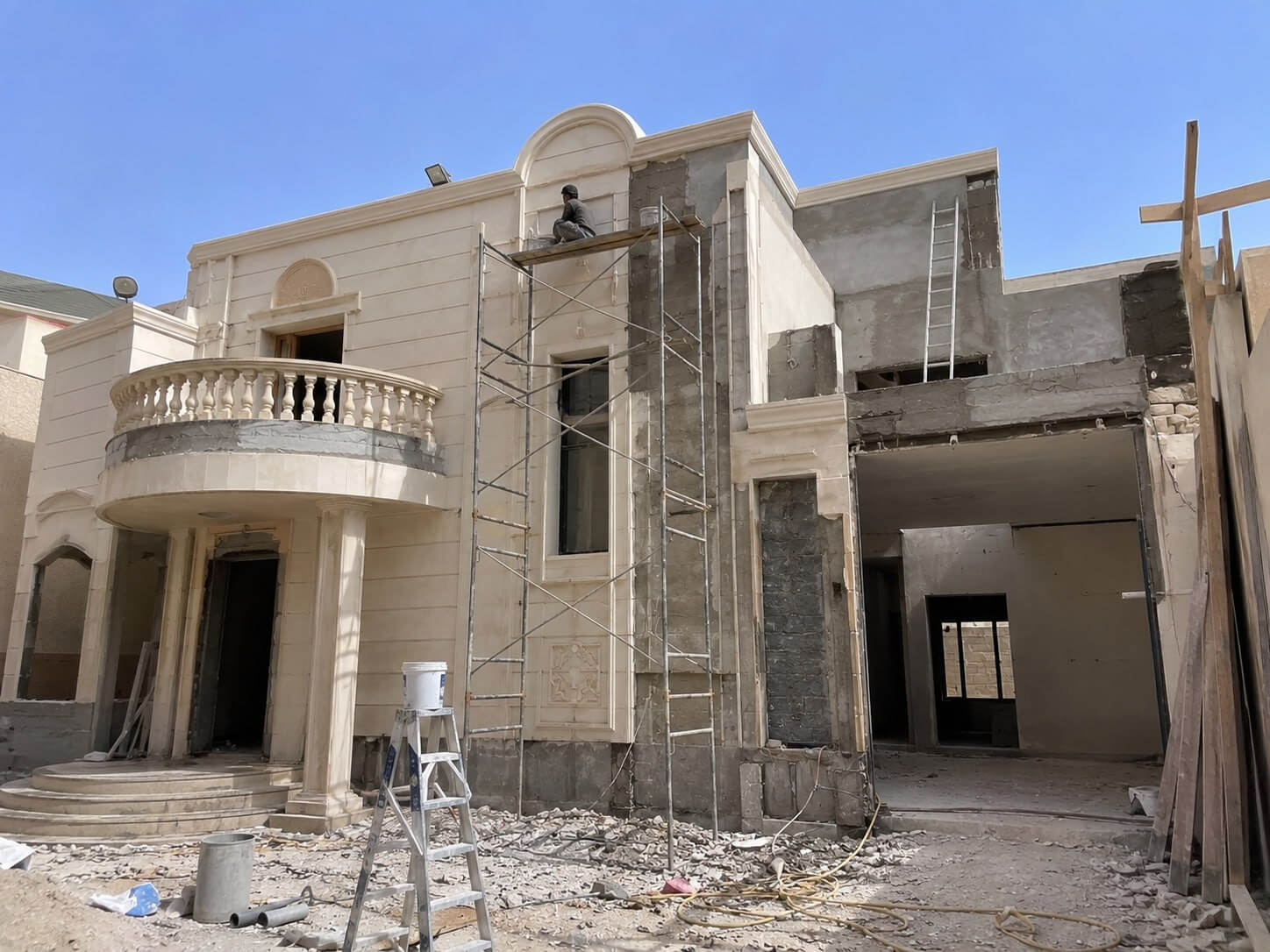
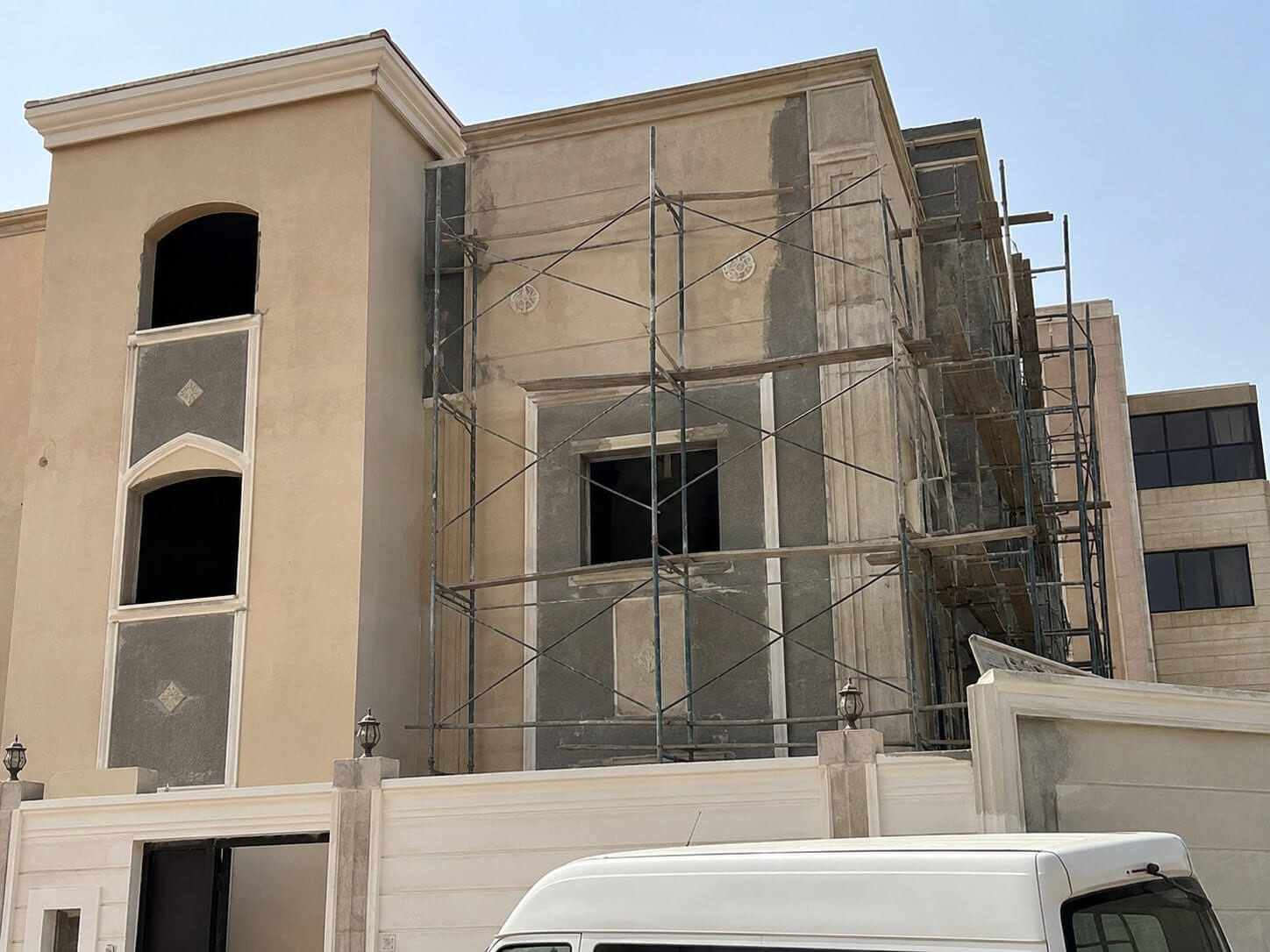
Complete villa facade renovation
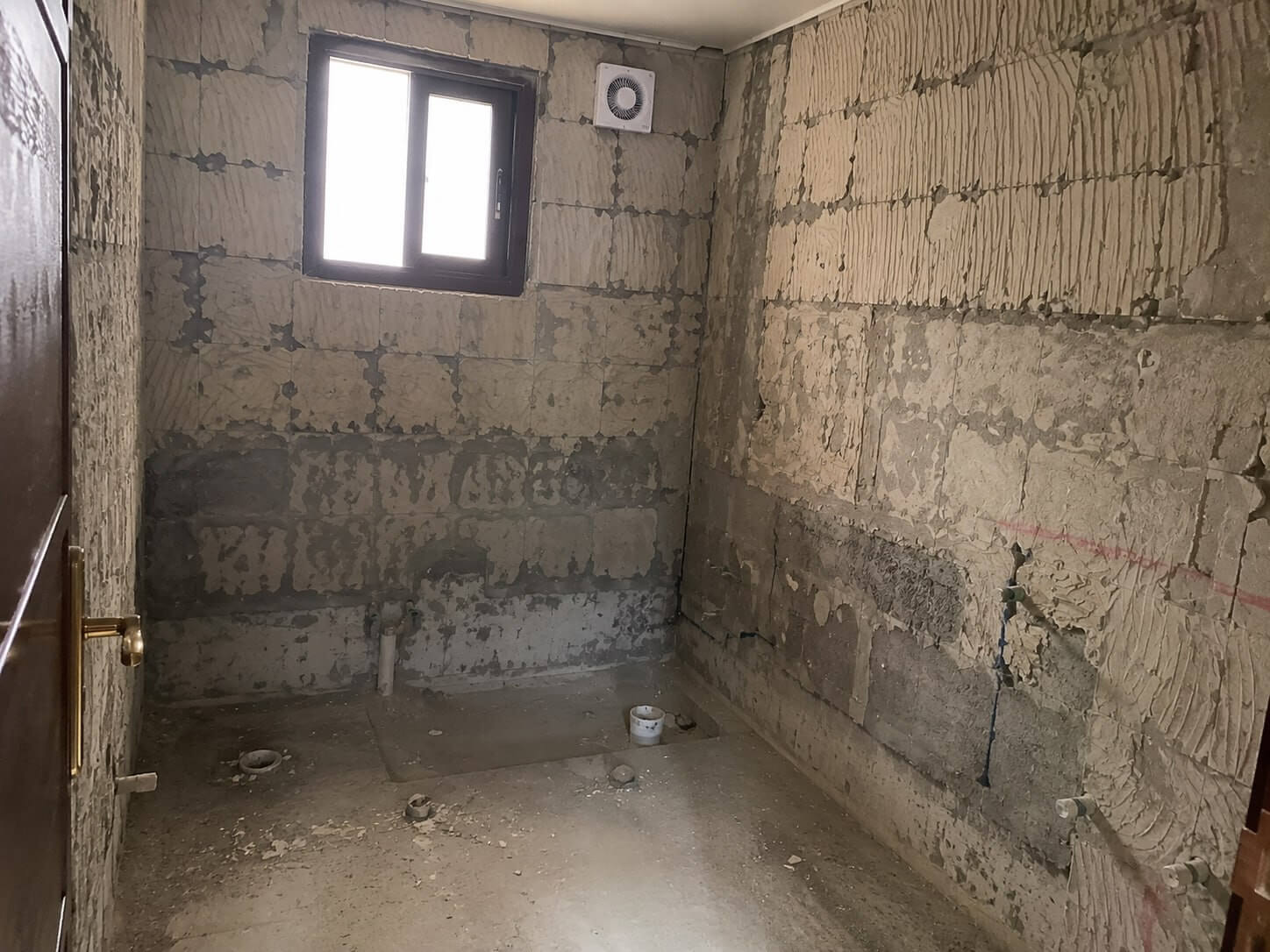
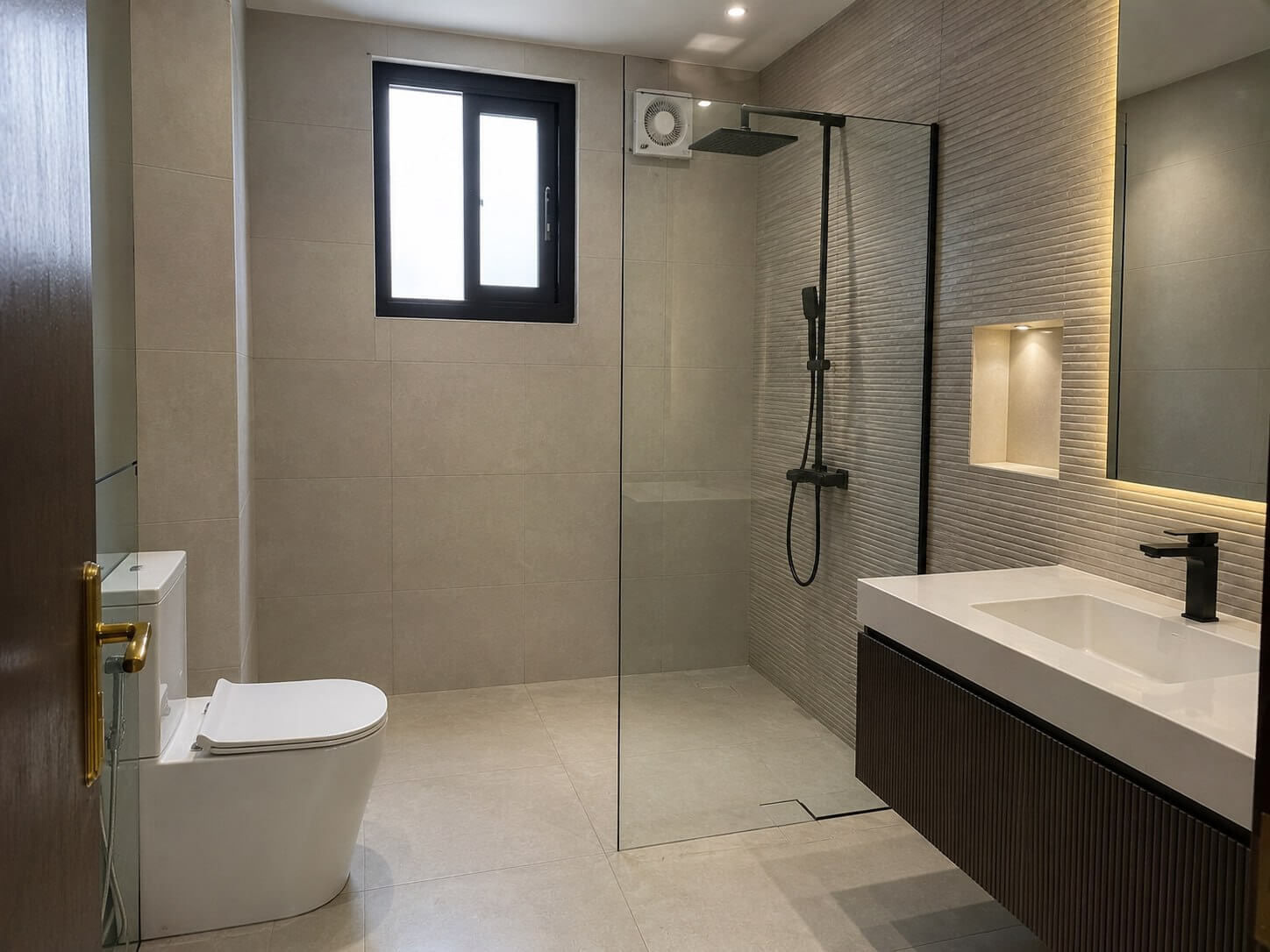
Bathroom renovation
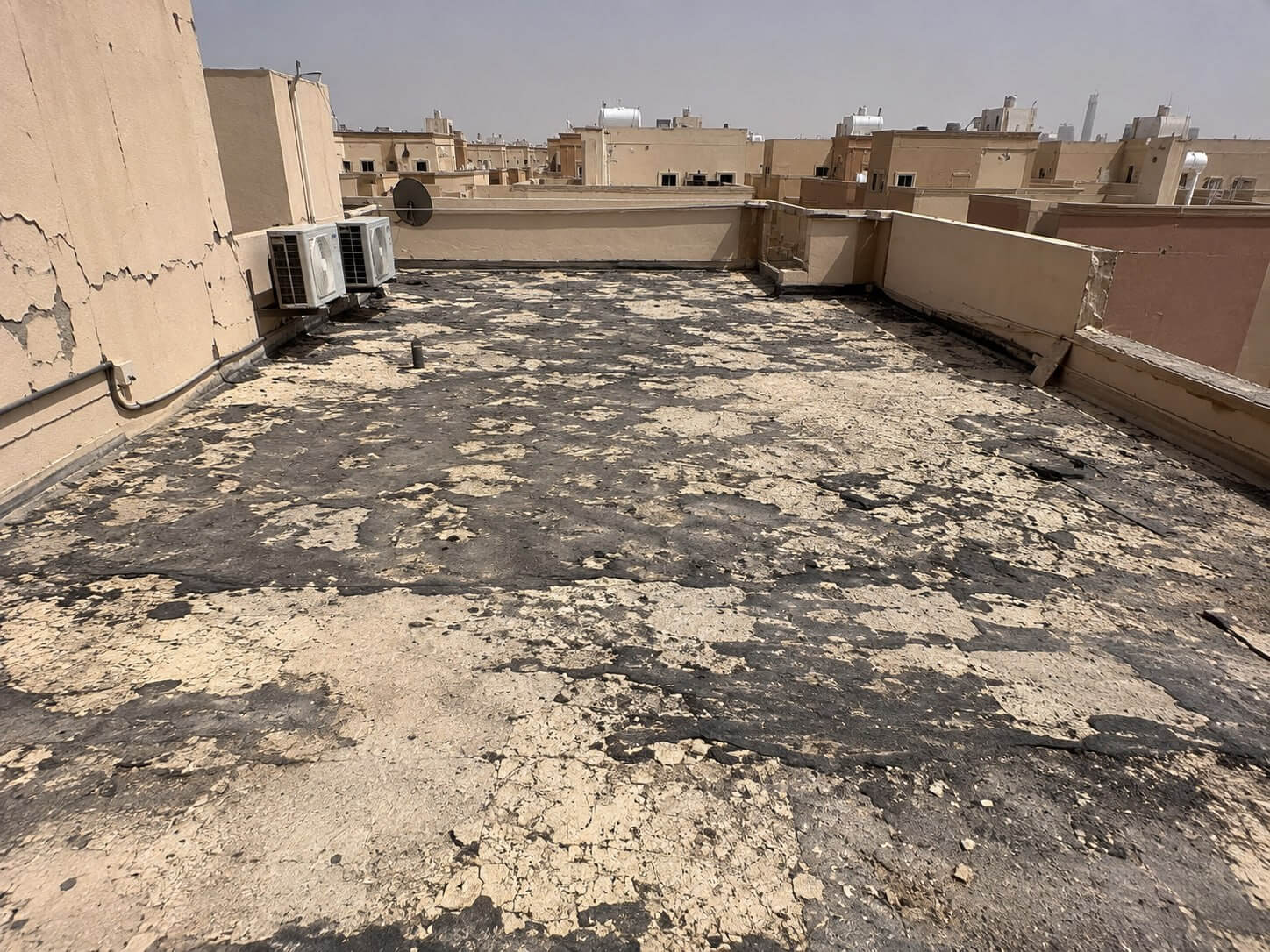
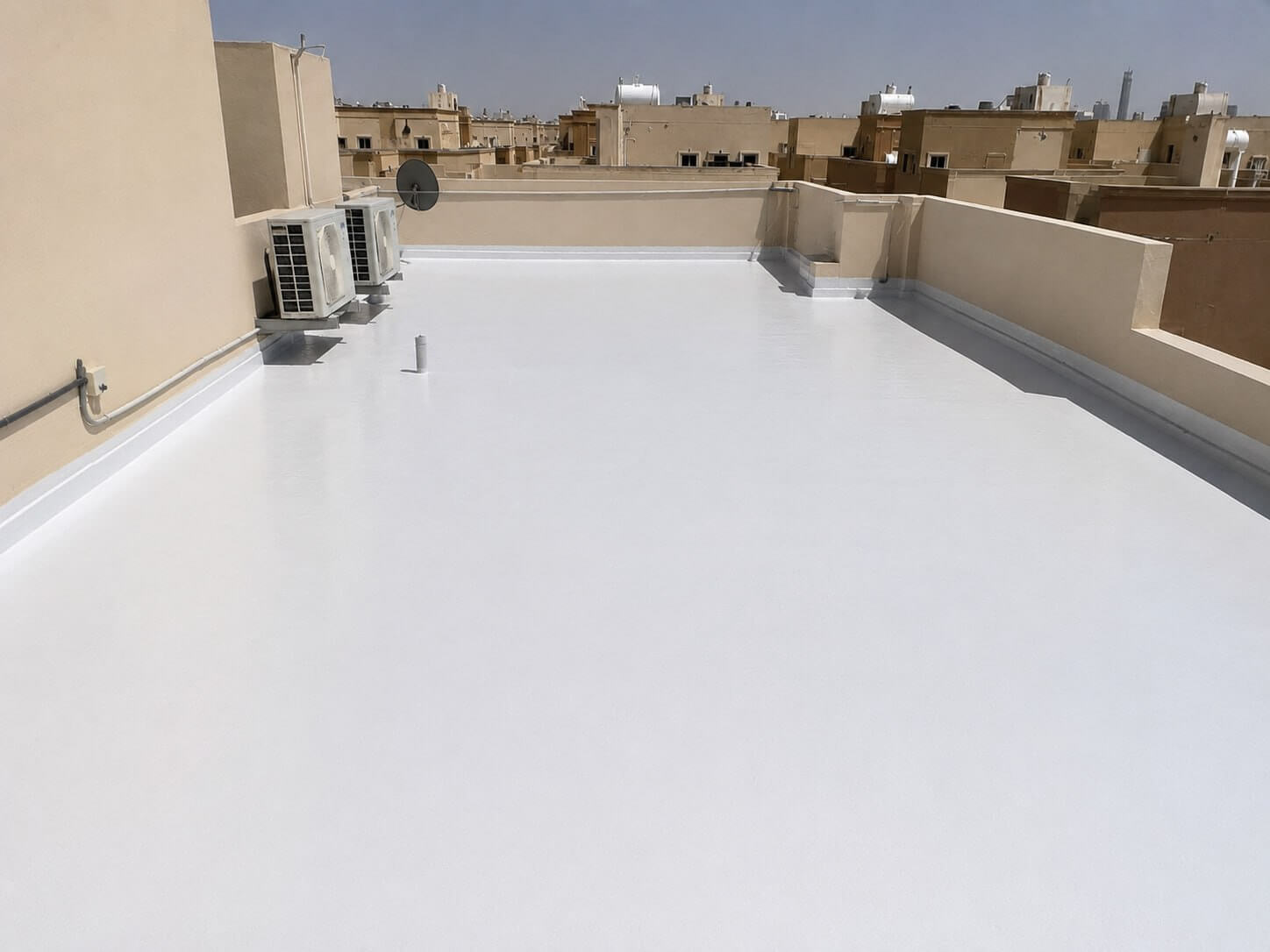
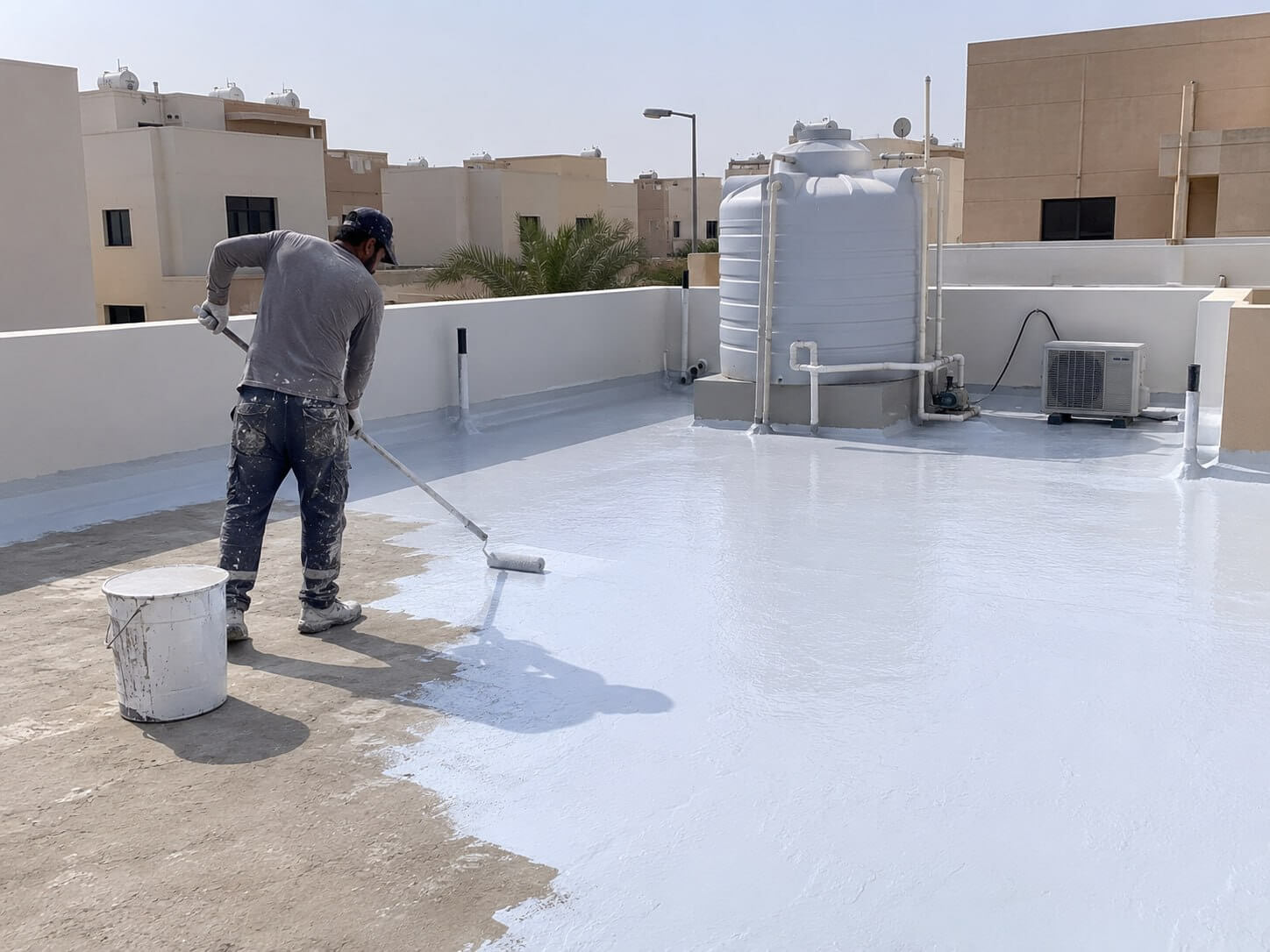
Roof insulation and repair
A thorough engineering inspection and committed delivery from the first visit to handover
Thorough structural inspection
A complete engineering assessment of the building before we start
A clear renovation plan
A clear timeline and quote with no surprises
A complete technical team
Contractors and craftsmen with long renovation experience
A real warranty
On the work and the materials used
From first contact to handover: clear steps with no surprises
Contact Us
Contact us by WhatsApp or phone and tell us what you want renovated
Design & Quote
We prepare an initial design and a clear price quote with no surprises
Site Visit
A specialist team inspects the site and assesses the building and every technical detail
Renovation works
Our technical team carries out the renovation with the best materials and keeps you updated throughout
Handover & Warranty
Final handover with a real warranty after handover
Our headquarters is in Riyadh, and our teams deliver projects across every region of Saudi Arabia with the same quality, engineering supervision and warranty.
Every house tires with time. Cracks appear in the walls, the facade colours fade and the roof starts leaking in winter. This is where complete renovation comes in, restoring the building's strength and appearance instead of temporary fixes that have to be repeated every so often.
This guide brings together what a villa or home owner needs before starting. You will learn the types of renovation and how they differ, the work steps, the materials and what raises or lowers the cost. You will also learn how to choose a villa renovation company that gives you a clear written quotation and stays with you until handover.
Complete renovation is not just a fresh coat of paint. It is a rehabilitation of the building on several levels, starting with what the eye cannot see and ending with what a guest sees at the door. That is why we usually divide it into clear layers so the owner knows where every step goes.
Complete renovation suits older villas where several problems have appeared at the same time. It suits anyone who has bought a used home and wants to live in it with confidence in its condition. It also suits palaces and large buildings whose owners want to update both appearance and function without demolition.
Residential and commercial projects such as apartment buildings, showrooms and offices also benefit. A tenant judges a building by its facade, entrances and bathrooms before anything else. Renovating homes offered for sale or rent makes them more attractive and reduces maintenance complaints after handover.
If the problem is limited to one place and its cause is clear, partial renovation may be enough. An example is a bathroom leaking from an old mixer, or a facade that only needs repainting. But if damp keeps returning in more than one room, or cracks appear in places far apart, that points to a deeper cause. In that case complete renovation is more economical in the long run because it treats the root instead of chasing the symptoms.
The right decision always starts with an inspection. Do not decide on the type of renovation before an engineer has seen the building and written down the findings clearly.
When renovation works are combined in one plan, every team works knowing what came before and what comes after. The plumber knows where the waterproofing goes, the electrician knows where the gypsum board goes and the finisher receives surfaces that are ready. This reduces repeated breaking out, cuts material waste and makes responsibility clear for any remark. You can also postpone optional improvements to a later phase without affecting the essential works.
Many owners mix up the types of renovation, and this causes confusion when comparing quotations. A quotation for facade renovation cannot be compared with one for complete renovation, even for the same building. So here are the main differences in brief.
| Type | What it covers | When to choose it |
|---|---|---|
| Partial renovation | One room, bathroom, kitchen or single element | When the problem is limited and its cause is known |
| Facade renovation | Treating external cracks, paint or stone, GRC elements and external insulation | When the facade looks worn or damp enters through the external walls |
| Structural renovation | Treating columns, beams, slabs and reinforcing steel | When deep cracks, visible rust or settlement in part of the building appear |
| Complete renovation | Structure, insulation, services, finishes and facade in one plan | For older villas, when problems are multiple, or before moving into a used home |
Cosmetic renovation only changes the appearance with new paint, new tiles or different lighting. Remedial renovation looks for the cause of the problem and removes it first, then redoes the finishes. The common mistake is asking for a cosmetic job on top of a problem that was never treated. The stains and cracks come back after a short time and the money spent is lost.
Villa facade renovation today offers more options than before. There are flexible paints that tolerate wall movement. There are external insulation systems that reduce heat gain. And there are stone claddings and GRC elements that give a grand look at a lighter weight.
What matters is that the type is written clearly in the quotation, with a list of included and excluded works.
Remember that complete renovation does not mean doing everything at once. A full plan can be agreed and then delivered in phases to suit your budget. The key is to start with what protects the building, the structure and insulation, and then move on to finishes and appearance.
Cracks and damp are the two most common reasons people ask for renovation. The problem is that they can look alike while their causes are completely different. That is why crack treatment starts with diagnosis before any material or tool.
Damp may come from the roof when its waterproofing fails. It may come from bathrooms and kitchens through a hidden pipe leak. It may rise from the ground through the walls if the foundations were never waterproofed. Each source has a different treatment. Damp resistant paint is useless if water is reaching the wall from a damaged pipe behind it.
If you notice peeling or blistering paint or a musty smell in a particular room, these can be signs that the problem lies with the waterproofing and should be inspected.
A proper repair takes longer than a quick fix, but it saves you repeating the repair every season.
Some cracks only need monitoring. Make a pencil mark at both ends of the crack, photograph it with the date and check it again after a while. If it has gone past the mark, it is moving and needs inspection. Cracks accompanied by rust, spalling concrete or unusual sounds from the doors should not wait. Ask for an engineering inspection straight away.
The order of stages in renovation matters a great deal. If you start finishing before the services are dealt with, you will have to break out again. So we follow a sequence that protects each stage from the one that follows it.
The engineer visits the site and inspects the structure, roofs, bathrooms, kitchens and facades. The engineer photographs the problems, writes down the findings and asks the owner about the building's history and any previous repairs. An extra inspection of a specific spot may be requested if a hidden cause is suspected.
After the inspection we write a list of the required works ordered by priority. We make clear what is necessary for safety and what is an optional improvement. Then comes the written quotation with clear items and specified materials.
We protect the furniture and floors that will remain and mark out the work areas. If the family is living in the house, we organise the work in sections so some spaces stay usable.
We remove damaged finishes and expose what lies behind them. Sometimes problems appear here that were not visible before. We document them with photos and inform the owner before any change to the scope. Then we treat the structure and the deep cracks.
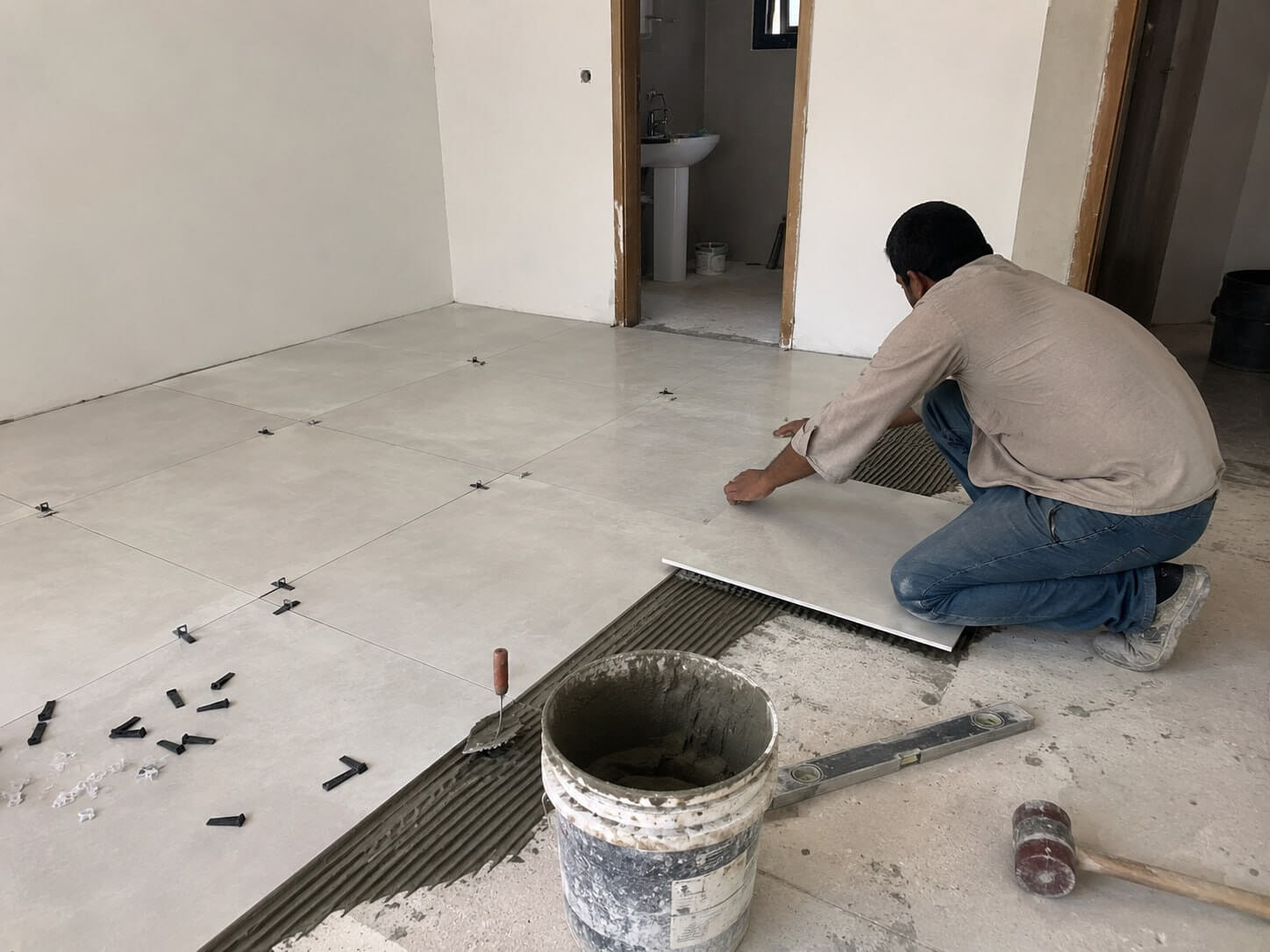
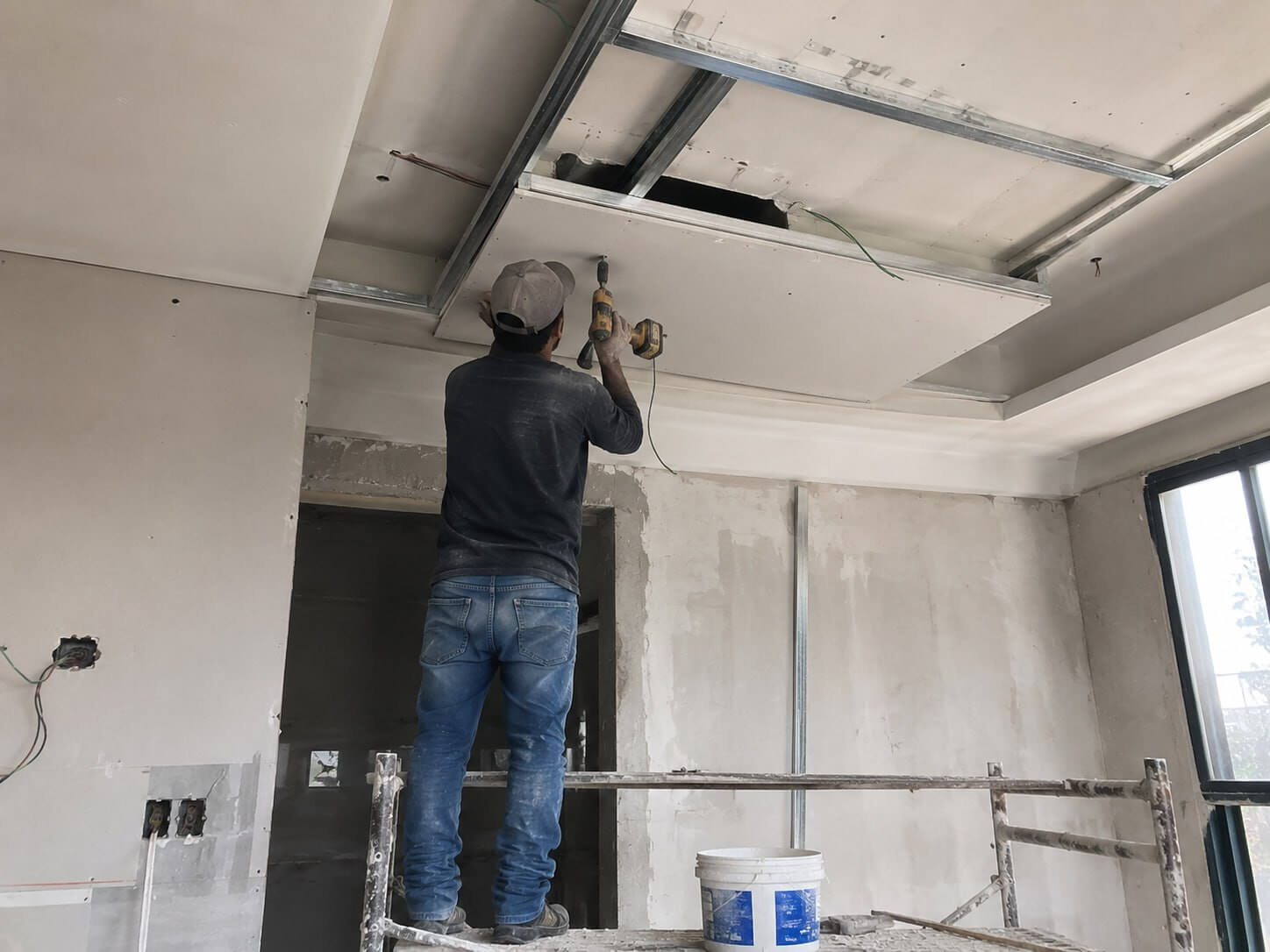
Once we are sure that what lies beneath the surface is sound, we start render, gypsum board, flooring and painting. Outside, we renovate the facade with the agreed material. This stage can be linked with our natural stone and GRC service if the facade is clad in stone.
We go through every item with the owner, record the remarks and fix them before handover. Then we hand over a file containing the photos, the types of materials used and the details of the warranty written into the contract.
At every stage the owner knows what has been done and what is coming next. We agree from the start on how to communicate with the responsible engineer and on the partial sign off points. For example, we do not close up walls before you have seen photos of the installations, and we do not start tiling before the water test has passed. This way you never discover anything too late, and the decision stays in your hands at every important step.
Materials are what remains in your house after the team leaves. Their choice decides whether the renovation holds up or the problems come back. A good material is not enough on its own if it is applied the wrong way, so here we talk about the material and how it is used together.
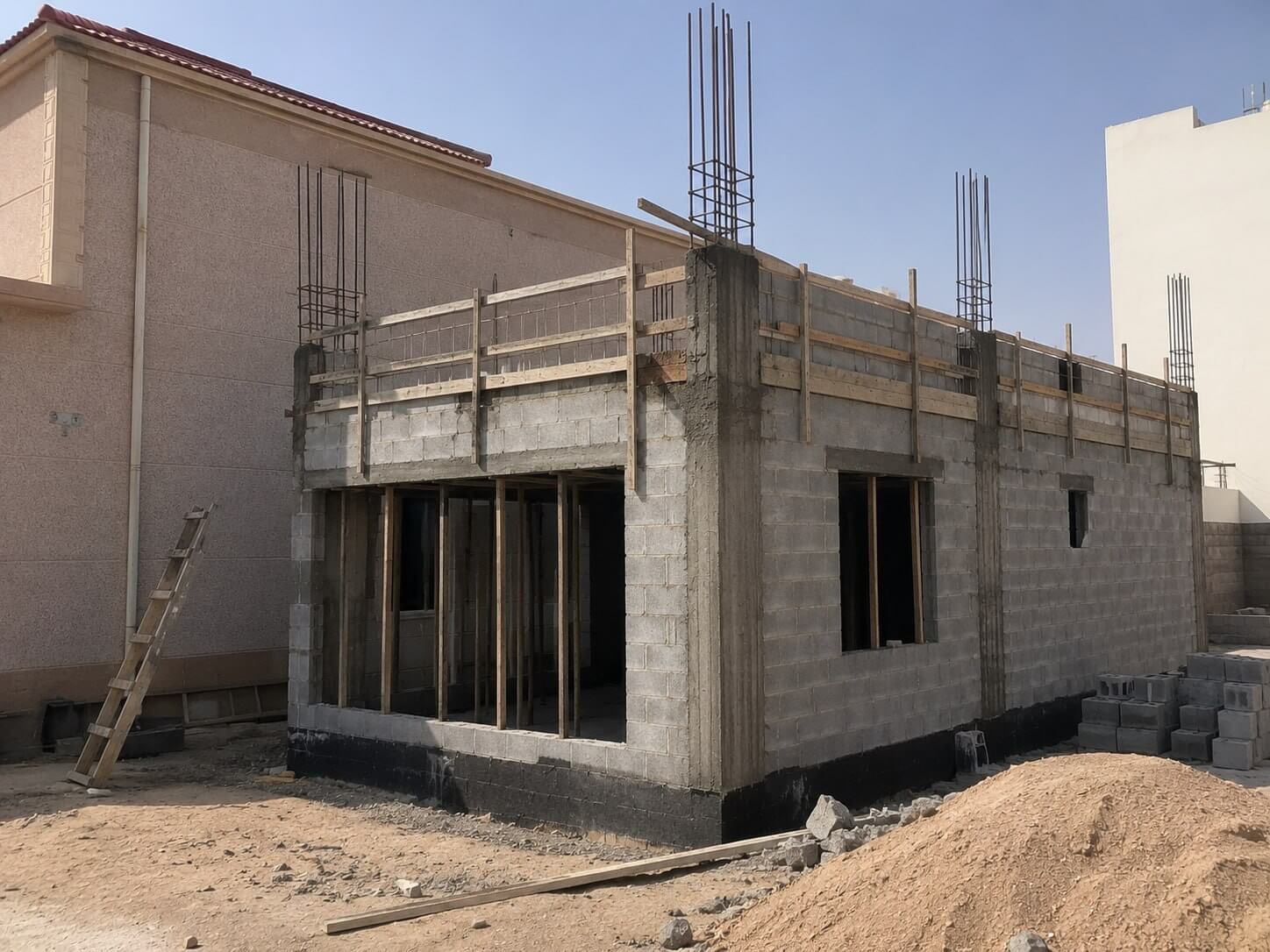
Concrete repair uses a special repair mortar that bonds to the old concrete and does not shrink. Exposed steel is coated with an anti corrosion product before it is covered again. In some cases injection materials are used for deep cracks. What matters is that the material suits the type and condition of the element.
Good render needs clean sand, correct mix proportions and water curing after application. Paints differ between interior and exterior. Exterior paint must withstand sun, dust and humidity without peeling or fading quickly. In bathrooms and kitchens, paints resistant to moisture and mould are used.
For villa facade renovation you may choose flexible paint, natural stone or GRC elements. Stone gives a grand look and stands the test of time but needs correct fixing. GRC is light and allows complex shapes. Flexible paint is quicker to apply and suits simple facades.
At Yam Integrated Construction we use approved materials and record their types in the project file so you can refer to it at maintenance time.
One point many people overlook is how materials work together. Some paints do not bond well over certain waterproofing products. Some adhesives do not suit large format tiles or marble. That is why we choose materials as one integrated system and not as separate pieces.
The first question most people ask is how much renovation costs. The honest answer is that the cost depends on many factors that only become clear after an inspection. Any figure given over the phone without a visit is a guess that may change considerably.
The deeper the problems, the more work there is. A building that needs corroded steel treatment is different from one that only needs painting and new bathrooms. The age of the internal services matters too. If the plumbing is old, replacing it completely may be more economical than repairing it piece by piece.
The difference between finishing materials is large. Tiles, marble, paints and sanitary ware come in different grades. Choosing a mid range level in secondary rooms and a higher level in majlis areas and entrances is a smart way to control the budget.
Renovating a painted facade is different from a stone facade with ornamentation and GRC elements. Stone needs careful removal and refixing, and ornamentation needs moulds or special fabrication.
If the family is living in the house, the work is split into phases, and this changes how it is organised. The project location and how easily materials and equipment can reach it also have an effect.
The cheapest quotation can turn out to be the most expensive if it neglects waterproofing or uses weak materials. A clear quotation is the one that protects you from surprises.
Rank the works by importance. Start with what protects the building, such as the structure, waterproofing and plumbing, and do not cut corners there. Then distribute the remaining budget over the finishes according to how important each space is. Group similar works into one phase, because setting up the site repeatedly has a cost. And settle your choices early so you do not pay for changes during the works.
You do not need to be an engineer to follow the quality of a renovation. It is enough to know what to ask for and when. Many of these checks happen before the works are closed up, because they become impossible after finishing.
Ask for a flood test on the roof and bathrooms. The drains are blocked, the surface is filled with water and left, then the ceiling below is inspected. If no damp appears, the waterproofing is sound. This test is one of the most important protections against winter problems.
Make sure the cracks were treated before painting and not simply covered. On stone facades, check the fixing of the pieces and the filling of the joints. Look at the facade at different times of day, because sunlight reveals what does not show in the shade.
At handover, ask for a written report listing every item and its condition. Any remark is recorded with a date and a time to fix it is agreed. Do not sign the final handover before the remarks are closed.
At Yam Integrated Construction we send the owner regular photos from the site. This lets you follow the hidden works even if you were not present when they were carried out.
Clear answers to these questions are the sign of a team that understands what it is doing. Evasion is a signal worth noticing.
Keep all photos and reports in one file. They are your reference for any later maintenance and for warranty reviews. They also help if you decide to sell the house, because they prove what work has been done.
Most renovation problems do not come from the difficulty of the work itself. They come from wrong decisions before starting or during the works. These are the most frequent ones.
Some owners want to see a quick result, so they ask for new paint and tiles before the damp or cracks are treated. After a while the blistering and peeling return and they have to break out again. Treatment first, then appearance.
A spoken agreement opens the door to disputes. What you understood may differ from what the contractor understood. Always ask for a written quotation with the items, materials and scope of work.
You do not see plumbing, electrics and waterproofing after handover, so some people try to save on them. This is the biggest mistake, because repairing them later means breaking the new finishes.
Every design change after starting causes delay and may waste materials. Try to settle your choices of tiles, colours and sanitary ware before the finishing stage begins.
For anyone preparing for finishing after renovation, take extra care at that stage, because it is where mistakes are most common.
Start with an engineering inspection, ask for a written scope and decide your choices early. Follow the hidden works through photos. This way you avoid most of what happens to others.
Many people see a small stain on the ceiling or a fine crack and decide to wait. Over time the damage spreads and water reaches the steel or the electrics. An early repair is usually simpler and less costly, so do not delay an inspection if you notice a sign that recurs or grows.
Another mistake is leaving the site without daily supervision. A skilled worker still needs an engineer who reviews and decides when something unexpected happens.
Finally, do not forget the boundary wall, courtyard and annexes. Neglecting them leaves sources of damp and cracking close to the main building.
The Kingdom is vast and its climate varies from one region to another. What works in Riyadh may not be the best choice in Jeddah or Abha. That is why we take the climate into account when choosing materials and work methods.
In Riyadh, Qassim and Al Kharj, temperatures are high and the difference between night and day is large. This repeated expansion and contraction causes cracks in render and facades, and dust affects paint colours. So here we focus on the following points.
In Jeddah, Dammam, Al Khobar, Jubail, Yanbu and Jazan, humidity and salt in the air are high. Salt penetrates the concrete and speeds up the rusting of the steel, which is why coastal buildings show more concrete spalling than others. Treatment needs extra protection for the steel, salt resistant materials and exterior paints that keep moisture out while letting the wall breathe. Owners here also need periodic checks on the condition of columns and projections.
In Abha, Khamis Mushait, Al Baha and Taif, rainfall is higher and the cold is noticeable in winter. This makes roof waterproofing more important than anywhere else. Water that enters cracks and then cools can also widen them over time. So we pay attention to sealing cracks well, forming correct roof falls and draining rainwater away from the walls.
Some works are affected by the weather at the time they are carried out. Exterior painting and waterproofing are best not done in rain or during the hottest hours. We arrange the work schedule so these stages are carried out at the right times for each region.
From our head office in Riyadh we serve every region of the Kingdom with the same inspection and supervision approach, while taking the nature of each city into account.
In Tabuk, Hail and Al Jouf, summer heat meets winter cold. This increases material movement and calls for care with thermal insulation and with facade joints so they do not crack as the seasons change.
Choosing a villa renovation company is the most important decision in the whole project. Materials can be changed, but the way of working and the commitment come from the team itself.
We start with a site visit and an engineering inspection, then hand you a written quotation with the items and materials. Once agreed, a responsible engineer follows the project with one team that is accountable from start to finish. We send you regular photos from the site, especially of the hidden works. At handover the warranty is written into the contract, together with a file of the materials used. You can request an inspection from the contact us page.
A good renovation needs simple care to last. These are the most important points.
For any remark during the warranty period, contact us and we will review it according to what is written in the contract.
Be wary of a contractor who gives you a final price without seeing the building. Be wary of a quotation that lists general items such as full renovation without details. And be wary of a request for a large advance that is not linked to a clear stage. These usually end in a dispute over scope or quality.
Many families renovate their home while still living in it. In most cases this is possible if the work is organised into clear zones. When the renovation covers the electrical and plumbing systems of the whole house, a temporary move may be more comfortable for the family and faster for the work.
We define a work zone and a living zone and separate them with dust barriers. Where possible, workers get their own entrance and a route that does not pass the family rooms. We finish and hand over one zone before moving to the next, so the whole house is never open at the same time.
We agree in advance when water or power will be cut and let you know beforehand. If the family is living at home, a bathroom and a kitchen stay usable. If the kitchen is part of the renovation, we arrange a temporary alternative for the essentials with you.
We make sure the main corridors and exits of the house stay open and clear of materials and tools throughout the works. Power is isolated only in the work zone so the other rooms remain served.
Paints and waterproofing materials have odours, so bedrooms are best kept away from them with good ventilation. Cutting tools and ladders are never left within children's reach. Anyone with a chest sensitivity should stay away from dusty works such as demolition and sanding.
Working hours are set to suit the family and respect prayer and rest times. The site is cleaned at the end of every day, and waste is collected and removed regularly. The supervisor is the single point of contact, so the household does not have to deal with each worker separately. If you have guests or a family occasion, we arrange with you to pause noisy works on that day.
At Yam Integrated Construction we include the zoning and protection plan in the quotation. That way you know from the start how the work will run inside your home and when each room will be affected.
Not every renovation has to be done in one go. Sometimes the budget is limited, or the owner prefers to spread the work over phases. What matters is to order the work so that the next phase never means breaking what was completed in the current one.
Start with what protects the building, then what serves daily use, then what improves the look. Waterproofing, leak repairs and structural cracks come before decoration, because even the finest paint will not last on a damp wall.
| Priority | Examples of works | Why |
|---|---|---|
| Protecting the building | Roof waterproofing, leak repairs, cracks and exposed steel | Delay increases the damage and the repair cost later |
| Safety and services | Electrics, earthing and concealed plumbing | Done before finishes so nothing is broken afterwards |
| Daily use | Bathrooms, kitchen, doors and windows | Directly affects the family's comfort |
| Look and upgrades | Paints, ceilings, facades and decor | Comes last, on a sound base |
Some works are linked and should not be separated. Replacing the plumbing in a bathroom while postponing the tiling means opening the wall twice. Waterproofing the roof while postponing the equipment installed on it can expose the waterproofing to damage during installation. The engineer therefore reviews linked works and groups them into one phase, even when the budget is limited.
Keep what is sound and do not replace it just for the sake of change. Choose mid-range materials for rooms that see little use and tougher materials for bathrooms, kitchens and corridors. Do not cut corners on waterproofing or electrics, because fixing them after finishing is costly and disruptive. If you split the work into phases, ask for the services needed by later phases to be run now, so no new breaking out is needed.
At Yam Integrated Construction we write your quotation in clear phases. You can start with the first phase and complete the rest when you are ready, without the works clashing with each other.
Handover is your last chance to find issues while they are still the contractor's responsibility. So do not treat it as a quick visit. Allow enough time and walk through the house room by room with the supervisor, with a written list in your hand.
Do not wait until the end to check everything. Services and waterproofing are inspected and accepted before they are covered with tiles or gypsum. Each partial handover is signed with photos that document it. The final handover then becomes a review of finishes and operation only, and major issues on the last day are reduced. Keep a copy of every record in a single file.
Ask for a file with photos of concealed works before they were closed, the locations of new services, the types of materials used, and the paint colours with their product codes. This file saves you a great deal for any future maintenance or addition. It also helps if you decide to sell or rent the house, because it documents what was done.
The written warranty sets out the covered works, such as waterproofing, services and the finishes carried out. It also states what it does not cover, such as damage from misuse, alterations made by another party, or parts that were outside the scope of work. Read these terms before signing, not after a problem appears. Ask how to report an issue and who will come to inspect it.
Record any issue that appears later with a photo and the date. Report it to the contractor through the agreed channel, and do not have it repaired by another party before informing them. At Yam Integrated Construction we review issues according to the written warranty in the contract, and the responsible engineer remains your point of reference.
Renovating a rented apartment building, a showroom or an office is different from renovating a villa occupied by its owner. Other parties are affected by the work, such as tenants, customers and visitors. The goal is to complete the renovation with as little interruption to business and residents as possible.
A business cannot afford a long closure. Noisy works are therefore done outside working hours where possible, and the site is divided so part of it stays open. In showrooms the facade and lighting matter most, because they are the first thing a customer sees. Offices need careful planning of electrical and network routes and air conditioning positions to suit the new layout.
Many older apartment buildings and shops in commercial districts need a structural inspection before any finishing, because new finishes cover defects without treating them. There may be additional loads from signs, tanks or old undocumented alterations. For shops facing the street, the work is arranged so it does not block the pavement or neighbouring entrances. Adjacent facades are protected from dust and debris throughout the works.
An investor owner needs a clear picture of the work even without visiting the site. We send regular photos of every stage and document the works in each apartment or unit separately. This makes later maintenance and letting easier and gives you a clear record for every unit.
At Yam Integrated Construction we renovate apartment buildings, showrooms and offices from our head office in Riyadh and in Jeddah, Dammam, Madinah and other cities. You can browse our projects or contact us to arrange a site visit.
The questions clients ask us most before starting a renovation
It depends on the scope of the renovation and the condition of the building. We set a clear timeline after the site visit and agreeing the scope.
Yes. We carry out a complete engineering inspection of the building before defining the scope and the quote.
Yes. We give a real warranty on the work and materials, and explain the details before we start.
Yes. We are headquartered in Riyadh and deliver projects in all cities and regions of Saudi Arabia: Jeddah, Makkah, Madinah, Dammam, Khobar, Taif, Abha and more.
Of course. We take on complete renovations or a single part, whether a facade, a bathroom or anything else you need.
Payment is made in installments linked to execution stages, agreed upon with you in detail before the project starts.
It depends on the size and location of the works. In many cases we divide the work into sections so some rooms stay usable. If the renovation covers the services throughout the house, we recommend moving out temporarily for comfort and safety.
A crack that widens over time, runs at an angle from the corners of doors and windows, or comes with rust and spalling concrete needs an urgent engineering inspection. Fine hairline cracks in the paint are usually superficial. Only an inspection can settle it.
It depends on the condition of the structure. If the structure is sound or can be treated, renovation preserves the building and saves time and cost. If the structural problems are extensive, we tell you so frankly after the inspection.
We document the problem with photos, explain it to you and propose the solution and its cost before carrying out anything. We do not add items without your written approval. This is set out in how additional works are handled in the quotation.
It can, depending on the condition of the facade. If damp is entering through the external walls, we treat the cracks and add a suitable protective layer before finishing. We specify this in the quotation after the inspection.
Yes, you can choose the materials and their colours, and we offer suitable options for each place. We tell you if a particular material does not suit the use, such as interior paint in a place exposed to sun. What matters is that the final choice is written in the quotation.
We send you regular photos from the site for every stage, especially the works that will be covered later. You also have a responsible engineer you can contact directly. This makes it easy for villa owners living in different cities to follow their project.
Yes, we renovate showrooms, offices and residential buildings as well as villas and palaces. In these projects we arrange the work to minimise its impact on tenants or on the business.
Leave your details and WhatsApp will open with your message ready to send to our support team.